

What Is a Whirlwind Romance and How Does It Work
What Is a Whirlwind Romance?

Love doesn't always follow a schedule. Sometimes it hits like a lightning bolt—intense, immediate, and impossible to ignore. You meet someone, and within weeks (or even days) you're talking about moving in together, planning trips, or imagining a future that feels startlingly real. That's the hallmark of a whirlwind romance, and it's more common than you might think.
But what exactly makes a relationship "whirlwind," and why do some people fall headlong into love while others take months or years to warm up? The answers involve brain chemistry, personality traits, and sometimes just timing. Understanding the mechanics can help you figure out whether you're experiencing something magical or moving too fast for your own good.
Defining Whirlwind Romance in Modern Relationships
A whirlwind romance is a relationship that accelerates from first meeting to deep emotional commitment in an unusually short timeframe—typically anywhere from a few days to three months. The key characteristics aren't just about speed, though. They include:
Intensity over pacing. You're not just seeing each other frequently; you're emotionally invested at a level that usually takes others much longer to reach. Conversations go deep immediately. Vulnerability happens early.
Rapid milestones. Saying "I love you" within weeks, meeting each other's families before the one-month mark, discussing long-term plans before you've had your first argument—these are classic markers.
All-consuming focus. Your new partner becomes the center of your world quickly. You might cancel plans with friends, think about them constantly, or feel an urgency to spend every available moment together.
How does this differ from typical relationship progression? Most relationships follow a more gradual arc: casual dating for several weeks, exclusive commitment after a month or two, deeper emotional disclosure over three to six months, and major life decisions (moving in, engagement) after at least a year. A whirlwind romance compresses this timeline dramatically, sometimes fitting six months of "normal" relationship development into three weeks.
The pattern shows up across all age groups and demographics, though the specific triggers vary. Sometimes it's circumstance—meeting someone right before one of you moves away creates urgency. Other times it's pure chemistry. And occasionally, it's a person's consistent pattern across multiple relationships.

Author: Lucas Merriweather;
Source: nappyheadedlovestories.com
Why Some People Fall in Love Quickly
Not everyone is wired for slow-burn romance. Some people consistently develop deep feelings fast, and it's not always a red flag. Several factors influence how quickly someone falls in love.
Life stage and readiness play a huge role. Someone who's spent years single, worked through past relationship baggage, and knows exactly what they want can recognize compatibility quickly. They're not hesitant because they've already done the internal work. Contrast that with someone fresh out of a breakup who might mistake rebound intensity for genuine connection.
Attachment history matters too. People with anxious attachment styles often fall hard and fast, seeking reassurance and closeness immediately. Those with secure attachment can also fall quickly, but their experience tends to be less frantic—they feel confident in the connection without needing constant validation.
Then there's simple personality. Extroverts, highly emotional people, and those who score high in openness to experience often report falling in love faster than their more reserved counterparts. They're comfortable with intensity and don't need months of observation before trusting their feelings.
The Psychology of Falling in Love Fast
From a psychological standpoint, rapid romantic attachment involves several mechanisms working together. One is projection and idealization—in the early stages, you're filling in gaps in your knowledge of the person with your hopes and fantasies. The less you actually know, the more room there is to imagine they're perfect for you.
Emotional regulation patterns also come into play. Some people experience emotions more intensely across the board. When they feel attraction, they feel it as love. There's less filtering, less self-questioning. This isn't necessarily immature—it's just a different emotional operating system.
Situational factors can accelerate attachment too. Shared intense experiences (traveling together, facing a challenge, even just staying up all night talking) create bonding that would normally take weeks to develop. Psychologists call this "misattribution of arousal"—your brain links the excitement of the situation to the person you're with.
The pattern I see most often is people who fall fast have usually experienced it before. It's not their first whirlwind; it's their relationship style. For them, the question isn't whether to trust the feeling, but whether to trust the person inspiring it.
What Research Says About Love at First Sight
Love at first sight research reveals something interesting: it's real, but it's probably not what you think. A 2017 study published in Personal Relationships found that about 60% of participants reported experiencing love at first sight at some point in their lives. But when researchers dug deeper, they found it was more accurately described as "strong initial attraction" rather than actual love.
The catch? People who experienced that instant spark and went on to develop successful relationships later reinterpreted that first moment as "love." Their brains rewrote the memory to fit the narrative. Those whose instant attractions fizzled just called it chemistry or infatuation.
Research from the Kinsey Institute shows that "love at first sight" experiences correlate strongly with physical attraction and perceived similarity. You see someone, find them attractive, notice (or imagine) you have things in common, and your brain generates a powerful emotional response. Whether that becomes love depends entirely on what happens in the weeks and months that follow.
Studies also show that people who believe in love at first sight are more likely to experience it—a classic self-fulfilling prophecy. If you're open to the possibility of instant connection, you'll interpret strong attraction as potentially being "the one" rather than dismissing it as just physical chemistry.
The Science Behind Fast Romantic Attachment
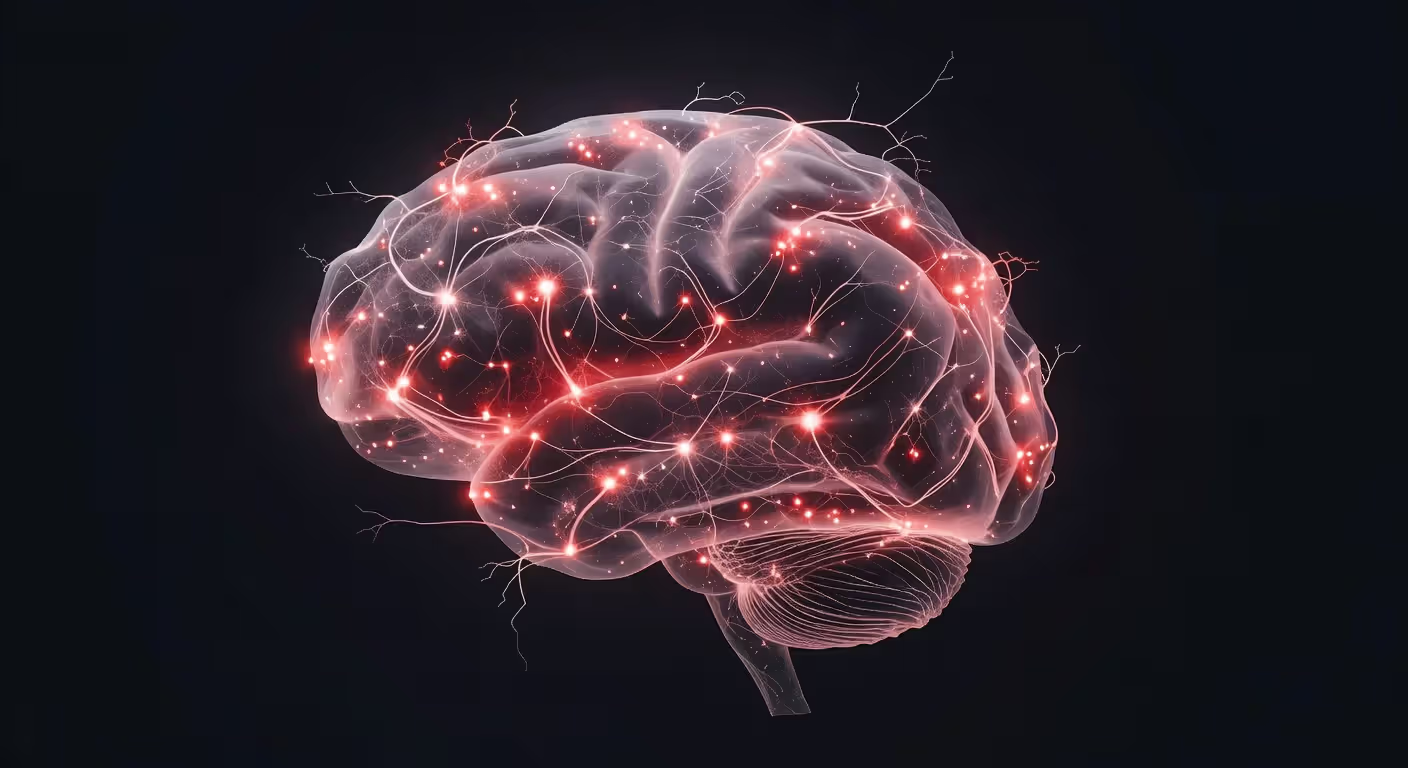
Your brain on early-stage love looks remarkably similar to your brain on cocaine. That's not poetic exaggeration—it's neuroscience.
When you're in the throes of passionate early stage love, your brain floods with dopamine, the neurotransmitter associated with reward, motivation, and pleasure. This creates that can't-eat, can't-sleep, constantly-thinking-about-them feeling. You're literally getting a neurochemical high from being around (or even thinking about) your new partner.
Oxytocin, often called the "bonding hormone," surges during physical touch, eye contact, and sexual activity. It promotes trust and attachment, making you feel closer faster. This is the same chemical that bonds mothers to newborns—it's powerful stuff.
Meanwhile, serotonin levels actually drop in early-stage romantic love, which researchers believe contributes to the obsessive thinking patterns common in new relationships. You can't stop thinking about them because your brain chemistry is literally making you a bit obsessive.
Author: Lucas Merriweather;
Source: nappyheadedlovestories.com
From an evolutionary psychology perspective, fast attachment made sense for our ancestors. Forming pair bonds quickly increased the chances of reproduction and cooperative child-rearing. The ability to fall in love fast and hard was an evolutionary advantage, not a bug. Our modern brains are still running that ancient software, even though our relationship timelines have changed.
The science behind fast romantic attachment also explains why these intense early feelings don't last forever. The dopamine rush typically peaks around the three-month mark and gradually declines over the first two years. This is why every long-term relationship eventually transitions from "passionate love" to "companionate love"—it's neurochemically inevitable. The question is whether there's enough compatibility and genuine connection underneath the chemistry to sustain the relationship once the initial high fades.
Intense Relationships from the Start: Benefits and Risks
Whirlwind romances get a bad reputation, but they're not inherently doomed. Like any relationship style, they come with both advantages and potential pitfalls.
The upside: When a whirlwind romance works, it works beautifully. The intensity can create a strong foundation of shared experience and emotional intimacy quickly. You're not wasting time on casual dating when you've found someone truly compatible. Some couples report that their early intensity helped them weather later challenges—they'd already proven they could go deep together.
There's also something to be said for trusting your instincts. Sometimes you just know. Plenty of long, happy marriages started with "we got engaged after six weeks." The passion and excitement of early-stage intensity can carry you through the awkward getting-to-know-you phase that trips up more cautious couples.
The downside: Moving too fast in a relationship often means skipping crucial compatibility checks. You might commit before seeing how your partner handles conflict, stress, or disappointment. You could overlook red flags because you're swept up in the romance. And if you're merging lives (moving in together, combining finances) before you really know each other, the stakes of a breakup become much higher.
Fast relationships can also create an artificial sense of intimacy. You feel close because you're spending every moment together and sharing intensely, but you haven't been tested by time or real-world challenges. It's like building a house on sand—it might look solid until the first storm hits.
Here's how the two relationship styles compare:
| Aspect | Whirlwind Romance | Slow-Burn Relationship |
| Timeline to commitment | Days to 3 months | 6 months to 2+ years |
| Emotional intensity | Very high from the start | Gradually builds over time |
| Decision-making speed | Rapid (moving in, meeting family, etc.) | Deliberate and measured |
| Risk of overlooking incompatibility | Higher—less time to observe patterns | Lower—more data before committing |
| Risk of missing the right person | Lower—willing to take chances | Higher—might dismiss good matches too quickly |
| Long-term success rate | Mixed (depends on underlying compatibility) | Slightly higher stability, but not guaranteed |
The table shows there's no clear winner. Both approaches can lead to lasting love or heartbreak. The determining factor isn't the speed—it's whether the relationship has genuine compatibility underneath the initial attraction.
Signs a Relationship Is Moving Too Fast
How do you know if you're experiencing a beautiful connection or careening toward a crash? Here are concrete behavioral indicators that suggest you might be moving too fast in a relationship:
You haven't seen them handle stress or conflict yet. If you're talking about forever but you've never had a disagreement or seen how they react when things go wrong, you're making decisions based on incomplete information. Healthy relationships require knowing how someone behaves on their worst days, not just their best.
You're losing yourself. Canceling plans with friends repeatedly, dropping hobbies you used to love, or feeling like you can't make decisions without your partner's input—these are signs you're merging identities rather than building a partnership between two whole people.
Major life decisions are happening on a compressed timeline. Moving in together to "save on rent" after three weeks, getting engaged before you've spent a holiday season together, or making career choices based on a brand-new relationship—these deserve more thought than intensity usually allows.
You're avoiding alone time. If the thought of not seeing them for a few days creates anxiety, or if you're together constantly because being apart feels wrong, that's often a sign of anxious attachment rather than healthy connection. Secure love can handle space.
Friends and family are expressing concern. One person's worry might be projection, but if multiple people who care about you are gently suggesting you slow down, it's worth listening. They can see patterns you might be too close to notice.
You're making excuses for red flags. "He's just stressed from work" (about controlling behavior), "She's been hurt before" (about jealousy), "It's complicated" (about someone who won't define the relationship)—these rationalizations often show up when you're moving too fast to process warning signs clearly.
The relationship exists in a bubble. If you've been intensely involved for weeks but haven't integrated each other into your real lives—friends, family, daily routines—you might be in a fantasy rather than a sustainable relationship.
Not every fast relationship shows these signs. But if you're checking multiple boxes, it's worth pumping the brakes.

Author: Lucas Merriweather;
Source: nappyheadedlovestories.com
How to Slow Down a Fast Relationship Without Losing Connection
So you've recognized you're moving fast—maybe too fast—but you don't want to lose what you have. That's completely possible. Here's how to slow down a fast relationship while maintaining the connection that drew you together.
Name it directly. Have a conversation. "I'm really into this, and I think that's exactly why I want to make sure we're building something sustainable. Can we talk about pacing?" Most people respond well to honesty, especially when it comes from a place of caring rather than rejection.
Reintroduce space intentionally. You don't have to go from seeing each other daily to once a week, but building in regular alone time helps. Keep your standing plans with friends. Maintain your hobbies. Spend a weeknight apart doing your own thing. Space doesn't dilute connection—it gives you things to talk about and helps you maintain your individual identities.
Slow down one area while maintaining others. Maybe you keep the emotional intimacy but hold off on moving in together for another six months. Or you stay physically involved but table the "meet my parents" conversation until you've been together longer. You don't have to slow everything down at once.
Set specific milestones. "Let's revisit the moving-in conversation after we've been together six months" or "I want to wait until we've been through a stressful period together before making long-term plans." Concrete timelines feel less like rejection and more like thoughtful planning.
Create experiences that reveal compatibility. Instead of just spending time in the romantic bubble, do things that show you how you work together in real life. Take a road trip (travel stress reveals a lot). Tackle a project together. Spend time with each other's friends. These experiences build connection while also providing useful information.
Check in with yourself regularly. Set a recurring calendar reminder to ask yourself: "Am I happy? Do I feel like myself? Am I making choices I'm confident about?" Regular self-check-ins help you stay grounded when intense emotions might otherwise sweep you along.
Maintain your boundaries. If you're not ready for something—meeting the kids, combining finances, saying "I love you"—don't do it just because the momentum of the relationship seems to demand it. Healthy relationships respect individual pacing.
The goal isn't to kill the magic. It's to make sure the foundation underneath the fireworks is solid enough to last.
Romantic love is an addiction—a perfectly wonderful addiction when it's going well, and a perfectly horrible addiction when it's going poorly. The brain system for romantic love lies way below your conscious thinking process, in the most primitive parts of the brain, associated with craving, motivation, focus, and wanting.
— Fisher Helen
Whirlwind Romance vs. Slow-Burn Relationship: Key Differences
Before we address common questions, here's a comprehensive comparison that highlights the fundamental differences between these two relationship trajectories:
| Factor | Whirlwind Romance | Slow-Burn Relationship |
| Initial attraction | Immediate and overwhelming | Present but measured |
| Time to "I love you" | Days to weeks | Months to a year+ |
| Time to exclusivity | Often immediate or within days | Several weeks to months |
| Meeting family/friends | Within first month | After 3-6 months typically |
| Cohabitation discussion | Within first 3 months | After 1-2 years |
| Emotional vulnerability | High and immediate | Gradual disclosure over time |
| Conflict experience | Often minimal before commitment | Usually tested before major decisions |
| Individual identity | Risk of rapid merging | Maintained throughout courtship |
| Brain chemistry | Peak dopamine/oxytocin flooding | Steady, gradual increase |
| Breakup impact if it fails | Often devastating due to intensity | Typically easier to process |
| Success predictors | Underlying compatibility, self-awareness | Communication patterns, shared values |

Author: Lucas Merriweather;
Source: nappyheadedlovestories.com
FAQ: Whirlwind Romance Questions Answered
Whirlwind romances aren't inherently good or bad—they're just intense. Whether that intensity becomes the foundation of something lasting or burns out quickly depends less on the speed and more on what's underneath. Pay attention to compatibility, not just chemistry. Maintain your sense of self even when you're swept up in someone else. And remember that real love doesn't require urgency. If it's right, it'll still be right in three months, six months, a year. The magic doesn't disappear when you take time to build something solid.
Related Stories

Read more
Read more




The content on this website is provided for general informational and educational purposes only. It is intended to explain concepts related to relationships, dating, marriage, emotional intimacy, attachment styles, and breakup recovery.
All information on this website, including articles, guides, and examples, is presented for general educational purposes. Outcomes and relationship experiences may vary depending on individual circumstances.
This website does not provide professional counseling, therapy, or legal advice, and the information presented should not be used as a substitute for consultation with qualified mental health professionals or relationship counselors.
The website and its authors are not responsible for any errors or omissions, or for any outcomes resulting from decisions made based on the information provided on this website.