

Codependency in Relationships Guide
Codependency in Relationships Guide

You know what's strange? Most couples don't spot codependency until they're already drowning in it. I'm talking about the kind of relationship where you've essentially vanished—where you can't make dinner plans without checking in first, where your partner's bad mood ruins your entire week, where you're somehow responsible for fixing their problems at work even though you've never set foot in their office.
This isn't about caring deeply. It's about losing yourself completely.
The good news? Once you see what's happening, you can actually do something about it. Recognition is half the battle.
What Codependency Actually Means in Romantic Relationships
Here's the technical definition: codependency is when someone becomes so dependent on their partner for validation and self-worth that they can't function independently anymore. But that doesn't really capture what it feels like, does it?
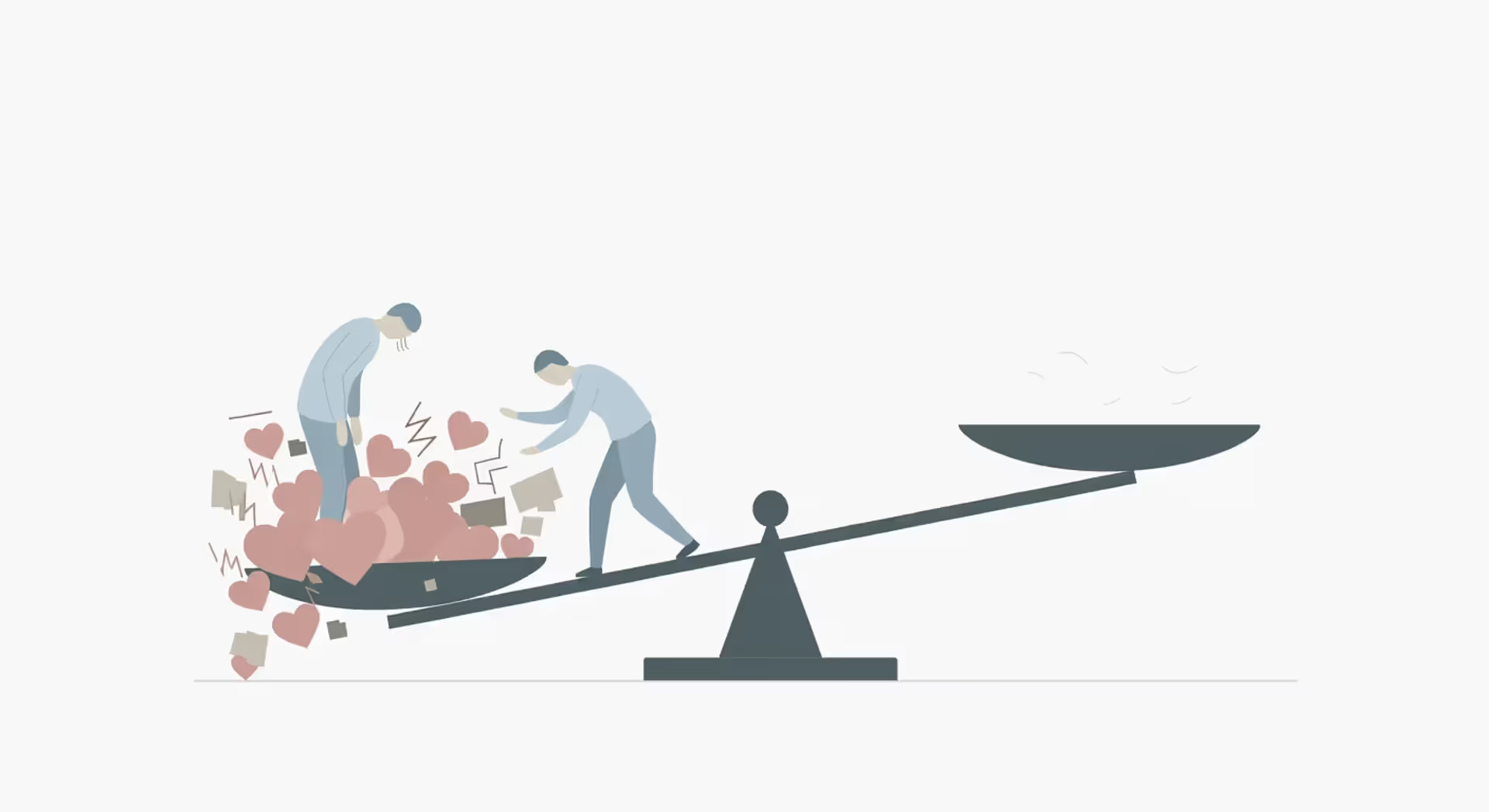
Think of it more like this—your boundaries have melted away. You genuinely can't tell where you end and your partner begins. Your identity? Gone. Absorbed into the relationship like water into a sponge.
The term came out of addiction treatment centers in the 1980s. Therapists noticed that partners of alcoholics were actually enabling the drinking—not on purpose, but through their desperate attempts to help. Then something interesting happened. Clinicians realized these same patterns showed up everywhere, not just around addiction. In marriages where nobody touched alcohol. In dating relationships between seemingly healthy people.
What is codependency in love? It's when you've merged so thoroughly with someone that you literally cannot identify your own preferences anymore. Their stress feels identical to your stress. When they fail at something, you experience it as your failure. When they succeed, that's the only time you feel worthwhile.
This looks nothing like secure attachment, by the way. People with healthy bonds stay close while maintaining separate selves. They support each other without disappearing. Codependent folks confuse self-erasure with devotion. They think controlling every detail equals caring.
Most of this starts in childhood. Maybe you grew up managing a parent's emotions because your safety depended on keeping them calm. Maybe expressing your own needs got you punished or ignored. That hypervigilance—constantly monitoring someone else's emotional temperature to protect yourself—becomes your relationship template. You carry it straight into your romantic life.
Emotional enmeshment in relationships creates this specific exhaustion. You're always on alert, always scanning for signs of disapproval, always adjusting yourself to maintain peace. There's no rest.
How to Recognize a Codependent Relationship
Signs of a codependent relationship often look like loyalty or commitment at first glance. But certain patterns give it away.
Maybe you've stopped seeing friends your partner doesn't like. You apologize constantly, even when you didn't do anything wrong. Your stomach knots up whenever they're upset, regardless of whether it involves you. You defend their behavior to others even when you privately know it's problematic. You've shelved your career goals because pursuing them might create tension.
The communication patterns tell the whole story. Conversations revolve around one person's needs while the other's go unmentioned. Criticism comes wrapped in vague statements instead of direct requests. Silence gets weaponized. One person walks on eggshells while the other controls things through mood swings or withdrawal.

Author: Julian Evercrest;
Source: nappyheadedlovestories.com
Common Codependent Partner Behaviors
Codependent partner behavior signs range from obvious to subtle. The codependent person usually:
- Takes responsibility for their partner's emotions, failures, and problems that aren't theirs
- Sacrifices personal time, hobbies, and friendships to stay constantly available
- Makes every decision based on how their partner might react
- Feels crushing guilt when setting any kind of limit or saying no
- Needs constant reassurance that the relationship is okay
- Monitors their partner's emotional state obsessively and adjusts behavior accordingly
- Derives all self-worth from being needed by someone else
- Stays in harmful situations because being alone feels scarier than being mistreated
The other partner might become increasingly dependent, demanding, or controlling—often without realizing it. The cycle feeds itself. More giving creates more expectations.
Self-Assessment Questions
Ask yourself these questions honestly:
Do you feel personally responsible for your partner's happiness? Can you make plans without asking permission first? Do you have friendships and interests that exist separately from your relationship? Can you disagree without fearing abandonment? Do you know what you want, or do you only know what your partner wants?
If most answers point toward fusion rather than connection, you're probably dealing with codependency. But here's what matters—recognizing it doesn't mean the relationship is doomed. It means you've identified what needs to change.
Healthy Dependence vs Unhealthy Codependency
The difference between love and codependency can be hard to spot. Both involve closeness, commitment, and caring about someone. But the underlying mechanics are completely different.
Healthy dependence—really, interdependence—means two whole people choosing to build a life together. Unhealthy codependency means two incomplete people trying to make one functional person. Here's what healthy dependence vs unhealthy codependency looks like in real life:
| Aspect | Healthy Interdependence | Codependency |
| Boundaries | Clear personal limits that both people respect; saying no doesn't create a crisis | Boundaries either don't exist or constantly change; refusing anything triggers guilt, anger, or punishment |
| Identity | Each person keeps their own interests, friendships, goals, and opinions | One or both people lose their separate identity; "we" completely replaces "I" |
| Communication | Honest, direct sharing of needs and feelings; conflict feels safe and constructive | Indirect communication through hints, assumptions, and mind-reading; conflict gets avoided or explodes |
| Decision-Making | Partners discuss major decisions but keep autonomy for personal choices | Every decision needs partner approval; making independent choices feels impossible |
| Emotional Regulation | Each person manages their own emotions while offering appropriate support | One person's mood completely dictates the other's emotional state; constant emotional caretaking |
| Responsibility | Each individual owns their decisions, feelings, and problems; support happens without rescuing | One person carries excessive responsibility for the other's life, mistakes, and emotional wellbeing |
Interdependence is the goal. It means you can depend on each other without collapsing when your partner needs space. You choose togetherness instead of requiring constant proximity to feel stable.
The most common confusion I see? Mistaking intensity for connection. Codependent relationships often generate more drama initially—the constant need creates urgency, and urgency feels meaningful. But real intimacy requires room to breathe. It requires two people who know themselves well enough to honestly share who they are.
Codependency is about giving away power over our self-esteem. When we do this, we make our happiness contingent on the actions of others.
— Beattie Melody
Why People Develop Codependent Patterns
Nobody wakes up and decides to become codependent. These behaviors develop as survival strategies—usually starting in childhood.
Growing up with a parent struggling with addiction, mental illness, or emotional instability often teaches kids to prioritize adult needs over their own. Children in these situations become experts at reading the room. They develop sophisticated skills in managing adult emotions because their safety depends on it. That heightened awareness gets wired into their nervous system.
Family systems that punish individuality also breed codependency. Some families treat any independence as betrayal. Expressing different opinions, developing separate interests, or setting boundaries gets labeled as selfish or disloyal. Kids from these backgrounds enter adulthood believing real love requires complete fusion.
Past trauma plays a significant role. When early relationships involved abandonment, neglect, or abuse, you might unconsciously work to prevent it from happening again. How? By maintaining total control. By anticipating every need. By making yourself so indispensable that leaving becomes unthinkable.
Low self-worth anchors most of these patterns. When you doubt your inherent value, you try to earn worth through usefulness. You become the fixer, the caretaker, the person who sacrifices everything. Being needed feels like protection against being left.
The paradox? The more you abandon yourself to keep someone else, the less of yourself remains. Eventually, there's nothing left.
These patterns aren't character flaws. They're coping mechanisms that outlived their usefulness. Understanding where they came from creates space for change.
How to Stop Being Codependent
Breaking free from codependency takes deliberate work. You're essentially rewiring relationship patterns that might be decades old. But it's absolutely possible.
First thing? Understand that how to stop being codependent starts with your changes, not your partner's transformation. You can't control whether they change. You can only modify your own patterns. Often, when you shift, the entire dynamic shifts with you.
Professional therapy helps tremendously. A skilled therapist—especially one who specializes in attachment, family systems, or codependency recovery—can spot patterns you can't see. They create a safe space to practice new behaviors. Individual therapy works. Group therapy with others recovering from codependency also works well, breaking the isolation that keeps these patterns locked in place.
Setting boundaries is non-negotiable. Start small. Say no to one request you'd normally agree to automatically. Let your partner handle a problem you'd typically solve for them. Sit with the discomfort—discomfort means growth, not failure. Guilt doesn't mean you're doing something wrong; it means you're doing something new.
Self-care becomes essential, not optional. After years of neglecting yourself, deliberately prioritizing your needs will feel selfish. Do it anyway. Pursue activities that bring you joy. Reconnect with friends. Rest without earning it. Eat food you actually like. Small acts of self-honoring add up.

Author: Julian Evercrest;
Source: nappyheadedlovestories.com
Rebuilding Your Sense of Self in a Relationship
Learning how to maintain your identity in a relationship requires intentional practice. Codependency erodes the self gradually—rebuilding happens the same way, one choice at a time.
Start by identifying your actual preferences, wants, and beliefs. This sounds simple but proves genuinely difficult after years of automatic deference. Make lists. What music do you actually enjoy when nobody's listening? How would you spend Saturday if your partner was out of town? What opinions do you hold that differ from theirs?
Keeping your sense of self while partnered means cultivating independent experiences. Take a class alone. Maintain friendships your partner isn't part of. Develop a hobby they don't share. Regular time apart—even just a few hours weekly—reinforces that you exist independently.
Notice automatic deference before it happens. Pause. Figure out what you actually think before agreeing. Practice saying "Let me think about that" instead of immediately complying.
Reconnect with your values. What actually matters to you? Not what should matter, not what your partner values—what genuinely matters to you? Let those values guide decisions. When choices align with your values, your sense of self strengthens.
Setting Boundaries Without Guilt
Guilt follows codependent people everywhere. It shows up when you set a limit, when you prioritize yourself, when you say no to a request.
Here's the reframe: boundaries aren't attacks. They don't control your partner. They define where you end and they begin. They protect both people.
Start with simple, clear statements. "I need alone time after work before I can talk." "I'm not comfortable discussing this topic." "I can't help with that today." Skip the lengthy explanations. Skip the apologies. Just state the information clearly.
Expect pushback, especially at first. When your partner has grown accustomed to unlimited access to your time, energy, and resources, boundaries will feel like rejection to them. Their discomfort isn't yours to fix. That's old codependent thinking.
Guilt will show up. Let it. Feel it without obeying it. Guilt is just an emotion, not a command. You can feel guilty and still maintain your boundary. With repetition, the guilt fades. Your nervous system learns that boundaries actually strengthen relationships instead of destroying them.
Breaking Codependent Patterns as a Couple
When both partners recognize the codependent dynamic and want to change it, real transformation becomes possible. Breaking codependent patterns together requires mutual commitment.
Start with honest conversation. Name the patterns you've noticed without blaming. "I've realized I manage your schedule because I'm afraid things will fall apart" hits differently than "You never handle your responsibilities." The first opens dialogue. The second shuts it down.
Practice differentiation—staying connected while remaining separate. This means each person takes responsibility for their own emotions, decisions, and problems. It means offering support without rescuing. It means tolerating your partner's occasional failures without jumping in to fix everything.
Communication techniques matter significantly. Use "I" statements that own your feelings: "I feel overwhelmed when I'm expected to solve this" rather than "You always dump your problems on me." Ask for what you need directly instead of hinting or expecting mind-reading. Check assumptions before reacting to them.
Schedule regular relationship check-ins where you discuss the relationship itself—what's working, what needs adjustment, where each person needs more space or connection. These conversations feel awkward initially but become easier with practice.

Author: Julian Evercrest;
Source: nappyheadedlovestories.com
Couples therapy accelerates progress dramatically. A trained therapist spots patterns you're too close to see, interrupts problematic dynamics as they happen, and teaches concrete skills for healthier interaction. They provide structure and accountability that make sustained change more likely.
This work is hard. You're changing an interaction pattern you've performed together for months or years. You'll slip back into familiar dynamics sometimes. That's normal. What matters is noticing when it happens and choosing differently next time.
Some relationships don't survive the shift from codependency to health. When the entire foundation was codependent enmeshment, building healthy interdependence might reveal fundamental incompatibility. That's painful but valuable information. Other relationships emerge stronger, more authentic, and more satisfying than either partner imagined possible.
FAQ: Codependency Questions Answered
Recovering from codependency doesn't mean becoming completely independent or eliminating all need for others. It's about finding balance—where you can be close without disappearing, where you can give without depleting yourself, where love enhances rather than erases who you are. The work is hard but the payoff is profound. On the other side of codependency is a version of yourself you might never have met—whole, grounded, and capable of real intimacy.
Related Stories

Read more
Read more




The content on this website is provided for general informational and educational purposes only. It is intended to explain concepts related to relationships, dating, marriage, emotional intimacy, attachment styles, and breakup recovery.
All information on this website, including articles, guides, and examples, is presented for general educational purposes. Outcomes and relationship experiences may vary depending on individual circumstances.
This website does not provide professional counseling, therapy, or legal advice, and the information presented should not be used as a substitute for consultation with qualified mental health professionals or relationship counselors.
The website and its authors are not responsible for any errors or omissions, or for any outcomes resulting from decisions made based on the information provided on this website.