
Signs of a One-Sided Relationship and What They Mean
Signs of a One-Sided Relationship

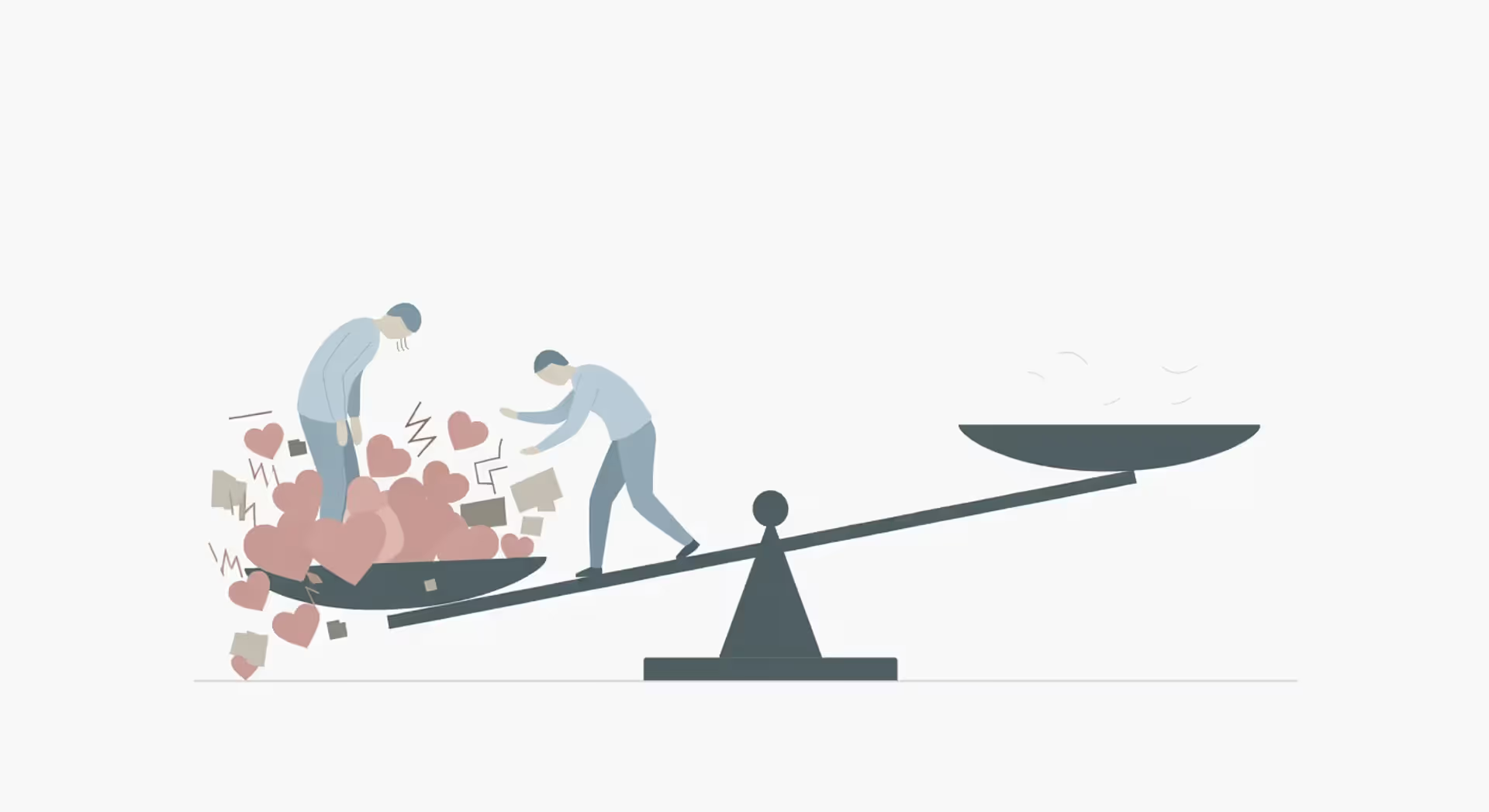
Relationships thrive on balance. When you're constantly the one reaching out, planning dates, or smoothing over conflicts while your partner coasts along, something's off. You might feel like you're managing the relationship solo—and honestly, you probably are. Recognizing the signs of a one-sided relationship isn't about keeping score over every text or dinner plan. It's about spotting patterns that leave you drained, undervalued, and questioning whether your partner's even in this with you.
What Is a One-Sided Relationship?
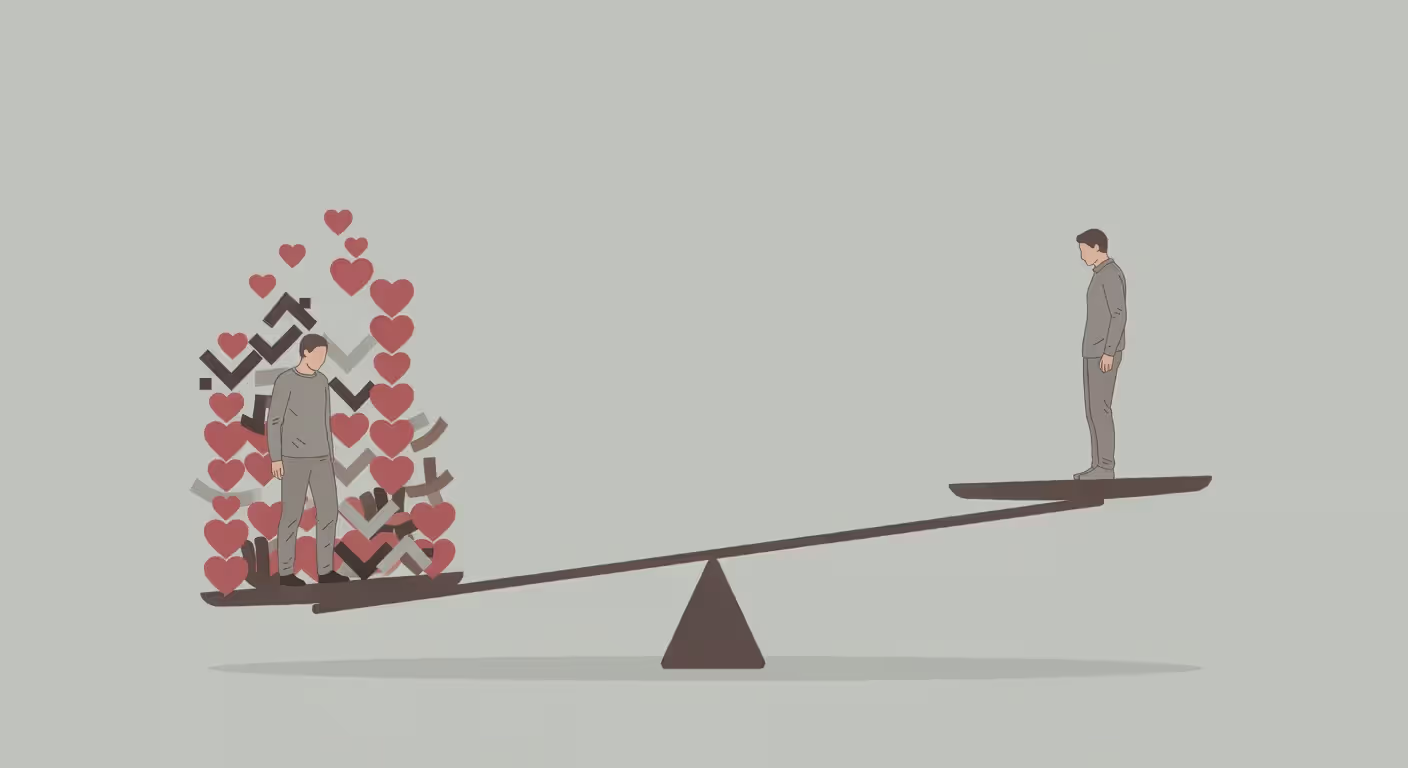
A one-sided relationship happens when one person consistently invests more energy, time, and emotion than the other. The imbalance shows up in how you communicate, make decisions, handle conflict, and plan your future together. One partner carries the emotional weight while the other shows up sporadically—or barely at all.
This isn't the same as a temporary rough patch. Every relationship hits bumps. Your partner might pull back during a stressful work project or family crisis. That's normal. The difference? In a truly one-sided dynamic, the imbalance becomes the default setting. It doesn't correct itself when the crisis passes.
The imbalance can be emotional, practical, or both. Emotional imbalance means you're the only one sharing feelings, offering comfort, or checking in on the relationship's health. Practical imbalance looks like you handling all the planning, compromising, and problem-solving. Often, you're dealing with both at once.
One-sided love takes this further. You're invested in someone who doesn't reciprocate your feelings or commitment level. They might enjoy your company but don't match your emotional depth or long-term vision. You're building a future in your head while they're just passing time.
Common Signs You Are Putting in More Effort Than Your Partner
The pattern reveals itself in small, repeated behaviors. You text first—always. You suggest plans. You remember their preferences, their schedule, their stress points. Meanwhile, you can't remember the last time they asked about your day without prompting.
Author: Julian Evercrest;
Source: nappyheadedlovestories.com
You're the relationship manager. You track anniversaries, plan vacations, and coordinate with friends. If you stopped initiating, the relationship would grind to a halt. That's not partnership. That's you doing all the work while someone else reaps the benefits.
Compromise flows one direction. You adjust your schedule, your preferences, your boundaries. Your partner? They expect you to adapt while they stay rigid. You've canceled plans to accommodate them countless times. They've done it for you... maybe once.
When problems arise, you're the one who brings them up, suggests solutions, and follows through. Your partner either dismisses concerns or agrees to change but never does. The burden of maintaining relationship health sits entirely on your shoulders.
Communication Patterns That Reveal Imbalance
Look at your message history. Who initiates? Who asks questions? Who keeps conversations going? If you're doing 80% of the reaching out, that's a problem.
Their responses feel minimal. You send paragraphs; they send "lol" or "ok." You share your day; they barely acknowledge it before switching topics—usually to themselves. Conversations feel like interviews where you're both the host and the only engaged participant.
You're always the one checking in. "How are you feeling about that thing?" "Did your meeting go okay?" "Want to talk about what happened?" They rarely ask how you're doing. And when they do, it feels perfunctory, like they're going through motions rather than genuinely caring about the answer.
Emotional Labor Disparities
You remember everything. Their coffee order, their mom's birthday, that story about their coworker they mentioned once. They forget your important dates or need multiple reminders for basic things that matter to you.
You manage their emotions but they ignore yours. When they're upset, you drop everything to comfort them. When you're struggling, they seem inconvenienced or offer surface-level support before changing the subject.
The pattern I see most often is one partner becoming their significant other's unpaid therapist while receiving nothing in return. You listen, validate, problem-solve, and encourage. They vent, take your advice, feel better—then disappear until the next crisis.
You anticipate their needs. They don't notice yours until you explicitly state them, and even then, follow-through is questionable. This emotional caretaking exhausts you while they remain blissfully unaware of the imbalance.
How Unequal Effort Affects Your Mental Health
Feeling alone in a relationship creates a unique kind of pain. You're technically with someone, but the loneliness cuts deeper because you expected partnership and got isolation instead. You watch other couples support each other and wonder why yours doesn't work that way.
Resentment builds slowly, then all at once. At first, you make excuses for them. They're busy. They're stressed. They show love differently. But excuses wear thin when the pattern never changes. Small annoyances become major triggers. You're angry at them for not trying—and angry at yourself for accepting so little.
Your self-esteem takes a hit. If your partner truly valued you, wouldn't they put in effort? You start questioning your worth. Maybe you're too demanding. Maybe you're not interesting enough to warrant their attention. These thoughts are lies, but they feel true when you're stuck in this dynamic.

Author: Julian Evercrest;
Source: nappyheadedlovestories.com
Anxiety becomes your constant companion. You overthink every interaction. Did that short text mean they're losing interest? Should you bring up the issue or will it push them away? You're walking on eggshells, trying to maintain a relationship that one person can't sustain alone.
The stress manifests physically. Sleep problems. Appetite changes. Tension headaches. Your body's responding to chronic emotional strain. You're in fight-or-flight mode over a relationship that should feel safe.
Why One Person Ends Up Doing All the Work
Attachment styles play a huge role. If you have an anxious attachment style, you might overfunction to maintain closeness. If your partner has an avoidant attachment style, they pull back when things get too intimate. This creates a pursuer-distancer dynamic where your efforts push them further away, making you try even harder.
Fear of conflict keeps many people in one-sided patterns. You don't speak up because you're scared of their reaction—or scared they'll leave. So you swallow your needs and keep giving, hoping they'll eventually notice and reciprocate. They won't. Not without direct communication.
Your partner might be emotionally unavailable. Past trauma, unresolved issues, or simple disinterest in deep connection means they can't or won't meet you halfway. Some people genuinely lack the capacity for balanced partnership. Others just don't want to develop it.
Different relationship priorities create imbalance too. You might see this relationship as a top priority while they view it as one option among many. You're planning a future; they're keeping things casual. When priorities don't align, effort won't either.
Sometimes people take advantage because they can. If you've shown you'll tolerate minimal effort, why would they change? They're getting their needs met without reciprocating. It's not malicious necessarily—just human nature to follow the path of least resistance.
What to Do in a One-Sided Relationship
First, assess whether this is fixable. Has your partner shown the capacity for change in other areas? Do they acknowledge problems when you raise them? Are they generally considerate in other relationships? If yes, there's hope. If they consistently dismiss your concerns or make promises they don't keep, you're dealing with someone who won't change.
You need to communicate your needs explicitly. Don't hint. Don't expect them to read your mind. Say directly: "I need you to initiate plans sometimes. I need you to ask about my day. I need to feel like you're invested in this relationship." Be specific about behaviors, not feelings.
But here's the thing—one conversation won't fix patterns built over months or years. You're looking for consistent change over time, not a temporary improvement followed by backsliding.
Questions to Ask Yourself Before Taking Action
Am I willing to accept this relationship as it currently is? Not the potential version. Not the person you hope they'll become. The reality right now.
Have I clearly communicated my needs, or am I expecting them to just know? Sometimes we assume our dissatisfaction is obvious when we've never actually spelled it out.
What am I getting from this relationship? If the answer is "not much," why are you staying? Fear of being alone isn't a good enough reason to remain in something that makes you lonely anyway.
Is this a pattern in my relationships, or is this person uniquely unavailable? If you've had multiple one-sided relationships, you might be choosing emotionally unavailable partners or overgiving from the start.
What would I tell a friend in this situation? We're often clearer about others' relationships than our own. Apply that outside perspective to yourself.

Author: Julian Evercrest;
Source: nappyheadedlovestories.com
How to Have the Conversation With Your Partner
Pick a calm moment when you're both relaxed. Don't ambush them after a fight or when they're stressed about work. Frame it as a relationship check-in, not an attack.
Use "I" statements. "I feel like I'm doing most of the planning" lands better than "You never make plans." Describe specific behaviors: "I've initiated our last ten dates" is harder to dismiss than vague feelings.
Avoid the word "always" or "never." It makes people defensive. Stick to patterns: "I've noticed that I usually..." or "It seems like I'm often the one who..."
Listen to their response without interrupting. They might not realize the imbalance exists. They might have a different perspective. Or they might get defensive and blame-shift. Their reaction tells you a lot about whether this is fixable.
Suggest concrete changes. "I'd like you to plan one date per week" is actionable. "I need you to care more" is too vague. Give them a roadmap for improvement.
Set a timeline for reassessment. "Let's try this for a month and check in" creates accountability. If nothing changes, you have your answer.
When to Walk Away From an Imbalanced Partnership
Some red flags indicate the relationship won't change. Your partner dismisses your concerns entirely. They agree to change but never follow through. They turn the conversation around to make you the problem. They say you're "too needy" or "too sensitive" when you ask for basic reciprocity.
If you've had multiple conversations about the same issues with no lasting improvement, believe the pattern. People show you who they are through consistent behavior, not occasional promises.
When your partner doesn't care equally, you'll feel it in your gut. They're comfortable with your unhappiness as long as their needs are met. They make minimal effort to understand your perspective. They prioritize everything else—work, friends, hobbies—while you get leftovers.
One-sided love versus mutual commitment looks different. In one-sided love, you're deeply invested while they're ambivalent. They might like you, but they don't love you the way you love them. Mutual commitment means both people actively choose the relationship and work to maintain it.
Protecting your emotional wellbeing sometimes means leaving. Staying in a one-sided relationship teaches you to accept crumbs. It reinforces that your needs don't matter. It keeps you from finding someone who'll actually meet you halfway.
The right person won't make you beg for basic consideration. They'll show up without constant reminders. They'll care about your happiness because your wellbeing matters to them. Don't settle for less because you're scared of starting over.
Balanced vs. One-Sided Relationship: Key Differences
| Dimension | Balanced Relationship | One-Sided Relationship |
| Initiating Plans | Both partners suggest activities and make arrangements regularly | One person plans everything; the other just shows up (or doesn't) |
| Emotional Support | Flows both directions; each partner comforts and listens to the other | One person provides all support; the other takes without giving back |
| Compromise | Both people adjust preferences and make sacrifices for the relationship | One person constantly accommodates while the other stays rigid |
| Communication Frequency | Both partners reach out; conversations feel natural and mutual | One person does most texting/calling; the other responds minimally |
| Conflict Resolution | Both acknowledge issues and work toward solutions together | One person identifies problems and does all the emotional labor to fix them |
| Future Planning | Both actively discuss and plan for shared goals and milestones | One person envisions the future while the other remains vague or disinterested |
Relationship satisfaction depends heavily on perceived equity. When one partner consistently invests more emotional energy, time, or resources without reciprocation, it creates what we call 'relational debt.' Over time, this debt accumulates and manifests as resentment, decreased relationship satisfaction, and increased anxiety. The partner who overinvests often experiences a decline in self-worth because they internalize the imbalance as evidence that they're not valuable enough to warrant equal effort. Healthy relationships require both people to show up consistently—not perfectly, but genuinely.
— Chen Alexandra
FAQ: One-Sided Relationship Questions Answered
Recognizing the signs of a one-sided relationship is painful but necessary. You deserve a partner who shows up with the same energy you bring. Don't mistake someone's potential for their reality, and don't sacrifice your wellbeing hoping they'll eventually match your effort. The right relationship won't require you to beg for basic reciprocity—it'll feel like partnership, not a solo project with an occasional guest appearance.
Related Stories

Read more

Read more




The content on this website is provided for general informational and educational purposes only. It is intended to explain concepts related to relationships, dating, marriage, emotional intimacy, attachment styles, and breakup recovery.
All information on this website, including articles, guides, and examples, is presented for general educational purposes. Outcomes and relationship experiences may vary depending on individual circumstances.
This website does not provide professional counseling, therapy, or legal advice, and the information presented should not be used as a substitute for consultation with qualified mental health professionals or relationship counselors.
The website and its authors are not responsible for any errors or omissions, or for any outcomes resulting from decisions made based on the information provided on this website.