
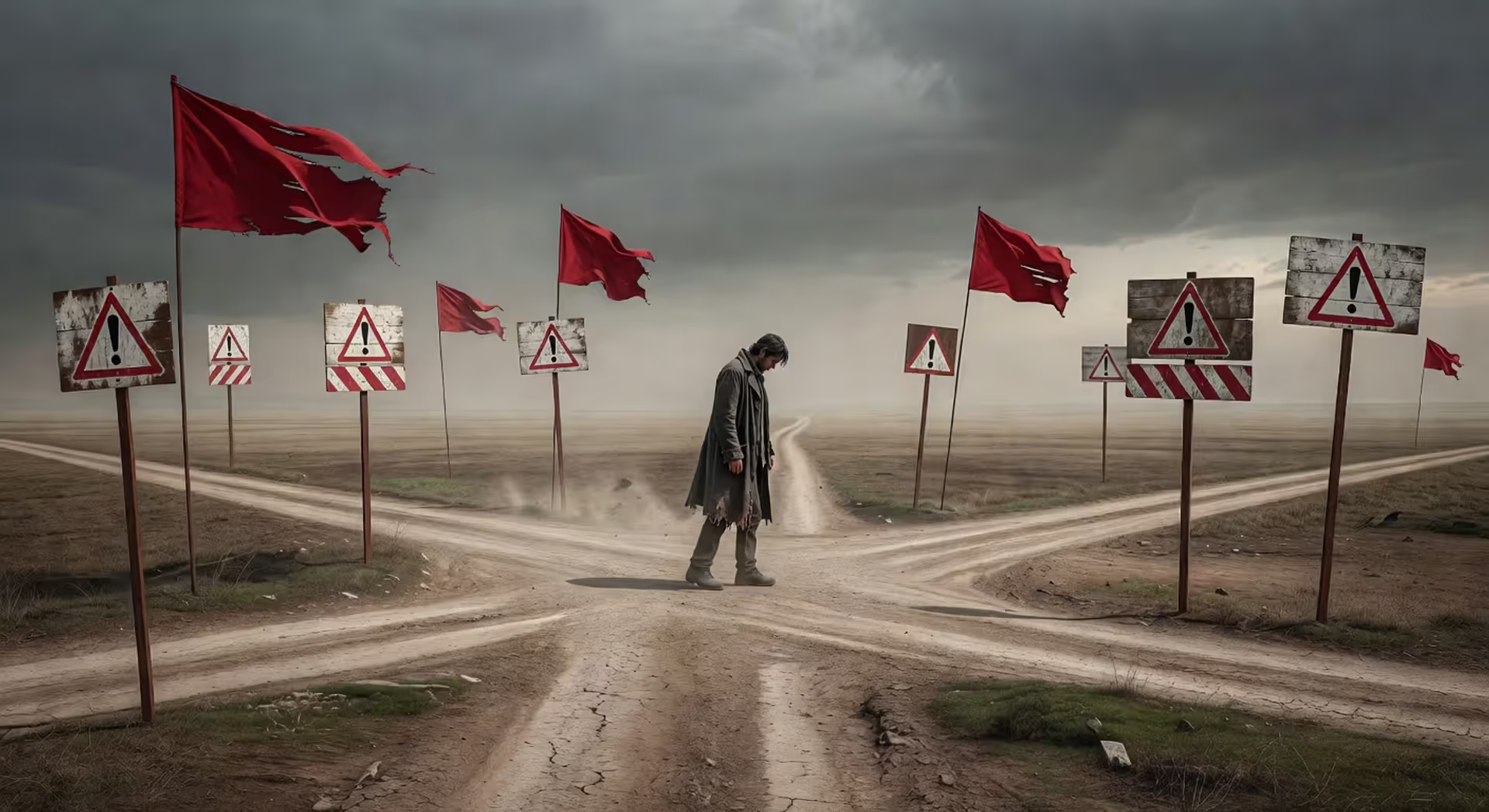
Red Flags in a Relationship You Should Never Ignore
Red Flags in a Relationship

Recognizing harmful patterns early can save you months—or years—of heartache. But here's the problem: when you're falling for someone, your brain floods with dopamine and oxytocin, chemicals that literally cloud your judgment. That warm, fuzzy feeling? It can blind you to behaviors that would alarm any outside observer. Understanding red flags in a relationship isn't about being cynical or paranoid. It's about protecting your well-being and making informed choices about who deserves a place in your life.
What Are Relationship Red Flags and Why They Matter
Red flags are warning signs that indicate potentially harmful, disrespectful, or incompatible behaviors in a romantic partner. Think of them as your internal alarm system—signals that something isn't right, even if you can't immediately articulate why.
These warning signs in a relationship matter because they often predict future patterns. A partner who dismisses your feelings during month two will likely do the same in year two, only with higher stakes. Research from relationship psychology shows that behaviors present in the early stages typically intensify over time rather than fade away.
Here's what red flags aren't: personal preferences or minor incompatibilities. If someone chews loudly or prefers different music, that's not a red flag. That's just human variation. Signs of a bad relationship involve respect, safety, and how someone treats you when things get difficult.
The difference is simple. Preferences are negotiable. Red flags involve non-negotiable aspects of healthy relationships: honesty, respect, emotional safety, and autonomy.
Why do people ignore them? Several reasons. You might rationalize the behavior ("They're just stressed"). You might blame yourself ("Maybe I'm too sensitive"). Or you might hope they'll change once they "really get to know you." They won't.
Early Warning Signs When You Start Dating Someone
The first few months reveal more than you think. Pay attention.
Love bombing tops the list of early warning signs in dating. Your new partner showers you with excessive attention, gifts, and declarations of love within days or weeks. It feels intoxicating. But it's often a manipulation tactic that creates intense attachment quickly, making you less likely to notice other problems later.
Inconsistent communication patterns signal trouble too. They text constantly for three days, then vanish for two without explanation. This hot-and-cold behavior keeps you anxious and focused on them, which is exactly the point.
Watch how they treat service workers, ex-partners, and family members. Someone who's rude to waitstaff but charming to you is showing you their character. You're just seeing the edited version. How they talk about exes matters too—if every former partner was "crazy" or "toxic," consider that you might be hearing a very one-sided story.

Author: Julian Evercrest;
Source: nappyheadedlovestories.com
Rushing physical or emotional intimacy is another red flag to watch for in a partner. They push for commitment, sex, or moving in together before you've had time to truly know each other. Real intimacy builds gradually. Forced intimacy serves someone else's agenda.
Avoiding questions about their past—jobs, relationships, living situations—suggests they're hiding something. Vague answers or deflection when you ask reasonable questions isn't mysterious or intriguing. It's suspicious.
One pattern I see most often is partners who make you feel guilty for having reasonable boundaries from day one. If saying "I need to go home now" or "I'm not ready for that yet" triggers anger or sulking, you're seeing a preview of future conflicts.
Controlling and Manipulative Behaviors to Watch For
Control starts small. Then it grows.
Isolation happens gradually. First, your partner suggests you spend less time with a friend they "don't trust." Then family gatherings become "stressful" for them, so you skip a few. Eventually, you realize you've lost your support network—and that was the goal all along. Controlling behavior in relationships often targets your connections to others because those people might notice the problems and encourage you to leave.
Monitoring your phone, demanding passwords, tracking your location, or interrogating you about who you talked to—these aren't signs of love. They're signs of possession. Healthy partners trust you. Controlling partners surveil you.
Financial control appears in various forms: preventing you from working, taking your paycheck, running up debt in your name, or making you ask permission for every purchase. Money equals freedom, and controlling partners know it.
Dictating your appearance, schedule, or activities strips away your autonomy. If your partner tells you what to wear, criticizes your haircut, or forbids you from pursuing hobbies they don't approve of, they're treating you like property.
Jealousy disguised as care is particularly insidious. "I just worry about you" becomes the excuse for interrogations. "I love you so much I can't stand other people looking at you" sounds romantic until you're not allowed to leave the house without permission.
How Gaslighting Shows Up in Relationships
Gaslighting makes you doubt your own reality. It's one of the most damaging emotional abuse red flags because it erodes your confidence in your own perceptions.
Common gaslighting signs include:
- Denying things they definitely said or did ("I never said that—you're remembering wrong")
- Trivializing your feelings ("You're overreacting" or "You're too sensitive")
- Countering your memory of events with false details
- Withholding information or conversation as punishment
- Telling others you're "confused" or "unstable"
You might find yourself constantly apologizing even when you're not sure what you did wrong. You second-guess every decision. You feel like you're going crazy. That's the intended effect.
Signs Your Partner Is Emotionally Manipulating You
Emotional manipulation is control through psychological tactics rather than physical force.
Watch for these patterns:
Guilt-tripping: "After everything I've done for you, you won't do this one thing for me?"
Playing victim: No matter the situation, they're always the wronged party, never the person who caused harm.
Moving goalposts: You meet their demands, but the target shifts. Nothing you do is ever enough.
Weaponizing vulnerability: They share deep trauma or struggles, then use your compassion to excuse bad behavior or avoid accountability.
Silent treatment: Withdrawing affection, conversation, or presence to punish you for perceived slights.
These tactics work because they exploit your empathy and desire to be a good partner. But meeting someone halfway only works when both people are actually moving toward the middle.
Emotional and Verbal Abuse Red Flags
Words wound. Sometimes deeper than fists.
Constant criticism wears you down over time. Your partner finds fault with everything: how you cook, clean, dress, speak, think. The message is clear—you're never good enough. This is one of the most damaging relationship warning signs not to ignore because it systematically destroys your self-esteem.
Name-calling and insults have no place in healthy relationships. "Stupid," "worthless," "fat," "crazy"—these aren't things you say to someone you love, even in anger. And if your partner follows the insult with "I was just joking" or "You're too sensitive," that's gaslighting piled on top of abuse.
Blaming you for their emotions is a manipulation tactic. "You made me angry" or "Look what you made me do" transfers responsibility for their behavior onto you. Adults are responsible for managing their own emotions. Full stop.

Author: Julian Evercrest;
Source: nappyheadedlovestories.com
Withholding affection as punishment—giving you the cold shoulder, refusing physical touch, or withdrawing emotional support when you've "misbehaved"—treats love like a reward you must earn through compliance. Love shouldn't be conditional on obedience.
Threatening harm or abandonment keeps you walking on eggshells. "If you leave, I'll kill myself" or "You'll never find anyone else" or "I'll make sure you never see the kids again"—these are harmful partner behaviors designed to trap you through fear.
Here's a comparison that clarifies the difference between normal conflict and emotional abuse: In healthy relationships, partners disagree about the issue. In abusive relationships, one partner attacks the other person's character, intelligence, or worth.
Behavioral Patterns That Signal a Toxic Partner
Patterns matter more than isolated incidents.
Refusal to apologize or take responsibility shows up constantly in toxic warning signs in love. Your partner never admits fault. Every problem is someone else's doing—usually yours. They might offer non-apologies like "I'm sorry you feel that way" (which isn't an apology at all) or "I'm sorry, but you..." (which is blame dressed up as remorse).
Playing the victim constantly means they've always got a story about how someone wronged them. Their boss, their family, their exes, you—everyone is out to get them. This pattern serves two purposes: it deflects accountability and generates sympathy that keeps you focused on their needs instead of your own.
Substance abuse issues don't automatically make someone a bad partner, but refusing to acknowledge or address them does. If drinking or drug use causes problems in your relationship and they won't seek help, that's a sign of a bad relationship that will likely worsen.
Anger management problems go beyond occasionally losing their temper. We're talking about explosive rage over minor issues, punching walls, breaking objects, or screaming until you're terrified. Even if the violence isn't directed at you yet, it demonstrates a lack of emotional regulation that puts you at risk.
Disrespecting boundaries repeatedly tells you everything you need to know. You've said no. You've explained your limits. They ignore them anyway. Whether it's sexual boundaries, emotional boundaries, or practical ones (like showing up unannounced), chronic boundary violation shows they don't respect your autonomy.

Author: Julian Evercrest;
Source: nappyheadedlovestories.com
When to Walk Away From an Unhealthy Relationship
Some red flags are dealbreakers. Others might be workable with genuine effort from both partners. The question is: how do you tell the difference?
Ask yourself these questions:
- Has your partner acknowledged the problem?
- Have they taken concrete steps to change (therapy, anger management, accountability)?
- Has the behavior improved, or do you just keep having the same fight?
- Do you feel physically and emotionally safe?
- Are you staying out of love or fear?
If your partner shows no awareness that their behavior is problematic, change won't happen. People don't fix what they don't think is broken.
Trust your instincts. That uncomfortable feeling in your gut exists for a reason. Your body often recognizes danger before your mind catches up. If something feels wrong, it probably is.
Safety planning matters if you're leaving a controlling or abusive partner. Tell trusted friends or family about your plan. Set aside money if possible. Document any threats or incidents. Contact domestic violence resources—they can help even if you haven't experienced physical violence. The National Domestic Violence Hotline (1-800-799-7233) offers confidential support 24/7.
Professional help from a therapist who specializes in relationships can provide clarity when you're too close to the situation to see it objectively. They can help you distinguish between fixable relationship problems and patterns that signal it's time to go.
Here's what many people don't realize: leaving is often the most dangerous time in an abusive relationship. Take precautions. Don't announce your plans in advance. Leave when they're not home if possible. Block their number and social media. Change your routines.
You don't owe anyone a relationship. Not even if you've been together for years. Not even if they promise to change. Not even if leaving feels impossibly hard.
Healthy Relationship Behaviors vs. Red Flag Behaviors
| Situation | Healthy Behavior | Red Flag Behavior |
| During disagreements | Listens to your perspective, takes breaks if needed, works toward compromise | Yells, name-calls, refuses to discuss, storms out, gives silent treatment |
| Your time with friends | Encourages your friendships, trusts you, occasionally joins if invited | Criticizes your friends, accuses you of cheating, demands constant updates, isolates you |
| When you set boundaries | Respects them even if disappointed, asks clarifying questions | Ignores them, guilt-trips you, punishes you, calls you selfish |
| Communication style | Honest and direct, admits mistakes, discusses feelings calmly | Lies, withholds information, uses passive-aggression, blames you for everything |
| Your achievements | Celebrates your success, supports your goals, feels proud of you | Minimizes accomplishments, competes with you, seems threatened, changes the subject |
| Financial decisions | Discusses major purchases, respects your financial autonomy, transparent about money | Controls all money, hides spending, prevents you from working, runs up debt in your name |
| Physical intimacy | Respects your pace, accepts "no" without pressure, prioritizes mutual enjoyment | Pressures or coerces, sulks when refused, ignores your discomfort, violates consent |
| Your appearance | Compliments you, accepts your style choices, attracted to the real you | Dictates clothing/hair/weight, criticizes your looks, compares you to others |
| Conflict resolution | Apologizes sincerely, changes problematic behavior, forgives and moves forward | Never apologizes, repeats same harmful patterns, holds grudges, keeps score |
| Your emotional needs | Provides support, validates feelings, makes time to connect | Dismisses emotions, mocks vulnerability, withholds affection as punishment |
The most dangerous red flag is when your partner's behavior makes you feel like you're constantly walking on eggshells. That persistent anxiety—the sense that you must monitor everything you say or do to avoid their anger or disappointment—indicates the relationship has become psychologically unsafe. Trust that feeling. Your nervous system is telling you something your heart might not want to hear yet.
— Chen Dr. Lisa
FAQ: Relationship Red Flags Questions Answered
Your well-being matters more than salvaging a relationship that harms you. Recognizing these warning signs isn't about being pessimistic—it's about being informed and protecting yourself. Healthy love feels safe, respectful, and supportive, not anxious, controlled, or diminished. You deserve a partner who enhances your life rather than one who makes you question your worth.
Related Stories

Read more

Read more




The content on this website is provided for general informational and educational purposes only. It is intended to explain concepts related to relationships, dating, marriage, emotional intimacy, attachment styles, and breakup recovery.
All information on this website, including articles, guides, and examples, is presented for general educational purposes. Outcomes and relationship experiences may vary depending on individual circumstances.
This website does not provide professional counseling, therapy, or legal advice, and the information presented should not be used as a substitute for consultation with qualified mental health professionals or relationship counselors.
The website and its authors are not responsible for any errors or omissions, or for any outcomes resulting from decisions made based on the information provided on this website.