

Signs of True Love in a Relationship
Signs of True Love in a Relationship

Wondering if what you're feeling is the real deal? You're not alone. Millions of people question whether they're experiencing genuine love or just a temporary rush of emotions. The difference matters because true love shapes your life choices, your happiness, and your future. Let's break down the signs that separate authentic love from everything else masquerading as it.
How to Know If You Are in Love
Recognizing when love is real isn't always obvious. Your heart races, your thoughts drift to one person constantlyk, but does that mean you're in love with someone?
Real love shows up in how you think about the future. You naturally include this person in your plans—not out of obligation, but because a future without them feels incomplete. When you're deciding on a job offer or planning next year's goals, they're already part of the equation.
You'll notice a shift in your priorities. Their happiness starts mattering as much as your own. This isn't about losing yourself—it's about expanding what "yourself" means. When they succeed, you feel genuine joy. When they hurt, you hurt too.
Another telltale sign: you want to be better. Not to impress them or meet some impossible standard, but because loving them makes you want to grow. You might tackle that bad habit you've ignored for years or finally pursue a goal you'd shelved.
The pattern I see most often is that people in real love feel safe being vulnerable. You share the embarrassing stories, the fears, the parts of yourself you usually hide. And here's the thing—they don't run. They stay, and they share their own messy truths back.
Am I in love with someone if I'm not constantly excited? Absolutely. Real love settles into something steadier than the initial fireworks. You feel calm around them. Comfortable. Like you can finally breathe.
One mistake people make: waiting for a lightning-bolt moment of certainty. Love often creeps up quietly. You realize one day that you can't remember when you started considering them your person—it just happened.

Author: Naomi Bellamy;
Source: nappyheadedlovestories.com
True Love vs Infatuation: Key Differences
Here's where things get tricky. Infatuation feels intense, consuming, almost like love. But it's not.
| Characteristic | True Love | Infatuation |
| Timeline | Develops slowly over months | Hits hard within days or weeks |
| Emotional stability | Steady, calming, secure | Intense highs and anxious lows |
| Focus | Whole person, flaws included | Idealized version, selective attention |
| Conflict response | Work through disagreements | Devastation or quick dismissal |
| Long-term vision | Clear future together | Vague or fantasy-based |
| Physical attraction role | Important but not central | Dominates the connection |
| Personal growth | Encourages individual development | Can stunt growth through obsession |
| Commitment level | Willing to sacrifice and compromise | Conditional on feelings staying intense |
Infatuation thrives on uncertainty. The not-knowing keeps you hooked. Real love vs strong feelings? Real love grows more certain with time, not less.
With infatuation, you're often in love with the idea of them. You fill in gaps with imagination. You overlook major incompatibilities because the chemistry feels so strong. But chemistry isn't compatibility.
True love sees the full picture. You know their annoying habits, their flaws, their worst moments—and you choose them anyway. Not despite these things, but including them.
The timeline tells you a lot. Infatuation peaks early and fades fast, usually within 6-18 months. True love builds gradually and deepens over years. If you're six months in and the intensity is already dropping off sharply, that's your answer.
What Does Real Love Feel Like Emotionally and Physically
Real love feels like coming home. That's the phrase people use most often, and it's accurate.
Emotionally, you feel accepted. Not just tolerated—genuinely welcomed as you are. There's a deep sense of being known and still wanted. The anxiety that comes with infatuation? It quiets down. You're not constantly wondering where you stand.
You'll experience what psychologists call "secure attachment." You can pursue your own interests, spend time apart, and trust the connection remains solid. Distance doesn't threaten it.
Real love is not just a feeling—it's a series of actions and choices that create emotional safety. When you can reach for your partner in moments of fear or pain and know they'll respond, that's when love becomes a secure bond.
— Johnson Sue
Physically, real love triggers different responses than infatuation's adrenaline rush. You might still get butterflies sometimes, but more often you feel relaxed in their presence. Your body literally calms down—lower cortisol, steadier heart rate.
Deep signs of genuine love include physical comfort. You sleep better next to them. Their touch soothes rather than just excites. You can sit in silence without it feeling awkward.
But here's what surprises people: real love can also feel ordinary. Not boring—ordinary. You're not on an emotional rollercoaster. Some days are just... nice. And that's okay. That's actually healthy.
The physical attraction in real love is layered. Yes, you're attracted to them, but it's tied to who they are, not just how they look. You find their specific laugh attractive. The way they concentrate. Their particular way of moving through the world.
Stages of Falling in Love and When It Becomes Real
Love doesn't hit all at once for most people. It unfolds in stages, each building on the last.
Early Stage: Attraction and Chemistry
This is the spark phase. You notice them. Something clicks—maybe physical attraction, maybe an instant rapport, maybe both.
Signs you are falling in love at this stage: you want to know everything about them. You're curious in a way that goes beyond surface details. What shaped them? What do they care about? What makes them laugh?
The early stage runs on dopamine and novelty. Everything feels exciting because it is new. You're discovering someone. But this isn't love yet—it's potential.
This phase typically lasts a few weeks to a few months. You're on your best behavior. They're on theirs. You haven't hit real conflict yet.
Middle Stage: Building Trust and Vulnerability
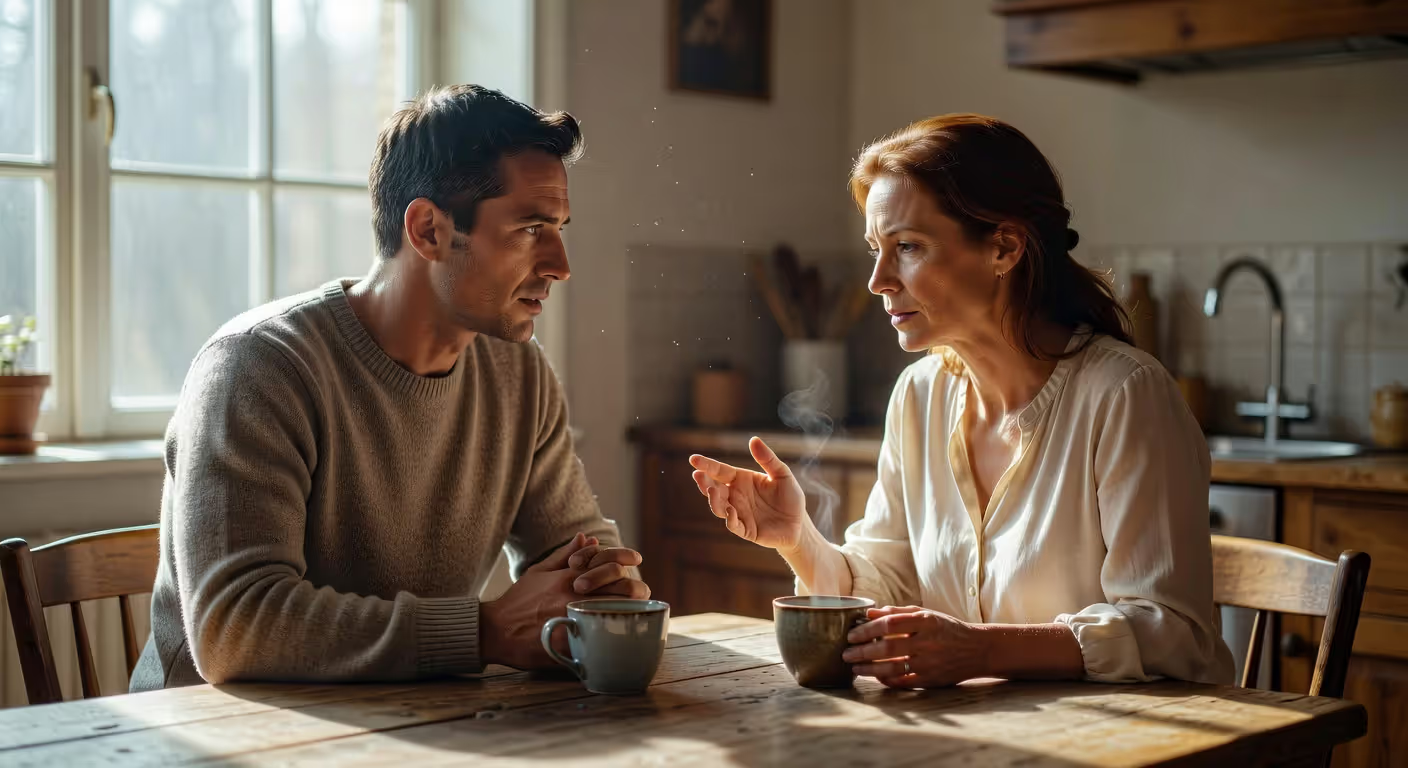
Now things get real. The shine wears off a bit. You see their flaws. They see yours.
This is where many relationships fail—and where real love begins for those that don't. You have your first real disagreement. You see them stressed, tired, or upset. They're not always fun anymore.
Author: Naomi Bellamy;
Source: nappyheadedlovestories.com
Building trust means showing up consistently. They say they'll call—they call. You promise to work on something—you actually do. Small promises kept matter more than grand gestures here.
Vulnerability deepens during this stage. You share harder truths. You let them see you cry, see you fail, see you at your worst. And critically—they don't weaponize it later.
This middle stage can last six months to two years. It's where you learn if you're compatible beyond attraction. Can you solve problems together? Do your values align? Can you both compromise?
Deep Stage: Commitment and Partnership
You've built something solid. You're not just dating—you're partners.
Deep love feels less like constant excitement and more like unshakeable certainty. You've weathered enough together to trust the foundation. You've seen each other through hard times and celebrated good ones.
The signs shift here. You make major decisions together. You've integrated your lives—friends know you as a unit, families are involved, you've made practical commitments.
This stage is where "in love" becomes "loving." The verb matters. It's active, ongoing, chosen. You're not passively experiencing feelings—you're actively building a life.
One thing people don't expect: deep love can feel less dramatic than early love. That doesn't mean it's less. It means it's different. Stable. Reliable. Real.
Love vs Attachment: How to Tell the Difference
This distinction trips people up constantly. Attachment can feel like love, but it's not the same thing.
Attachment asks: "What do I get from this person?" Love asks: "How can we both thrive together?"
Is this love or just attachment? Check your motivations. Attachment clings because you fear being alone, you're comfortable, or you've invested too much time to quit. Love stays because the relationship genuinely enriches both lives.
Attachment feels like need. You can't function well without them. The thought of them leaving creates panic. Love feels like choice. You want them in your life, but you'd survive without them—you just don't want to find out.
Here's a key difference: attachment often resists change. You want things to stay exactly as they are because change threatens your security. Real love adapts. You grow together, and the relationship evolves without falling apart.

Author: Naomi Bellamy;
Source: nappyheadedlovestories.com
Attachment styles play a role here. Anxious attachment can make you cling to relationships that aren't healthy. Avoidant attachment can make you mistake emotional distance for independence. Secure attachment—the goal—allows for both closeness and autonomy.
A common mistake: confusing familiarity with love. You've been together for years, you know each other's routines, breaking up would be massively inconvenient. But do you actually like who they are today? Do they make your life better, or just familiar?
Real love includes healthy attachment, but it's not only attachment. You're bonded, yes, but not trapped. The relationship feels like freedom, not a cage.
Common Mistakes When Recognizing Love
Let's talk about what gets people confused.
Mistaking comfort for love. You've been together a while. It's easy. You have routines. But easy doesn't mean right. Love should be comfortable, yes—but it should also be fulfilling. If you're staying because leaving would be hard, that's not love. That's inertia.
Confusing strong feelings for compatibility. The sex is amazing. You have intense conversations. The highs are incredibly high. But do you share values? Life goals? Can you handle boring Tuesday evenings together? Strong feelings matter, but they're not enough alone.
Ignoring red flags because you "love" them. Real love doesn't require you to accept mistreatment, disrespect, or incompatibility. If you're constantly making excuses for their behavior or convincing yourself things will change, pause. Love shouldn't hurt.
Thinking love means constant happiness. It doesn't. Real relationships include frustration, disappointment, and boredom sometimes. That's normal. The question isn't whether you're always happy—it's whether you're happy more often than not, and whether the relationship helps you grow.
Waiting for certainty before committing. Some people wait for absolute proof they're in love before they'll fully invest. But love often requires a leap. You won't have perfect certainty. You'll have enough evidence to make an informed bet—then you choose.
Believing love should feel effortless. Early love might feel easy. Long-term love requires effort. You work on communication. You choose each other during hard times. You maintain intimacy intentionally. That effort doesn't mean it's not real love—it means it's mature love.
One more: thinking your partner should "complete" you. They shouldn't. You should already be whole. They should complement you, challenge you, and support you—but not complete you. That's too much pressure for any human.

Author: Naomi Bellamy;
Source: nappyheadedlovestories.com
FAQ: Recognizing True Love Questions Answered
Recognizing true love isn't about finding perfection or experiencing constant euphoria. It's about identifying a connection that's steady, growth-oriented, and mutually supportive. You'll know it's real when the relationship makes you feel more like yourself, not less. When you can weather hard times together and come out stronger. When choosing them, day after day, feels less like effort and more like the most natural thing in the world.
Related Stories

Read more
Read more




The content on this website is provided for general informational and educational purposes only. It is intended to explain concepts related to relationships, dating, marriage, emotional intimacy, attachment styles, and breakup recovery.
All information on this website, including articles, guides, and examples, is presented for general educational purposes. Outcomes and relationship experiences may vary depending on individual circumstances.
This website does not provide professional counseling, therapy, or legal advice, and the information presented should not be used as a substitute for consultation with qualified mental health professionals or relationship counselors.
The website and its authors are not responsible for any errors or omissions, or for any outcomes resulting from decisions made based on the information provided on this website.