

How to Know When to Leave a Relationship
How to Know When to Leave a Relationship?

Knowing when to leave a relationship is one of the hardest decisions you'll ever face. The signs aren't always dramatic. Sometimes it's just a quiet feeling that won't go away, a gradual realization that what you have isn't what you need. You might still care deeply about your partner while recognizing that staying together is causing more harm than good. The truth? There's rarely a perfect moment or an undeniable signal. But there are patterns, red flags, and gut feelings that deserve your attention. Understanding these indicators can help you make a decision that honors both your well-being and the reality of your situation.
Signs Your Relationship Cannot Be Repaired
Some relationships reach a point of no return. Not because anyone's a villain, but because the foundation has cracked beyond repair.
Emotional disconnect that persists. When you share news—good or bad—and your first instinct isn't to tell your partner, that's telling. If you've stopped seeking their comfort, stopped wanting their opinion, or feel more like roommates than partners, the emotional bond may have dissolved. This isn't about occasional distance. It's about a consistent pattern where you feel lonelier with them than without them.
Repeated patterns despite promises. They say they'll change. Maybe they even try for a week or two. Then the same behaviors resurface: the dismissiveness, the broken promises, the emotional unavailability. One of the clearest signs you should walk away from a relationship is when someone shows you through repeated actions that their words mean nothing. Change requires sustained effort, not temporary performance.
Loss of mutual respect. Contempt is the relationship killer. When you roll your eyes at their opinions, mock their interests, or feel embarrassed by who they are, respect has left the building. Same goes if they treat you this way. Love can't survive in an environment of chronic disrespect. You might still have affection, but without respect, you're building on sand.

Author: Julian Evercrest;
Source: nappyheadedlovestories.com
Incompatible life goals that can't be reconciled. She wants children; he's certain he doesn't. One person needs to live near aging parents; the other has a career opportunity across the country. These aren't small differences. When core life visions don't align and neither person can compromise without deep resentment, the relationship has an expiration date. Staying means someone sacrifices their fundamental needs, which breeds bitterness over time.
Safety concerns of any kind. Physical violence, emotional abuse, financial control, threats, or intimidation—these are non-negotiable deal-breakers. If you feel afraid, constantly on edge, or like you're walking on eggshells, the relationship cannot be fixed through conversation or therapy. Your safety always comes first. Always.
When Love Alone Isn't Enough to Stay Together
Here's something most people don't want to hear: loving someone doesn't mean you should stay with them.
Love is necessary but not sufficient. You can genuinely love someone and still be completely wrong for each other. The pattern I see most often is people staying in relationships that make them miserable because they confuse love with compatibility. These aren't the same thing.
Compatibility creates daily life. Love is the feeling; compatibility is the structure. Do your communication styles work together? Do you handle conflict in ways that resolve rather than escalate? Can you navigate stress, money, and mundane decisions without constant friction? If your daily interactions are exhausting, love becomes the thing you remember having rather than the thing you currently feel.
Unmet core needs that don't improve. Everyone has non-negotiable emotional needs: feeling valued, having physical affection, experiencing quality time, receiving support during hard moments. When your core needs go unmet month after month despite clear communication, when love is not enough to stay. Your partner might be a good person who loves you sincerely but can't give you what you fundamentally require.
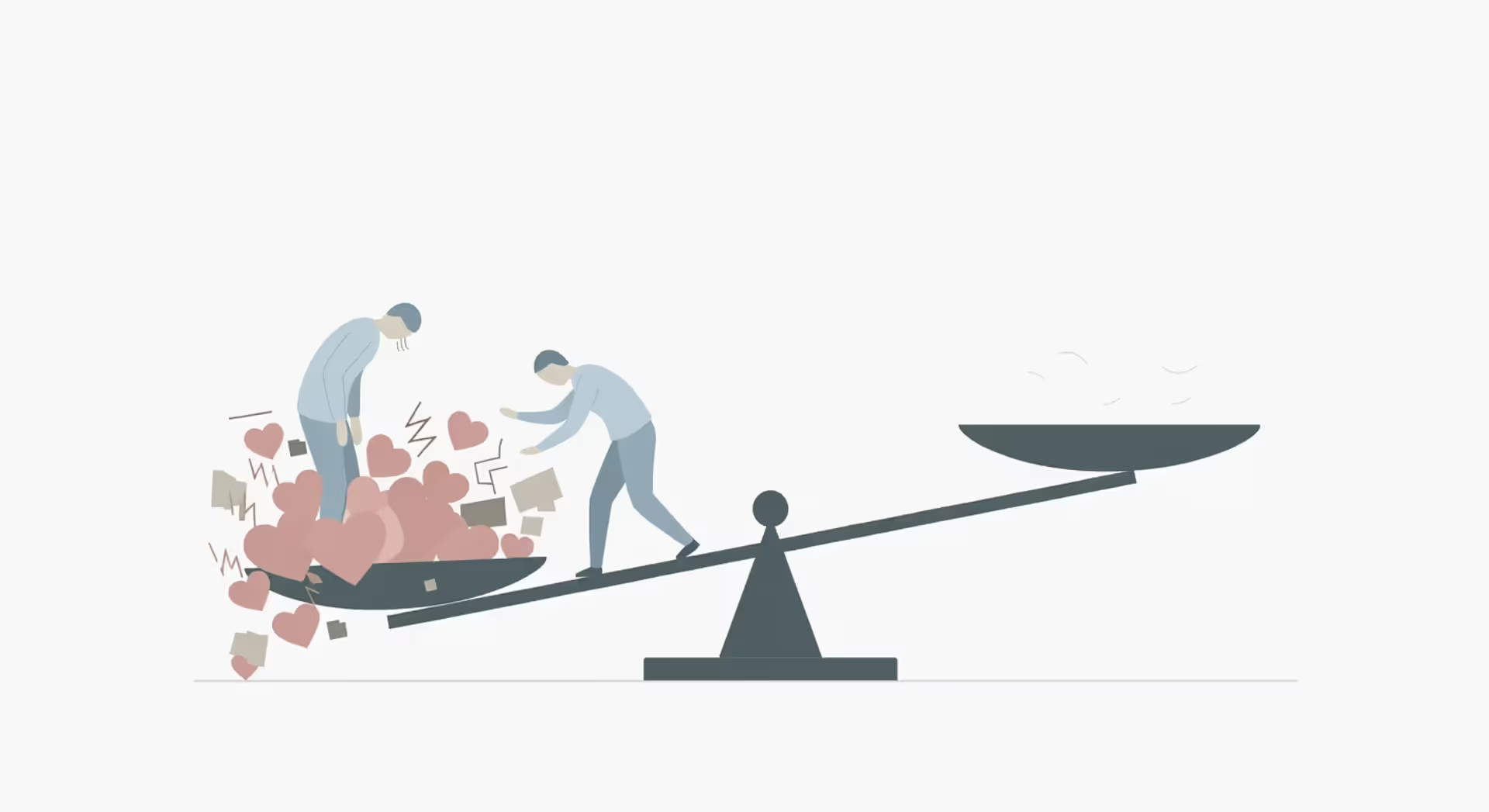
One-sided effort drains everything. You're the one suggesting date nights, initiating difficult conversations, reading relationship books, proposing therapy. They're passively along for the ride, doing the minimum to keep you from leaving. This imbalance is exhausting. A relationship where one person does 80% of the emotional labor isn't sustainable. Eventually, you'll have nothing left to give.
The hard truth? Sometimes people love each other but bring out each other's worst qualities. Sometimes timing is wrong. Sometimes two good people create a toxic combination. Recognizing this doesn't diminish what you shared. It just acknowledges reality.
Trusting Your Gut Feeling About the Relationship
Your intuition knows before your conscious mind catches up.
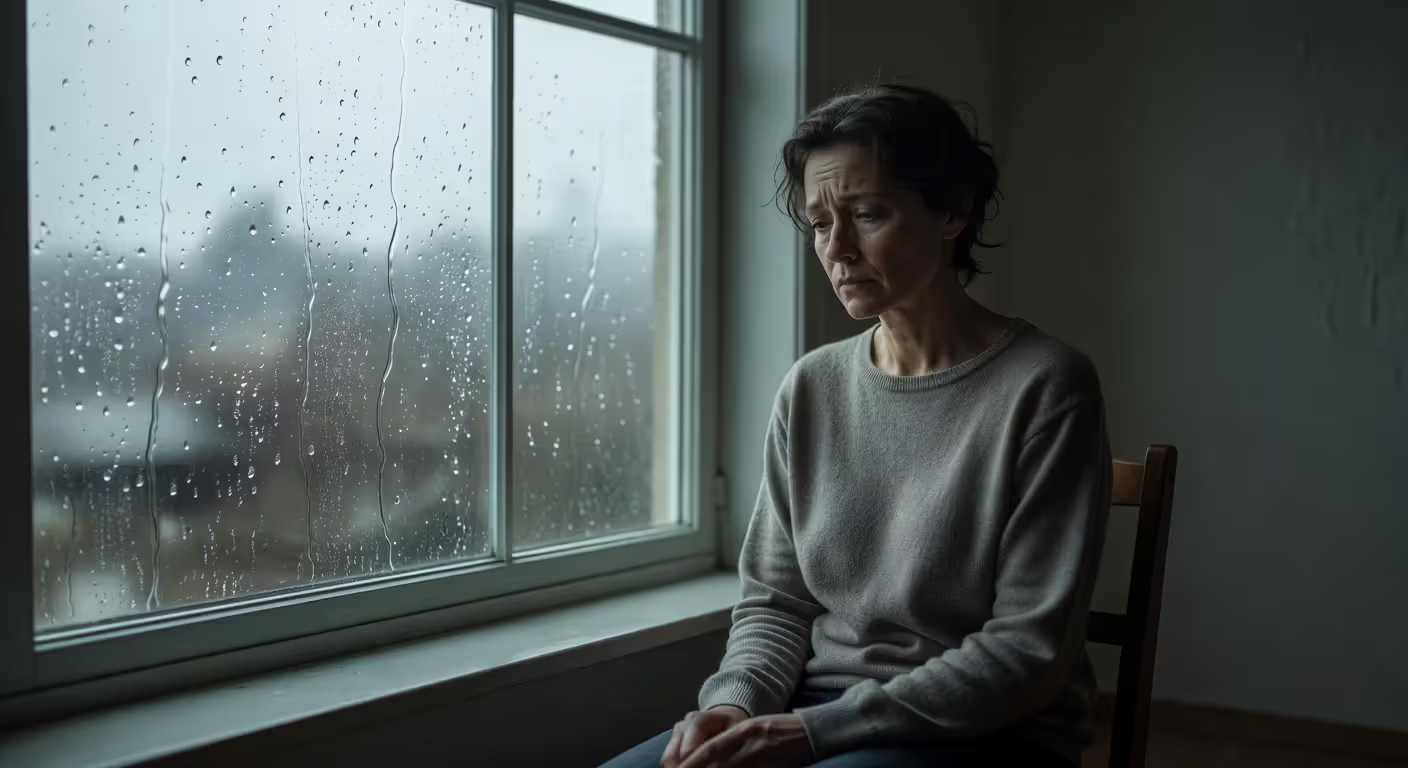
That persistent feeling that something's off—the one you keep trying to rationalize away—deserves your attention. When you have a gut feeling that a relationship is over, your subconscious has likely been collecting evidence for months. It notices the pattern of disappointments, the accumulation of small betrayals, the way you feel smaller rather than bigger when you're together.
Intuition speaks through your body. Do you feel tension in your chest when they text? Does your stomach drop when you hear their key in the door? Do you feel relief when plans get canceled? Physical responses are data. Your nervous system is telling you something your mind hasn't fully processed yet.
Persistent unhappiness that has no clear cause. You can't point to one big thing that's wrong, but you're not happy. You feel stuck, drained, or vaguely depressed in ways that lift when you're apart. This low-grade misery is easy to dismiss because there's no dramatic incident to justify leaving. But chronic unhappiness is reason enough. You don't need to wait for a crisis to give yourself permission to want more.
Author: Julian Evercrest;
Source: nappyheadedlovestories.com
The fantasy of being single keeps recurring. If you regularly imagine what life would be like without them—and that imagined life feels like freedom rather than loss—pay attention. This isn't about occasional frustration. It's about a persistent pull toward a different life, one where you're not constantly compromising who you are.
How to know when a relationship is over often comes down to this: when staying requires you to ignore your own inner voice, you've already left emotionally. The physical departure is just catching up to what you already know.
Should You Stay or Leave? How to Decide
This isn't a decision to rush, but it's also not one to avoid indefinitely.
A framework for clarity. Set a specific timeframe—say, three months. During this period, be intentional. Address issues directly. Suggest therapy if you haven't tried it. Observe whether things improve with effort or whether you're just delaying the inevitable. At the end of that period, assess honestly: are you moving toward something better or just treading water?
The pros/cons list (with a twist). Yes, make the list. But here's the important part: if your "reasons to stay" are mostly about logistics, finances, or avoiding discomfort (fear of being alone, not wanting to hurt them, already signed a lease), those aren't real reasons. They're obstacles. Real reasons to stay involve genuine connection, mutual growth, and a shared vision that excites both of you.
Trial separation as a diagnostic tool. Sometimes you need physical distance to gain emotional clarity. A structured separation—with clear boundaries and a defined timeframe—can show you whether absence makes the heart grow fonder or just makes you realize how much better you feel on your own. This isn't a break to date other people; it's a pause to evaluate without the daily friction.
Questions to Ask Yourself Before Breaking Up
Get brutally honest with yourself:
- Do I feel like myself in this relationship, or am I constantly performing a version of me that's more acceptable?
- If my best friend described my relationship to me, what advice would I give them?
- Am I staying because of who they are now or who I hope they'll become?
- Does this relationship add to my life or primarily create problems to solve?
- When I imagine my life in five years, is this person genuinely in that picture or just theoretically there because they're here now?
Should I break up with my partner? If answering these questions feels like relief rather than sadness, you probably already know.
When Couples Therapy Can Help vs. When It Won't
Therapy works when both people are committed to change and the relationship has a foundation worth saving. It's effective for communication breakdowns, navigating life transitions, healing from betrayal if both parties are willing, and breaking destructive patterns that both people want to fix.
Therapy can't help when one person has already emotionally left the relationship, when there's active abuse or safety concerns, when fundamental values or life goals are incompatible, or when one person is only going to appease the other without genuine investment in the process.
A good therapist won't push you to stay together. They'll help you see the relationship clearly and make an informed decision. If your therapist suggests that maybe this relationship has run its course, take that seriously.
How to End a Relationship You Still Have Feelings For
This is perhaps the most painful scenario: knowing you need to leave someone you still love.
Emotional preparation comes first. Before the conversation, get clear on your reasons. Write them down if needed. Anticipate that your partner will be hurt, confused, or angry. Prepare for them to promise change or beg for another chance. Decide in advance whether you're open to that conversation or whether your decision is final. Wavering in the moment makes everything harder.
The conversation itself. Choose a private setting where you won't be interrupted. Be direct and honest without being cruel. "I care about you, but I'm not happy in this relationship, and I don't see that changing" is far better than vague statements that leave room for negotiation. Avoid the temptation to list every grievance—this isn't about making them understand every way they fell short. It's about clearly communicating that the relationship is ending.

Author: Julian Evercrest;
Source: nappyheadedlovestories.com
Making the decision to end a relationship you still love means accepting that love alone wasn't enough. You don't need to stop caring about them to leave. You just need to prioritize your own well-being over preserving something that isn't working.
Post-breakup boundaries are non-negotiable. How to leave a relationship you still love includes creating space afterward. No, you can't be friends right away. No, you shouldn't keep texting to "check in." No, sleeping together "one last time" won't provide closure. Clean breaks heal faster than prolonged ambiguity. Remove them from social media if needed. Delete old texts. Box up their belongings. Create physical and digital distance so you can both move forward.
Practical steps to take:
- Secure your own housing if you live together (give yourself a firm deadline)
- Separate finances immediately
- Tell close friends and family so you have support
- Consider talking to a therapist to process the grief
- Plan activities and social connections to fill the void
- Expect to feel terrible for a while—that's normal and doesn't mean you made the wrong choice
The guilt will be intense. You'll question yourself. You'll remember the good times and wonder if you're making a mistake. This is all part of the process. Feeling sad about ending something doesn't mean you should have stayed.
Common Mistakes When Deciding to End a Relationship
People often sabotage their own clarity with these patterns.
Waiting for the "perfect time." There will never be a convenient moment to break someone's heart. Not after the holidays, not after their big work project, not after their family gathering. Waiting for ideal circumstances just prolongs both people's suffering. The kindest thing is often to be honest sooner rather than later.
Ignoring red flags because of sunk cost. "We've been together for seven years" isn't a reason to stay for seven more. The time you've invested doesn't obligate you to invest more time in something that isn't working. This fallacy keeps people in dead relationships for decades. The best time to leave was when you first realized it wasn't working. The second best time is now.
Staying for external reasons. The kids, the mortgage, what people will think, shared friend groups, the dog you adopted together—these are real complications but not reasons to remain in a relationship that's harming you. Kids don't benefit from watching parents model an unhappy partnership. Financial difficulties can be navigated. People's opinions don't dictate your life. Logistics are solvable; incompatibility isn't.
Leaving without clear communication. Ghosting, slow fades, or creating drama to force them to end it—these are cowardly approaches that create unnecessary pain. If someone deserved your time and affection in the relationship, they deserve honesty in its ending. The temporary discomfort of a difficult conversation is far better than the lasting damage of avoidance.
Mistaking fear for doubt. Of course you're scared. Ending a relationship means facing uncertainty, potential loneliness, and the grief of losing what you once had. Fear is normal. But fear of the unknown isn't the same as genuine doubt about whether you're making the right choice. Don't let anxiety convince you to stay in something you know isn't right.

Author: Julian Evercrest;
Source: nappyheadedlovestories.com
Stay vs. Leave: Comparing Relationship Scenarios
| Situation | Signs to Work on It | Signs to Leave |
| Communication issues | Both people acknowledge the problem and are willing to try new approaches; conflicts are uncomfortable but not destructive | One person shuts down completely or becomes verbally abusive; same arguments repeat with no resolution despite multiple attempts |
| Different love languages | You're both learning each other's needs and making genuine effort to meet them; progress is slow but visible | One person dismisses the other's needs as "too demanding" or refuses to adjust their behavior at all |
| Trust broken by infidelity | The person who cheated takes full responsibility, shows genuine remorse, and commits to transparency and therapy | They minimize the betrayal, blame you for their choices, or you find yourself constantly checking their phone months later |
| Decreased intimacy | Both people miss the connection and are willing to prioritize rebuilding it; external stressors (new baby, job stress) are identifiable and temporary | One person has completely lost attraction or interest; the physical relationship feels obligatory or nonexistent for over a year |
| Different life goals | The differences are negotiable (where to live, how to spend money) and compromise feels fair to both parties | Core incompatibilities exist (children, marriage, career paths) where one person would have to sacrifice a fundamental need |
| Frequent arguments | You fight about issues but still respect each other; there's genuine desire to find solutions together | Arguments include contempt, name-calling, or bringing up past issues; you feel worse about yourself after every fight |
| Family interference | Your partner sets boundaries with their family and prioritizes your relationship while maintaining family connections | Your partner consistently sides with family against you or refuses to establish any boundaries despite ongoing problems |
| Mental health struggles | Your partner is actively working on their mental health through therapy, medication, or other support; they take responsibility for their behavior | They refuse help, blame you for their mental state, or use their struggles to manipulate or excuse harmful behavior |
The most painful relationships to leave are often the ones without obvious villains. When there's no abuse, no infidelity, no dramatic betrayal—just a slow erosion of connection—people feel they don't have 'permission' to leave. But you don't need a catastrophe to justify choosing your own happiness. Sometimes recognizing that you've grown in different directions is the most mature, loving decision you can make for both people.
— Chen Melissa
FAQ: Ending Relationships Questions Answered
Deciding when to leave a relationship is deeply personal and rarely straightforward. Trust yourself. You know your situation better than anyone else, and that persistent feeling you keep trying to ignore deserves your attention. Whether you choose to stay and work on things or leave and start fresh, make the decision consciously rather than letting inertia decide for you. Both staying and leaving require courage—just different kinds. Whatever you choose, choose it actively, with full awareness of what you're committing to. Your future self will thank you for having the difficult conversation now rather than years down the road.
Related Stories

Read more
Read more




The content on this website is provided for general informational and educational purposes only. It is intended to explain concepts related to relationships, dating, marriage, emotional intimacy, attachment styles, and breakup recovery.
All information on this website, including articles, guides, and examples, is presented for general educational purposes. Outcomes and relationship experiences may vary depending on individual circumstances.
This website does not provide professional counseling, therapy, or legal advice, and the information presented should not be used as a substitute for consultation with qualified mental health professionals or relationship counselors.
The website and its authors are not responsible for any errors or omissions, or for any outcomes resulting from decisions made based on the information provided on this website.