

How to Start Relationship Trauma Healing After a Toxic Partner
How to Start Relationship Trauma Healing?

Healing from relationship trauma isn't just about "getting over" someone. It's about untangling the psychological damage that toxic dynamics leave behind—damage that can reshape how you see yourself, trust others, and move through the world. If you've survived emotional abuse, narcissistic manipulation, or a deeply harmful partnership, you already know: the hardest part isn't the breakup. It's what comes after.
What Relationship Trauma Actually Does to Your Mental Health
Trauma from past relationships effects run deeper than sadness or anger. They rewire your nervous system.
When you're subjected to ongoing emotional abuse, manipulation, or unpredictability, your brain adapts to survive. You develop hypervigilance—constantly scanning for threats, reading micro-expressions, anticipating the next blow. Your amygdala stays activated. Your cortisol levels spike. Over time, this creates a baseline of chronic stress that doesn't just disappear when the relationship ends.
The effects of a bad relationship on mental health show up in measurable ways. Research consistently links toxic relationship exposure to increased rates of depression, anxiety disorders, PTSD, and complex trauma symptoms. You might experience intrusive thoughts, emotional flashbacks, or physical reactions to reminders of your ex. Sleep disturbances are common. So is a pervasive sense of shame that's hard to shake.
Complex PTSD from relational trauma creates a kind of soul injury. The damage isn't just to your sense of safety in the world—it's to your sense of self. That's why traditional talk therapy alone often isn't enough; we need approaches that address the body's stored trauma responses.
Attachment wounds develop when someone you loved also became your primary source of fear or pain. This creates what psychologists call "disorganized attachment"—you simultaneously crave connection and fear it. Trust becomes nearly impossible because the person who was supposed to be safe proved dangerous.
The pattern I see most often is people blaming themselves for their continued symptoms. You think you should be "over it" by now. But trauma doesn't follow a schedule. Your brain is doing exactly what it's designed to do after prolonged threat exposure.
Healing from relationship trauma is rarely a straight path. Some days feel like progress, others feel like setbacks—but every step you take toward understanding, self-compassion, and recovery is part of moving forward.
— Marcus Chen
Signs You're Still Carrying Emotional Damage from Past Love
Recognizing trauma from past relationships effects in your current life is the first step toward healing.
You're constantly bracing for impact. Even in safe situations, you're waiting for the other shoe to drop. New partners' kind gestures feel suspicious. You analyze every text message for hidden meaning. This hypervigilance made sense when you needed it. Now it's exhausting you.
Self-blame has become your default setting. You apologize excessively. You assume you're the problem in conflicts. When something goes wrong, your first thought is "What did I do?" This is emotional damage from past love—internalized criticism that your abuser planted and you've kept watering.
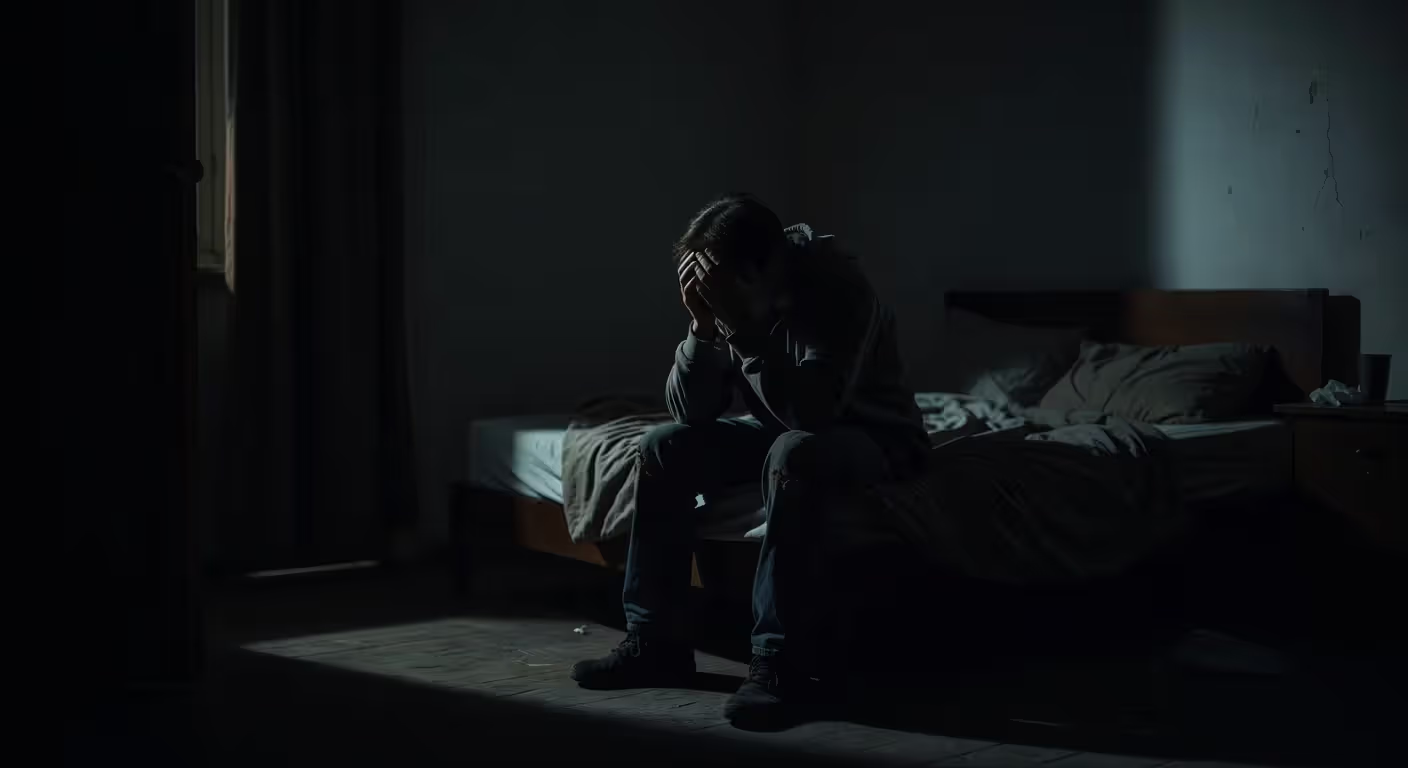
Intimacy terrifies you. Not just physical intimacy, though that can be affected too. Emotional vulnerability feels like handing someone a loaded weapon. You keep people at arm's length, share selectively, maintain escape routes. The idea of being truly known makes your chest tight.
Author: Naomi Bellamy;
Source: nappyheadedlovestories.com
You're repeating the same relationship patterns. Different faces, same dynamics. You're drawn to emotionally unavailable people or find yourself in the "fixer" role again. This isn't because you're broken—it's because unhealed trauma creates a template your brain recognizes as familiar, and familiar feels safer than unknown, even when familiar was harmful.
Your sense of self feels fragmented. You struggle to name your own preferences, needs, or boundaries. Years of having your reality denied or your feelings dismissed taught you to distrust your own perceptions. Now you second-guess everything.
Physical symptoms count too: chronic tension, digestive issues, unexplained pain. Your body keeps the score when your mind tries to move on.
How Recovering from a Narcissistic Partner Differs from Other Breakups
Recovering from a narcissistic partner involves challenges that don't exist in typical relationship endings.
The gaslighting effects linger longest. Narcissistic abuse systematically dismantles your reality testing. You were told your memories were wrong, your feelings were overreactions, your concerns were crazy-making. Even after leaving, you might struggle to trust your own judgment. You'll catch yourself thinking "Maybe I was too sensitive" or "Maybe it wasn't that bad."
It was that bad. And healing from emotional abuse in a relationship with a narcissistic dynamic requires first accepting that your reality was valid.
Identity erosion is another unique feature. Narcissists need you small to feel big. Over months or years, you likely abandoned hobbies, friendships, career ambitions, and personality traits that threatened them or didn't serve their needs. Post-breakup, you might not remember who you were before. That's not dramatic—it's a documented outcome of coercive control.
Trauma bonding creates a biochemical addiction to the relationship. The intermittent reinforcement—cruelty followed by affection, devaluation followed by love-bombing—creates powerful dopamine patterns in your brain. You don't just miss the good times. Your nervous system craves the entire cycle. This is why you might feel drawn back to someone who harmed you, even when you intellectually know better.
The table below outlines key differences in recovery approaches:
| Aspect | Healthy Relationship Recovery | Narcissistic Abuse Recovery |
| Timeline | 3–6 months for acute grief | 12–24+ months for trauma symptoms to significantly improve |
| Primary Challenge | Processing loss and sadness | Rebuilding reality testing and self-trust |
| Therapeutic Approach | General counseling or support groups | Trauma-informed therapy, often including EMDR or somatic work |
| Common Obstacle | Loneliness and adjustment | Trauma bonding, cognitive dissonance, shame |
| Support Needs | Friends, time, self-care | Specialized narcissistic abuse education, strong boundaries with flying monkeys |
| Contact Recommendation | Possible friendly contact after healing | Strict no-contact typically necessary |
You'll also face unique social challenges. Narcissists often control the narrative post-breakup, painting themselves as the victim. Mutual friends might not understand why you can't "just be civil." Family members might pressure reconciliation. This secondary invalidation can be as damaging as the original abuse.
Practical Steps for Healing Emotional Wounds from Love
Relationship trauma healing requires more than time. It needs intentional action.
Acknowledge the Abuse Without Minimizing It
You can't heal what you won't name. Stop softening the language. If your partner belittled you, controlled your finances, isolated you from friends, monitored your phone, or made you feel afraid—that was abuse. It doesn't matter if they never hit you. It doesn't matter if they had a hard childhood. It doesn't matter if there were good moments too.
Write down what happened. Use the actual words: abuse, manipulation, coercion. This isn't about vilifying someone. It's about giving yourself permission to treat your experience as serious as it was.
Many survivors get stuck here because acknowledging abuse means accepting that someone they loved intentionally harmed them. That cognitive dissonance is painful. Sit with it anyway.
Establish No-Contact or Firm Boundaries
For many people overcoming relationship trauma, especially narcissistic abuse, no-contact isn't optional—it's survival.
Block numbers, emails, social media. All of it. Don't check their profiles through friends' accounts. Don't leave "just in case" communication channels open. Every point of contact resets your healing clock and gives them an opportunity to hoover you back in.
If you share children or can't avoid all contact, implement "gray rock" technique: become boring and unresponsive emotionally. Share only necessary information. Don't engage with provocations. Treat interactions like business transactions.

Author: Naomi Bellamy;
Source: nappyheadedlovestories.com
This will feel cruel at first. You might grieve the loss all over again. That's normal. Protect your healing space anyway.
Work with a Trauma-Informed Therapist
Not all therapy is created equal for relationship trauma. You need someone who understands how abuse affects the nervous system, not just someone who'll help you "process your feelings."
Look for therapists trained in:
- EMDR (Eye Movement Desensitization and Reprocessing)
- Somatic Experiencing
- Internal Family Systems
- Complex PTSD treatment
Traditional cognitive-behavioral therapy can help, but trauma lives in your body, not just your thoughts. You need approaches that address the physiological imprint.
Can you heal without professional help? Some people do. But why make it harder than it needs to be? Trauma-informed therapy accelerates healing and helps you avoid common pitfalls that keep people stuck for years.
Process Grief and Anger Safely
Healing emotional wounds from love means feeling everything you've been suppressing.
You'll grieve the relationship you thought you had. The future you'd imagined. The person you believed they were. The time you lost. The version of yourself that didn't survive. This grief comes in waves. Let it.
Anger will show up too—probably later than you expect. That's healthy. You should be angry. You were harmed. Anger is information and fuel. It tells you something wrong happened, and it gives you energy to rebuild.
Find safe outlets: therapy, journaling, physical exercise, screaming in your car. What doesn't work: unleashing it on your ex (they'll use it against you), turning it inward (creates depression), or pretending it doesn't exist (it'll leak out sideways).
One approach that helps: write letters you'll never send. Say everything. Then burn them, shred them, or delete them. The point isn't communication—it's expression.
Rebuilding Self Worth After a Harmful Relationship
Rebuilding self worth after a harmful relationship is where the deepest work happens.
Toxic relationships don't just hurt you—they teach you lies about yourself. You absorbed messages that you're too much or not enough, that your needs are unreasonable, that you're lucky anyone tolerates you. These beliefs didn't originate with you, but now they live in your head rent-free.
Start with self-compassion practices. Talk to yourself the way you'd talk to a friend in your situation. When you catch yourself thinking "I'm so stupid for staying," reframe it: "I did the best I could with the information and resources I had at the time." This isn't making excuses. It's offering yourself the basic kindness you'd extend to anyone else.
Research shows self-compassion is a stronger predictor of psychological resilience than self-esteem. It's also more stable—it doesn't depend on external validation or performance.
Challenge internalized criticism actively. When you hear your ex's voice in your head—"You're too sensitive," "No one else would put up with you," "You're the crazy one"—interrogate it. Is that actually true? Would you say that to someone you loved? Whose interest does that belief serve?
Write down the negative beliefs you carry about yourself. Next to each one, write evidence against it. This feels awkward at first. Do it anyway.

Author: Naomi Bellamy;
Source: nappyheadedlovestories.com
Rediscover your identity outside the relationship. Who were you before? What did you love that you gave up? What did you want to try but weren't allowed to? Self healing after toxic relationship includes reclaiming lost parts of yourself and discovering new ones.
Try things just because they interest you, not because you're good at them or they're productive. Reconnect with old friends your ex didn't like. Take up space. Be "too much." Wear what you want. The freedom will feel strange before it feels good.
Set new standards for how people treat you. You've learned what you won't tolerate. Now define what you will require: respect, honesty, consistency, emotional safety, reciprocity. Write these down. Refer back when you're tempted to accept less.
Rebuilding self-worth isn't about becoming who you were before. You can't unlearn what you now know. It's about integrating the experience into a stronger, wiser version of yourself who knows her value and protects it fiercely.
Common Mistakes People Make When Recovering from a Toxic Relationship
Knowing what doesn't work saves you months of spinning your wheels.
Rushing into a new relationship is the most common mistake. You're lonely. You want to feel desired again. You want proof you're lovable. So you jump into something new before you've healed the old wounds. This almost always ends badly—either you choose another toxic person (because unhealed trauma seeks familiar patterns) or you bring your unresolved issues into a healthy relationship and sabotage it.
There's no magic timeline, but most therapists recommend at least a year of singleness after a seriously toxic relationship. Use that time to rebuild yourself, not to prove you're over it by coupling up quickly.
Isolating completely is the opposite mistake. You're ashamed. You don't want to burden people. You're tired of talking about it. So you withdraw. But recovering from a toxic relationship requires connection. Isolation reinforces the shame and the distorted beliefs your abuser planted.
You don't need to process with everyone, but you need safe people who believe you and remind you of reality when you start doubting yourself.
Ignoring professional help because you think you should be able to handle it alone is self-sabotage dressed up as strength. Relationship trauma is serious. It changes your brain. You wouldn't set your own broken leg. Don't try to heal complex psychological injury without support.
Expecting linear progress sets you up for disappointment. Healing isn't a straight line. You'll have good weeks followed by terrible days. You'll think you're over it, then see something that triggers you right back to square one. This doesn't mean you're failing. It means you're human and trauma recovery is messy.
Healing looks more like a spiral—you revisit the same issues at deeper levels over time. Each time, you have more resources and insight.
Another mistake: staying in contact "for closure." Closure is something you give yourself, not something you get from your abuser. That final conversation where they finally understand and apologize? It's not coming. And if it does, it won't feel how you think it will. Stop waiting for external validation of your experience and start validating it yourself.
Frequently Asked Questions About Overcoming Relationship Trauma
Healing from relationship trauma isn't about erasing what happened or becoming who you were before. It's about integrating the experience, reclaiming your sense of self, and building a life where you're safe—from others and from the internalized voices that tell you you're not enough. You survived. Now you get to do more than just survive. Take it one day at a time, be patient with yourself, and remember that healing isn't linear. You're not broken. You're recovering. And that's exactly what you should be doing.
Related Stories

Read more

Read more




The content on this website is provided for general informational and educational purposes only. It is intended to explain concepts related to relationships, dating, marriage, emotional intimacy, attachment styles, and breakup recovery.
All information on this website, including articles, guides, and examples, is presented for general educational purposes. Outcomes and relationship experiences may vary depending on individual circumstances.
This website does not provide professional counseling, therapy, or legal advice, and the information presented should not be used as a substitute for consultation with qualified mental health professionals or relationship counselors.
The website and its authors are not responsible for any errors or omissions, or for any outcomes resulting from decisions made based on the information provided on this website.