

Signs You Are Healing After a Breakup
Signs You Are Healing After a Breakup

Content
Content
Breaking up hurts—nobody's surprised by that. What throws most people off is the sheer confusion that comes with trying to recover. You'll have a Tuesday where you're laughing at memes and feeling almost normal, then Wednesday hits and you're sobbing in your car because a billboard reminded you of them. This whiplash leaves you wondering: am I actually getting better, or am I just pretending really well? Understanding the signs you are healing after a breakup can help you tell the difference between genuine recovery and just white-knuckling through each day until the pain magically disappears (spoiler: that's not how it works).
What Healing After a Breakup Actually Looks Like
Let's get one thing straight: recovering from a breakup doesn't mean you'll suddenly forget your ex ever existed. That's fantasy, not reality.
Actual healing is messy and incremental. You'll string together several good days, then get knocked sideways by a random memory. Most people imagine recovery as a steady climb upward, but what you'll actually experience resembles a hiking trail—sometimes you're ascending, sometimes you plateau, occasionally you backtrack a bit before finding your way forward again.
How healing from a breakup actually feels is less like an on-off switch and more like adjusting a dial degree by degree. The heaviness lifts bit by bit. You'll catch yourself noticing subtle changes: you mention the relationship without your throat tightening, you spend an entire evening without obsessively checking your phone, or you book a vacation three months out without that sinking feeling in your gut.
True healing means you've worked through the grief, not just buried it under distractions. You've allowed yourself to sit in the discomfort instead of sprinting away from it. You've let the tears come when they needed to, acknowledged the anger when it surfaced, and slowly learned to carry the sadness without letting it swallow you whole.
Surface-level coping might look impressive from the outside but leaves the wound untreated underneath. You're scheduling every minute of every day. You've already downloaded dating apps and started seeing someone new. You've adopted the narrative that "it wasn't even a big deal." These tactics might help you survive the immediate aftermath, but they're constructing a facade rather than a foundation.
The recovery period varies dramatically from person to person. Some folks demonstrate signs of progress after heartbreak within a few weeks. Others require several months or longer. A 2023 study in the Journal of Positive Psychology showed that most participants reported meaningful improvement around the twelve-week mark, though "meaningful improvement" doesn't equal "fully recovered." It means the sharp, constant ache has softened into something you can manage.

Author: Naomi Bellamy;
Source: nappyheadedlovestories.com
Physical and Mental Signs Your Body Is Recovering
Your body doesn't lie. When you're recovering from heartbreak, your nervous system sends clear signals that it's finally settling down.
Sleep quality improves before almost anything else. You won't necessarily sleep perfectly, but you're no longer staring at the ceiling until dawn replaying every conversation or constructing elaborate fantasies about getting back together. You drift off within a reasonable timeframe. You sleep more soundly through the night. The rest actually feels restorative.
Food becomes appealing again. During the worst phase, eating might have felt impossible or you might have compulsively consumed everything within reach. As recovery progresses, your eating patterns stabilize. You feel hungry at normal times. Meals taste good again. Your weight finds its natural equilibrium.
Physical stress symptoms start disappearing. That constant pressure in your chest, the perpetual knot in your stomach, the recurring tension headaches—they show up less often. You might not even register their absence until you suddenly notice your jaw isn't clenched anymore.
Your energy rebounds significantly. Fresh heartbreak is absolutely draining. Daily tasks feel like climbing mountains. As healing takes hold, your stamina returns. You complete a full workday without needing to collapse. You can meet up with friends without feeling like you're performing in a play that exhausts you completely.
Mental clarity returns. Focus sharpens. You can finish a chapter of a book and recall what you read. You can complete work projects without your thoughts derailing back to the breakup every few minutes. This cognitive restoration is among the most dependable body and mind signs of healing after loss.
Here's one people often miss: your immune system strengthens. Heartbreak actually weakens your body's defenses. As emotional healing progresses, physical health follows. You catch fewer colds, bounce back faster when you do get sick, and generally feel more robust.
Emotional and Behavioral Signs of Real Progress
Your actions tell the most honest story. Pay attention to what you're doing, not just what you're feeling.
Social media stalking stops. Not because you've dramatically blocked them in anger, but because checking their profiles simply doesn't occur to you anymore. Multiple days pass without you wondering what they're doing. When their profile accidentally appears, you don't spiral into analysis mode. You might glance briefly and keep scrolling. This behavioral shift matters enormously.
Memories surface without destroying you. You can think about them without tears. When recollections appear—and they will appear—they don't flatten you. You can remember happy moments with wistful fondness instead of stabbing pain. You can acknowledge the relationship held meaning without desperately wanting it back.

Author: Naomi Bellamy;
Source: nappyheadedlovestories.com
The rose-colored glasses come off. This matters tremendously. Early after a split, your brain plays an endless highlight reel of perfect moments. During recovery, you remember the complete picture—including all the reasons things didn't work. You can understand why the relationship ended without making anyone the villain. You develop a balanced view of what actually existed versus what you desperately wanted to exist.
Solitude becomes enjoyable rather than something to endure. You're not just tolerating being alone—you're actually appreciating it. You can spend an entire weekend by yourself without feeling pathetic or lonely. You resurrect hobbies you'd abandoned. You create plans that genuinely excite you. You reconnect with the person you were before this relationship consumed your identity.
Signs of emotional growth after a relationship include establishing healthier boundaries, articulating your needs more effectively, and identifying patterns you want to avoid moving forward. You're extracting wisdom from the experience instead of merely surviving it.
Your sense of self separates from the relationship. You stop introducing yourself through the lens of being someone's ex. You stop recounting the breakup narrative to every new person you encounter. Your identity stands independently again.
Am I Healing or Just Coping? Key Differences
This question haunts people during recovery. And honestly, the distinction is crucial.
Here's the core difference: coping helps you survive today. Healing transforms you for tomorrow.
| Aspect | Genuine Healing | Temporary Coping |
| Emotional Processing | Experiences feelings as they emerge; tolerates discomfort; works through grief gradually | Dodges emotions; maintains constant busyness; numbs pain through substances, overwork, or endless distractions |
| Social Behavior | Connects with others when genuinely ready; establishes clear boundaries; shares struggles honestly with trusted people | Completely withdraws or overshares indiscriminately; forces social situations before feeling prepared |
| Relationship to Ex | Recognizes both positive and negative aspects; maintains realistic perspective; emotional intensity gradually decreases | Either idealizes what was lost or vilifies the ex; remains intensely preoccupied (whether positively or negatively) |
| Future Orientation | Creates plans centered on personal development; feels curious about emerging possibilities | Makes impulsive decisions to prove a point; rushes into new relationships to escape loneliness |
| Thought Patterns | Becomes more present-focused over time; can interrupt rumination; practices self-compassion | Gets trapped in obsessive thinking; endless "what if" scenarios; harsh self-judgment or blame cycles |
| Physical Self-Care | Slowly returns to nourishing routines; responds to body's signals | Ignores basic needs or obsessively controls exercise/diet as distraction |
Avoidance strategies can look like productivity. You're socializing, staying busy, checking off tasks. But if you're fleeing from pain instead of processing it, you're managing symptoms rather than healing the wound. The pain doesn't have an expiration date—it waits for you.
Suppression masquerades as strength. "I'm totally fine. Already over it. Honestly didn't affect me that much." But emotions you push down don't vanish—they seep out in unexpected ways. You become irritable with friends for no clear reason. Anxiety appears without obvious triggers. Activities that used to bring joy feel hollow.
Actual healing requires processing, which feels uncomfortable in the moment. You write about what happened. You talk things through with a therapist or someone you trust deeply. You permit yourself to feel sad on a random afternoon without needing a reason. You do the difficult work of understanding what occurred and what it means for your path forward.
Recovery from romantic loss follows an unpredictable path. You'll experience days of feeling entirely stable, then get ambushed by intense sadness seemingly without warning. This isn't moving backward—it's the actual mechanism of emotional processing. The real measure of healing isn't whether pain disappears completely, but whether you can experience difficult emotions without them completely derailing your functioning. You're developing emotional resilience, not building immunity to feeling.
— Chen Lisa
Timing matters significantly. If you felt "perfectly fine" within days of ending a serious relationship, you're likely managing rather than healing. Genuine recovery requires time. Attempting to accelerate through it typically creates problems down the road.
Signs You Have Moved On Emotionally
Moving forward doesn't announce itself dramatically. It arrives quietly, almost without you noticing.
You experience authentic indifference instead of performed detachment. These feel completely different. Performed detachment requires constant effort—you're actively working to not care. Authentic indifference simply exists. You discover they're seeing someone new and you feel... essentially nothing. Maybe fleeting curiosity, but zero jealousy, no pain, no compulsion to investigate further.
You can genuinely wish them well. Not performatively, not to demonstrate how "evolved" you are, but sincerely. You hope they find happiness. You hope they've learned and grown. Their wellbeing no longer threatens your own.

Author: Naomi Bellamy;
Source: nappyheadedlovestories.com
New connections feel possible. Not desperately pursuing them to fill an emptiness, but genuinely remaining open. When someone interesting enters your life, you can explore that potential without endlessly comparing them to your ex. You can stay present during new interactions.
How do you know you are healing from a breakup? When you envision your future, they're absent from it. You think about next year, five years ahead, where you want to live, what you want to accomplish—and they're irrelevant to those plans. Not because you're angrily excluding them, but because they simply don't factor into your life anymore.
Shared spaces and experiences become yours again. You can visit that restaurant you frequented together. You can listen to songs you both loved. These things might carry a faint echo of memory, but they no longer belong to the relationship. You've reclaimed them.
Your self-worth exists independently of their opinion. This might be the most significant indicator. You recognize your value whether they acknowledge it or not. Their choice to leave, their perspective on you, their new relationship—none of it determines your worth.
When Healing Stalls: What Slowed Progress Means
Sometimes recovery hits an unexpected plateau. You were advancing steadily, showing clear improvement, and then... everything stops. Or you actually slide backward.
This doesn't indicate something's wrong with you. It indicates you're a normal human being.
Grief operates in waves rather than following a predictable decline. The wave comparison gets used constantly because it's accurate. You'll be standing on stable ground when sorrow crashes over you unexpectedly. Something might trigger it—a familiar song, a particular scent, an anniversary date—or it might appear without any obvious cause. These emotional waves decrease in frequency and power over time, but they never completely vanish.
Recovery doesn't follow a straight path. You'll enjoy a strong week, then suffer through a brutal day, followed by two decent days, then a difficult morning. This isn't evidence of failure. It's the standard pattern when healing from any major loss. Measure progress month-to-month rather than day-to-day.
Specific factors slow the process considerably. Maintaining regular contact with your ex extends the timeline. Sharing children or working together prevents complete separation, which complicates healing. If the relationship involved trauma or abuse, professional support isn't just helpful—it's essential.
Sometimes stalled progress signals deeper work waiting to be addressed. Perhaps the breakup activated old wounds around abandonment. Maybe it's surfacing unresolved issues from your childhood. Maybe you're dealing with depression or anxiety that predated the relationship. These underlying issues need direct attention.
When should professional support become a priority? If intense struggle continues beyond six months. If you can't maintain basic functioning at work or in other relationships. If you're experiencing thoughts of self-harm. If you're relying on substances to manage emotions. If you're stuck in anger or bargaining and can't progress. Seeking therapy demonstrates wisdom and self-care, not weakness.
The pattern I notice most frequently when healing stalls: people assume they should be "past this by now," so they abandon the practices that were supporting their recovery. They stop journaling, quit therapy, stop reaching out to friends. Then they're confused about why they feel worse. Sustained healing requires ongoing effort, especially after you start feeling better.
How Long Does It Really Take to Stop Hurting
Everyone desperately wants a timeline. I understand completely. When will this finally stop hurting?
The honest answer: it depends on numerous factors. But patterns do emerge.
Research conducted at the University of London revealed that most people begin feeling substantially better around the eleven-week point after a breakup. But "substantially better" doesn't mean "completely healed." It indicates the worst of the acute agony has subsided.
A 2025 study published in the Journal of Social and Personal Relationships found that average time to feel "mostly recovered" was approximately six months for relationships lasting a year or more. However, the range varied enormously—some participants felt better within two months, while others required eighteen months or beyond.
That popular "half the relationship's duration" guideline has no scientific foundation. A three-year relationship doesn't automatically demand eighteen months of recovery. Some people heal more quickly from lengthy relationships than brief ones, depending on countless other variables.
What actually determines recovery speed? Circumstances surrounding the split matter significantly. Getting blindsided extends the timeline considerably. Seeing it coming or initiating the breakup yourself typically speeds recovery. Betrayal or deception creates deeper wounds that take longer to heal.
Attachment style influences the process. Anxiously attached individuals often struggle intensely initially but can move forward once they fully commit to recovery. Avoidantly attached people might appear fine at first but experience delayed grief emerging months later. Securely attached individuals typically process grief more effectively throughout the entire journey.
Your support network makes an enormous difference. People with close friends and family to lean on recover faster than those who isolate themselves. Social connection functions as medicine for heartbreak.
What you actively do during recovery matters far more than passive time passing. Someone who intentionally processes emotions, maintains healthy routines, and engages in self-reflection will heal faster than someone who simply waits for time to magically fix everything while avoiding their feelings.
Author: Naomi Bellamy;
Source: nappyheadedlovestories.com
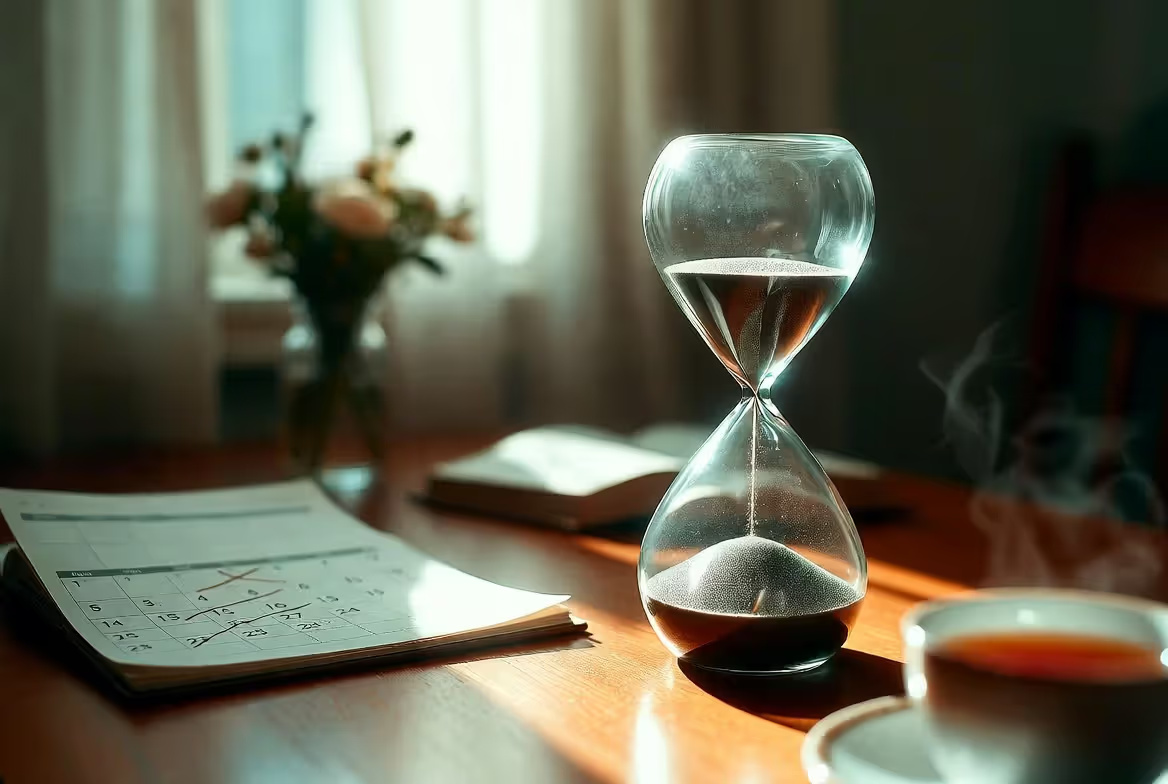
When you stop hurting after a breakup isn't a single dramatic moment. It's incremental. One day you'll realize an entire week passed without thinking about them. Then two weeks. The gaps stretch longer. The intensity diminishes. Eventually, they transform from your entire story into simply one chapter of it.
Most people report feeling "like themselves again" somewhere between six months and a year following a significant relationship ending. But you're never identical to who you were before. You've developed. You've gained insight. You carry the experience with you, but it no longer defines you.
FAQ: Breakup Recovery Questions Answered
Healing from a breakup isn't something that passively happens to you—it's something you actively engage in. The signs you are healing after a breakup will appear in small, ordinary moments: the morning you wake up without immediate sadness washing over you, the afternoon you schedule plans without considering whether they conflict with your ex's life, the evening you feel genuinely content in your own company. Trust the process, show yourself compassion during setbacks, and remember that every day you prioritize your wellbeing is a day you're progressing forward.
Related Stories

Read more

Read more




The content on this website is provided for general informational and educational purposes only. It is intended to explain concepts related to relationships, dating, marriage, emotional intimacy, attachment styles, and breakup recovery.
All information on this website, including articles, guides, and examples, is presented for general educational purposes. Outcomes and relationship experiences may vary depending on individual circumstances.
This website does not provide professional counseling, therapy, or legal advice, and the information presented should not be used as a substitute for consultation with qualified mental health professionals or relationship counselors.
The website and its authors are not responsible for any errors or omissions, or for any outcomes resulting from decisions made based on the information provided on this website.