
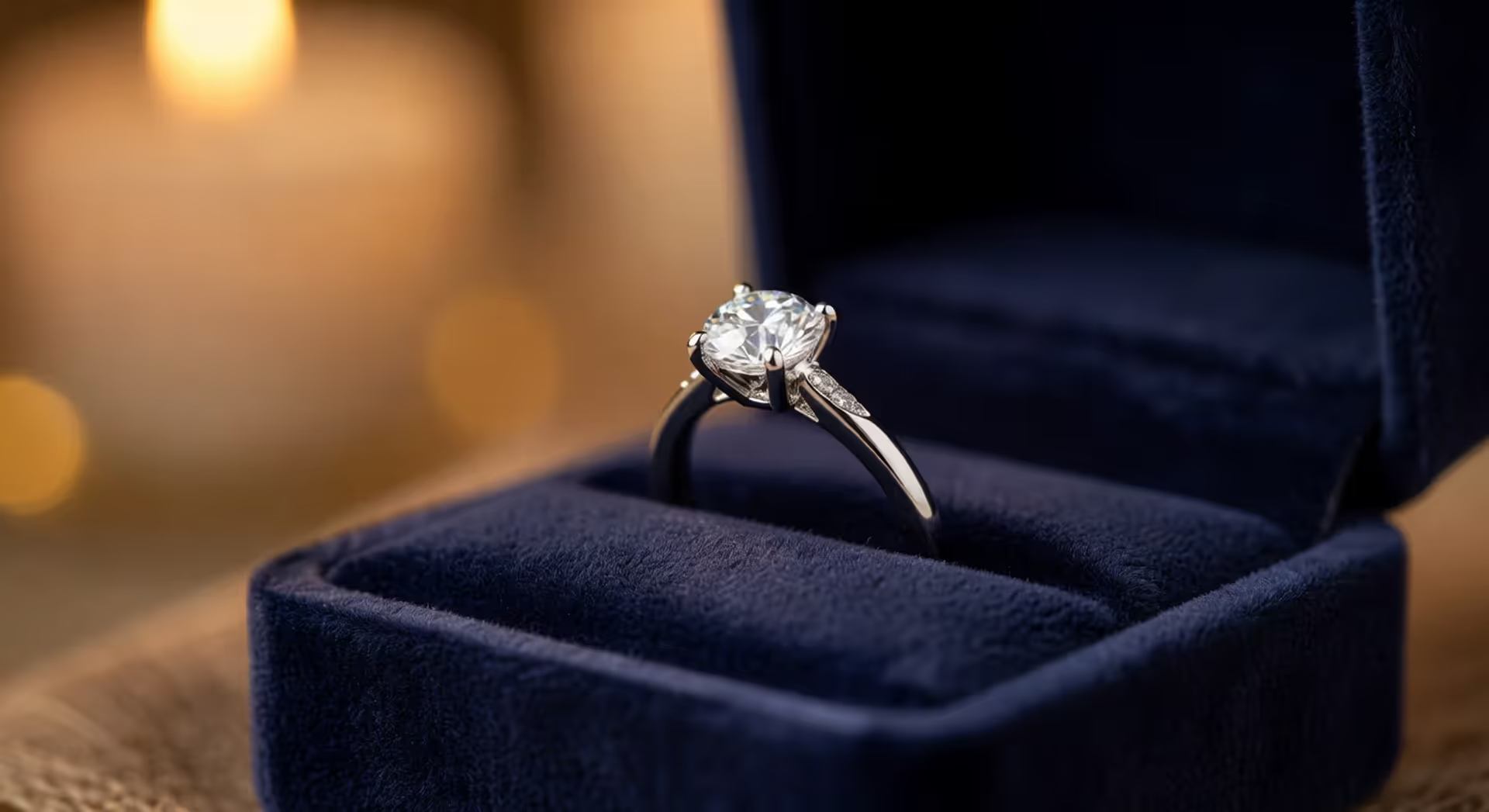
What to Know Before Buying an Engagement Ring
What to Know Before Buying an Engagement Ring?
Shopping for an engagement ring can feel overwhelming. There's the pressure of finding something perfect, the confusion around diamond jargon, and the fear of making a costly mistake. But here's the thing: armed with the right information, you'll navigate this process with confidence. Whether you're leaning toward a classic solitaire or exploring vintage engagement ring ideas, understanding what matters most before you buy will save you time, money, and second-guessing. Let's break down everything you need to know before buying an engagement ring so you can make a choice you'll both love for decades.
Have the Conversation First: What to Discuss With Your Partner
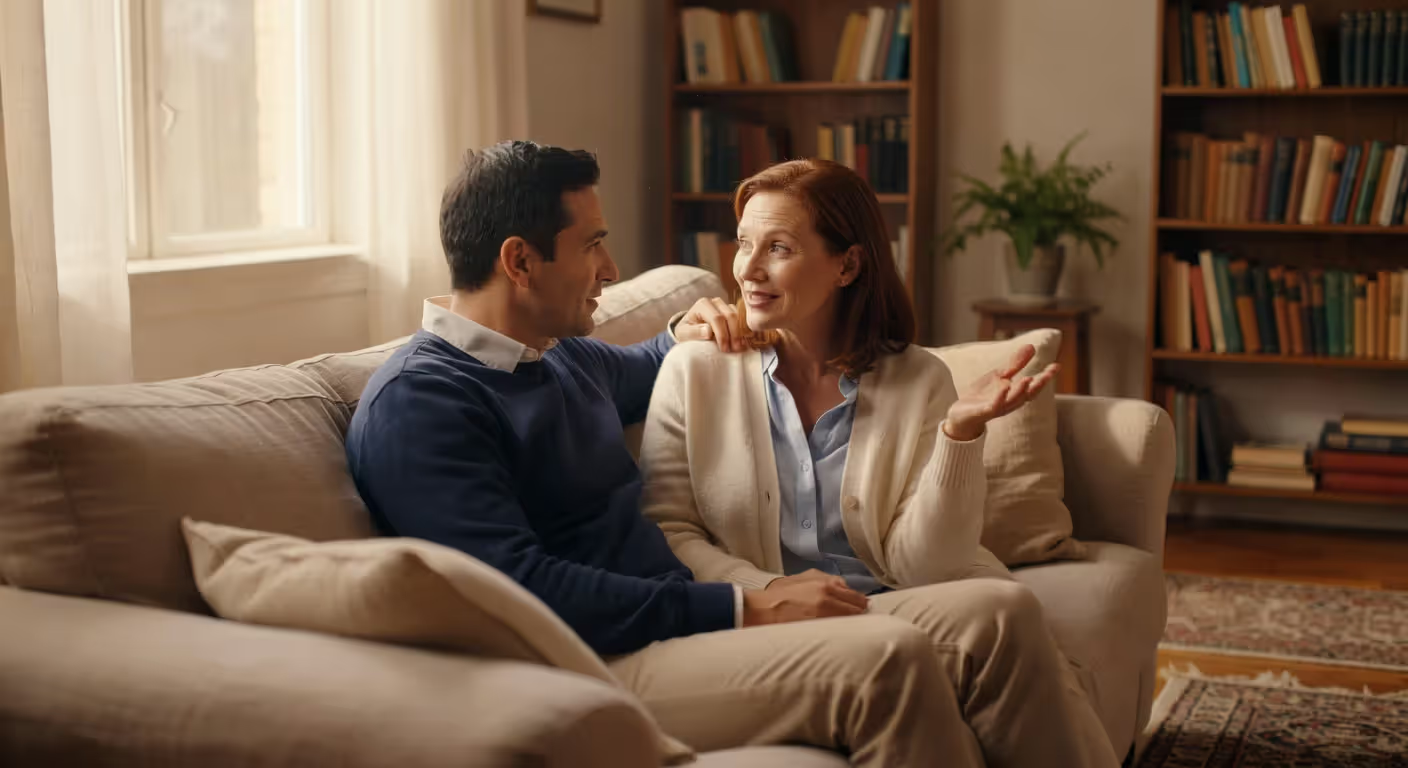
Forget the old notion that engagement rings must be a total surprise. The best purchases happen when you've had honest conversations beforehand.
Start by discussing expectations around the proposal itself. Does your partner want to be completely surprised by the timing and location, or would they prefer some input on the ring? Many couples find a middle ground: surprise proposal, but collaborative ring selection.
Talk about style preferences early. Ask open-ended questions like "What kind of jewelry do you wear most?" or "Do you prefer modern or classic looks?" Pay attention to whether they gravitate toward simple, minimalist pieces or ornate, detailed designs. This conversation doesn't ruin the magic. It prevents you from guessing wrong on something they'll wear forever.
Timeline matters too. If your partner expects a proposal within the next few months, you'll need to factor in production time for custom rings or resizing. Some settings take 6-8 weeks to create, especially if you're working with a designer on unique engagement ring styles.
And here's something most people skip: discuss comfort level with the ring itself. Will your partner wear it daily, including during workouts or hands-on hobbies? A delicate vintage setting might not suit someone who works with their hands. A low-profile design might be better than a high-set stone for active lifestyles.
The conversation to have before buying an engagement ring should also touch on values. Does ethical sourcing matter to your partner? Would they be open to lab-grown diamonds or recycled metals? These preferences can significantly shape your shopping approach.
Author: Evelyn Hartleigh;
Source: nappyheadedlovestories.com
Setting a Realistic Budget Without Overspending
Let's kill the "three months' salary" rule right now. It's marketing fiction created by diamond companies in the 1930s, not financial wisdom.
Your budget should reflect your actual financial situation, not some arbitrary formula. According to 2026 industry surveys, the average spent on engagement rings in the US ranges from $4,500 to $6,800, but that average includes everything from $800 rings to $50,000+ purchases. What matters is what works for you.
Start by looking at your monthly discretionary income. How much can you comfortably save over the next few months without derailing other financial goals? Remember, you're likely planning a wedding too, which brings its own costs.
Consider the total cost of ownership. The sticker price isn't everything. You'll also need to budget for:
- Ring insurance (typically $1-2 per $100 of value annually)
- Potential resizing ($50-150 depending on complexity)
- Annual inspections and prong tightening ($0-50, often free at purchase location)
- Cleaning and maintenance
Financing options exist, but tread carefully. Many jewelers offer 0% interest for 12-24 months, which can work if you're disciplined about payments. Miss the payoff deadline, though, and deferred interest charges hit hard—often 25-30% APR applied retroactively to the original balance.
The pattern I see most often is buyers stretching beyond their comfort zone, then feeling financial stress that taints the engagement period. Don't do that. A $2,000 ring given with joy beats a $10,000 ring accompanied by credit card anxiety.
One smart approach: decide on your absolute maximum, then shop at 70-80% of that ceiling. This gives you wiggle room if you fall in love with something slightly above your target or want to add a custom engraving.
Understanding Diamond Quality and Ring Shapes
Diamond education doesn't need to be complicated. You need to understand enough to make informed choices, not to become a gemologist.
The 4 Cs Explained Simply
The 4 Cs—Cut, Color, Clarity, and Carat—determine diamond quality and price. But they're not equally important.
Cut matters most. It determines how light moves through the diamond, creating that sparkle you're after. A well-cut diamond will outshine a poorly cut one of higher color or clarity. Look for "Excellent" or "Ideal" cut grades for round diamonds. For fancy shapes (anything non-round), cut grading is less standardized, so rely on visual inspection and expert guidance.
Color refers to the absence of color. The GIA scale runs from D (colorless) to Z (light yellow or brown). Here's the secret: most people can't distinguish between D-F (colorless) and G-J (near-colorless) once the diamond is set. Going with G-H color can save you 15-25% compared to D-F without a visible difference to the untrained eye.
Clarity measures internal imperfections (inclusions) and external blemishes. The scale runs from Flawless to Included. Most inclusions in VS2 (Very Slightly Included) or SI1 (Slightly Included) grades are invisible to the naked eye. You're paying for microscopic differences that won't affect beauty. SI1 diamonds offer excellent value if they're "eye-clean"—no visible flaws when viewed normally.
Carat is simply weight, not size. Two diamonds of the same carat weight can look different sizes depending on cut proportions. A 0.90-carat diamond can appear nearly identical to a 1.0-carat but cost 15-20% less because of psychological pricing thresholds.
The biggest mistake I see is couples prioritizing carat weight over cut quality. A smaller, beautifully cut diamond will always look more brilliant than a larger, poorly cut stone. Focus on what makes the diamond come alive with light, not just what sounds impressive on paper.
— Chen Michael
Popular Diamond Cuts and What They Say About Style
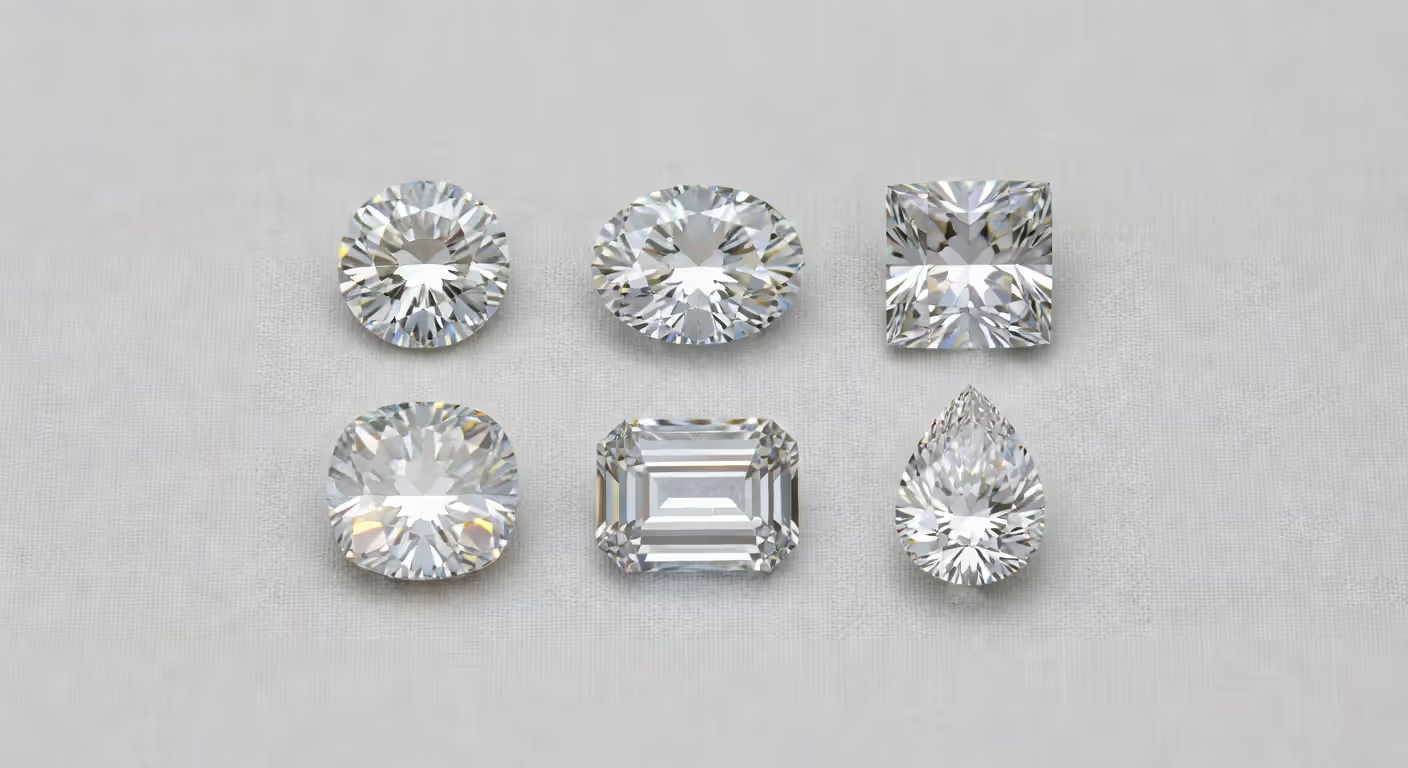
Shape is about personal preference and hand aesthetics. Here's how the most popular engagement ring cuts compare:
| Shape | Popularity Rank | Average Price Range (1ct) | Best For | Pros | Cons |
| Round | #1 | $4,500-$8,000 | Classic tastes, maximum brilliance | Most sparkle, timeless, high resale value | Most expensive per carat |
| Oval | #2 | $3,200-$6,500 | Modern traditionalists, elongating fingers | Larger face-up appearance, trending | Can show "bow-tie" effect in center |
| Princess | #3 | $2,800-$5,500 | Contemporary style, geometric preference | Sharp lines, good value, modern look | Corners can chip, requires protective setting |
| Cushion | #4 | $3,000-$6,000 | Vintage lovers, soft aesthetics | Romantic look, hides inclusions well | Less brilliance than round |
| Emerald | #5 | $3,500-$6,800 | Sophisticated minimalists, art deco fans | Elegant, unique, shows clarity | Less sparkle, requires higher clarity grade |
| Pear | #6 | $3,000-$5,800 | Unique style seekers, feminine aesthetic | Distinctive, elongates fingers | Can look dated if not set well, asymmetry issues |
Round diamonds remain the most popular by a significant margin—about 45% of all engagement rings sold in 2026 feature round cuts. But oval diamonds have surged in popularity over the past three years, now accounting for nearly 20% of purchases.
Engagement ring shapes explained simply: round and oval maximize sparkle through brilliant faceting. Emerald and Asscher use step cuts that create hall-of-mirrors effects with less fire but more elegance. Princess, cushion, and radiant cuts blend brilliant and step faceting for unique looks.
Author: Evelyn Hartleigh;
Source: nappyheadedlovestories.com
Your partner's hand shape can guide the choice. Longer fingers can carry any shape well. Shorter fingers often look best with oval, pear, or marquise cuts that create a lengthening effect. Wider hands suit round, cushion, or princess cuts that provide balanced proportions.
How to Choose a Ring Style Your Partner Will Love
You're not a mind reader, but you can be an excellent detective.
Start with observation. What jewelry does your partner already wear? If they gravitate toward yellow gold and ornate details, a white gold minimalist solitaire probably isn't their style. If they wear mostly silver and simple pieces, skip the vintage-inspired halo settings.
Check their Pinterest boards or Instagram saves. Many people create secret wish lists for engagement rings. If you can access these (with permission or through subtle investigation), you've struck gold.
Enlist allies carefully. A best friend or sibling can be invaluable, but choose someone who'll keep the secret and knows your partner's taste well. Give them specific questions: "Would they prefer a solitaire or a ring with side stones?" or "Do they like rose gold or platinum?"
Consider lifestyle practically. Does your partner work in healthcare, food service, or another field where they'll need to remove the ring frequently? A simple setting without many prongs or crevices is easier to clean and less likely to snag. Active individuals often prefer bezel or flush settings where the diamond sits lower and more protected.
The vintage versus modern question often comes down to personality. Vintage engagement ring ideas appeal to people who love history, unique character, and sustainable choices. These rings feature intricate detailing, milgrain edges, and often colored gemstone accents. Modern designs emphasize clean lines, architectural settings, and innovative materials.
Don't overthink unique engagement ring styles to the point of choosing something too trendy. Tension settings, split shanks, and colored diamonds can be stunning, but make sure the design will age well. Your partner will wear this for decades, through changing fashion cycles.
The simpler option usually wins here. When in doubt, choose a classic setting you can upgrade or modify later. Many couples start with a solitaire and add a wedding band or anniversary diamonds over time.
Ethical and Sustainable Ring Options to Consider
Ethics in jewelry matters more to today's buyers than ever before. You have several paths to ensure your ring aligns with your values.
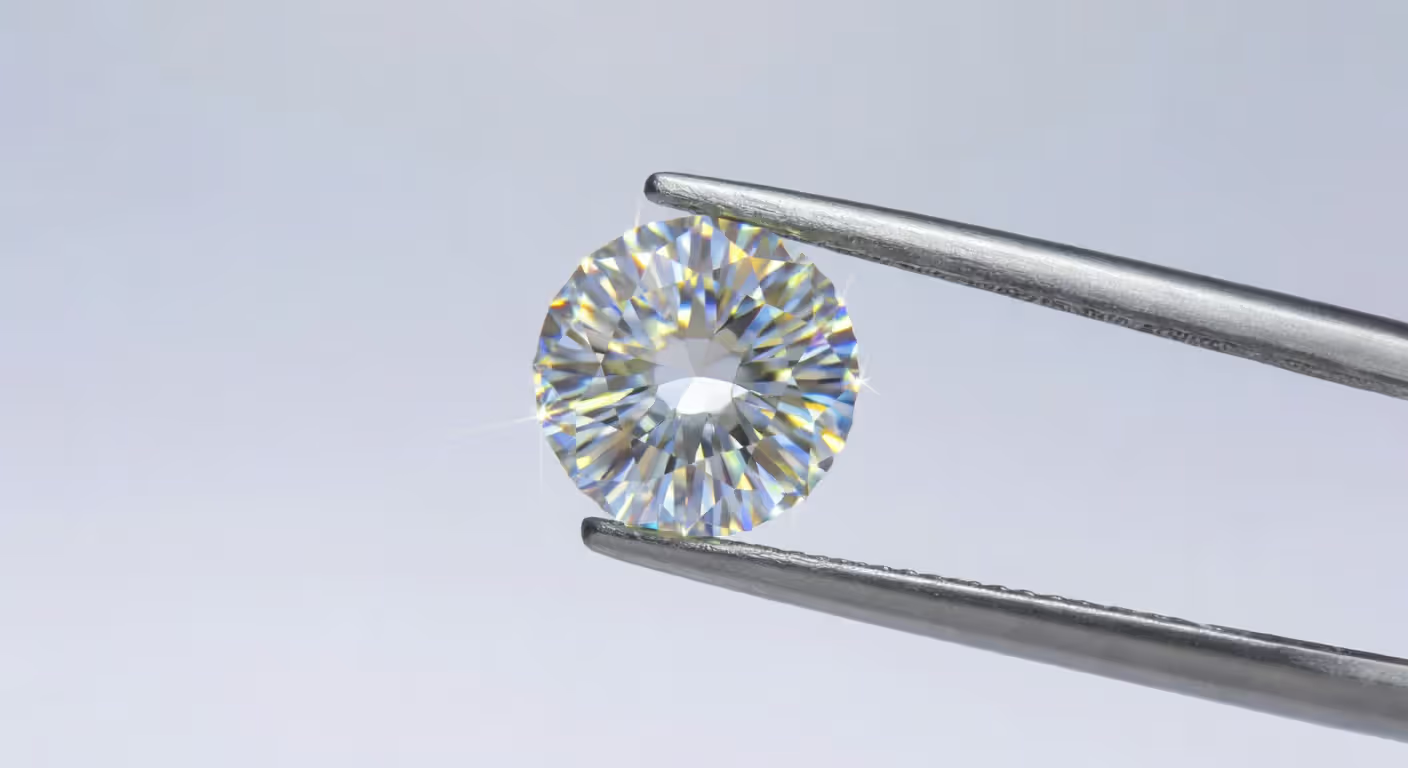
Lab-grown diamonds have moved from niche to mainstream. These are real diamonds—chemically, physically, and optically identical to mined diamonds—created in controlled environments. They cost 40-60% less than mined equivalents, allowing you to get a larger or higher-quality stone for the same budget.
The environmental argument is compelling. Lab diamonds require significantly less land disruption and water usage than mining. The ethical case is even stronger—no risk of funding conflict or exploitative labor practices.
Author: Evelyn Hartleigh;
Source: nappyheadedlovestories.com
Some people still prefer mined diamonds for their natural origin story. That's valid. If you go this route, look for Kimberley Process certification at minimum, though this system has limitations. Better yet, seek retailers who provide detailed sourcing information and support responsible mining initiatives.
Recycled metals offer another ethical win. Many jewelers now use reclaimed gold and platinum, reducing the environmental impact of new mining. This option doesn't compromise quality—refined recycled metals are identical to newly mined ones.
Vintage and antique rings represent the ultimate in sustainability. You're giving new life to an existing piece rather than creating demand for new mining. Estate sales, antique dealers, and specialized vintage jewelers offer incredible options, often with craftsmanship quality that's hard to find in modern production pieces.
Some couples choose alternative gemstones entirely. Sapphires, moissanite, and morganite offer beauty and durability at different price points. Moissanite, in particular, provides diamond-like brilliance at a fraction of the cost, though it has slightly different optical properties that some people notice.
Ethical engagement ring options don't mean compromising on beauty or quality. They mean being intentional about where your money goes and what practices you support.
Common Mistakes First-Time Ring Buyers Make
Learning from others' errors saves you headaches. Here are the traps to avoid.
Getting the wrong size tops the list. If you're planning a surprise, borrow a ring your partner wears on their ring finger (left hand, fourth finger) or trace it on paper. Many jewelers offer free sizing within the first year, but it's still an inconvenience. When in doubt, size up slightly—rings are easier to size down than up, and finger sizes fluctuate with temperature and time of day.
Skipping certification is a costly mistake. Always buy diamonds with grading reports from reputable labs—GIA (Gemological Institute of America) or AGS (American Gem Society) are the gold standards. These reports verify the diamond's characteristics and provide documentation for insurance. A diamond without certification is harder to insure and resell.
Impulse buying happens when you walk into a store "just to look" and leave with a ring. Jewelry stores are designed to create urgency—limited-time sales, "this stone won't last," high-pressure tactics. Resist. Take time to compare options, sleep on major decisions, and never buy the first day you shop.
Ignoring the setting cost catches people off guard. You might budget $5,000 for a diamond, then discover the setting you love costs another $2,500. Ask about total cost upfront, including the center stone, setting, and any customization.
Forgetting about insurance is surprisingly common. Engagement rings should be insured immediately—homeowners or renters insurance often doesn't provide adequate coverage. Specialized jewelry insurance costs about $1-2 per $100 of appraised value annually and covers loss, theft, and damage. Get this arranged within days of purchase.
Prioritizing size over quality leads to disappointing purchases. A 2-carat diamond with poor cut and visible inclusions won't impress like a 1-carat diamond with excellent proportions and clarity. Remember: sparkle beats size.
Not checking return and upgrade policies can lock you into a ring your partner doesn't love. Understand the jeweler's policies before buying. Many offer 30-day returns or exchanges, and some provide upgrade programs where you can trade up later, crediting your original purchase.
Frequently Asked Questions About Engagement Ring Shopping
Buying an engagement ring is a significant moment, but it doesn't have to be overwhelming. With honest conversations, realistic budgeting, and solid diamond education, you'll find a ring that represents your commitment beautifully. Trust your preparation, listen to your instincts, and remember that the ring symbolizes your relationship—the love behind it matters far more than carats or settings. Take your time, ask questions, and enjoy this exciting step toward your future together.
Related Stories
Read more

Read more



The content on this website is provided for general informational and educational purposes only. It is intended to explain concepts related to relationships, dating, marriage, emotional intimacy, attachment styles, and breakup recovery.
All information on this website, including articles, guides, and examples, is presented for general educational purposes. Outcomes and relationship experiences may vary depending on individual circumstances.
This website does not provide professional counseling, therapy, or legal advice, and the information presented should not be used as a substitute for consultation with qualified mental health professionals or relationship counselors.
The website and its authors are not responsible for any errors or omissions, or for any outcomes resulting from decisions made based on the information provided on this website.