

How to Prepare for a First Date and Make a Great Impression
How to Prepare for a First Date?

Walking into a first date can feel like stepping onto a stage. Your heart's racing, your palms might be a little sweaty, and you're wondering if you'll say the right things. But here's the truth: first dates don't have to be nerve-wracking performances. With the right preparation and mindset, you can show up as your best self and actually enjoy the experience. Whether you're meeting someone from a dating app or going out with someone you've known for a while, these practical tips will help you navigate everything from what to wear to how to keep the conversation flowing naturally.
What to Do Before Your First Date
Preparation is half the battle. The hours before your date set the tone for how confident and comfortable you'll feel once you're face-to-face.
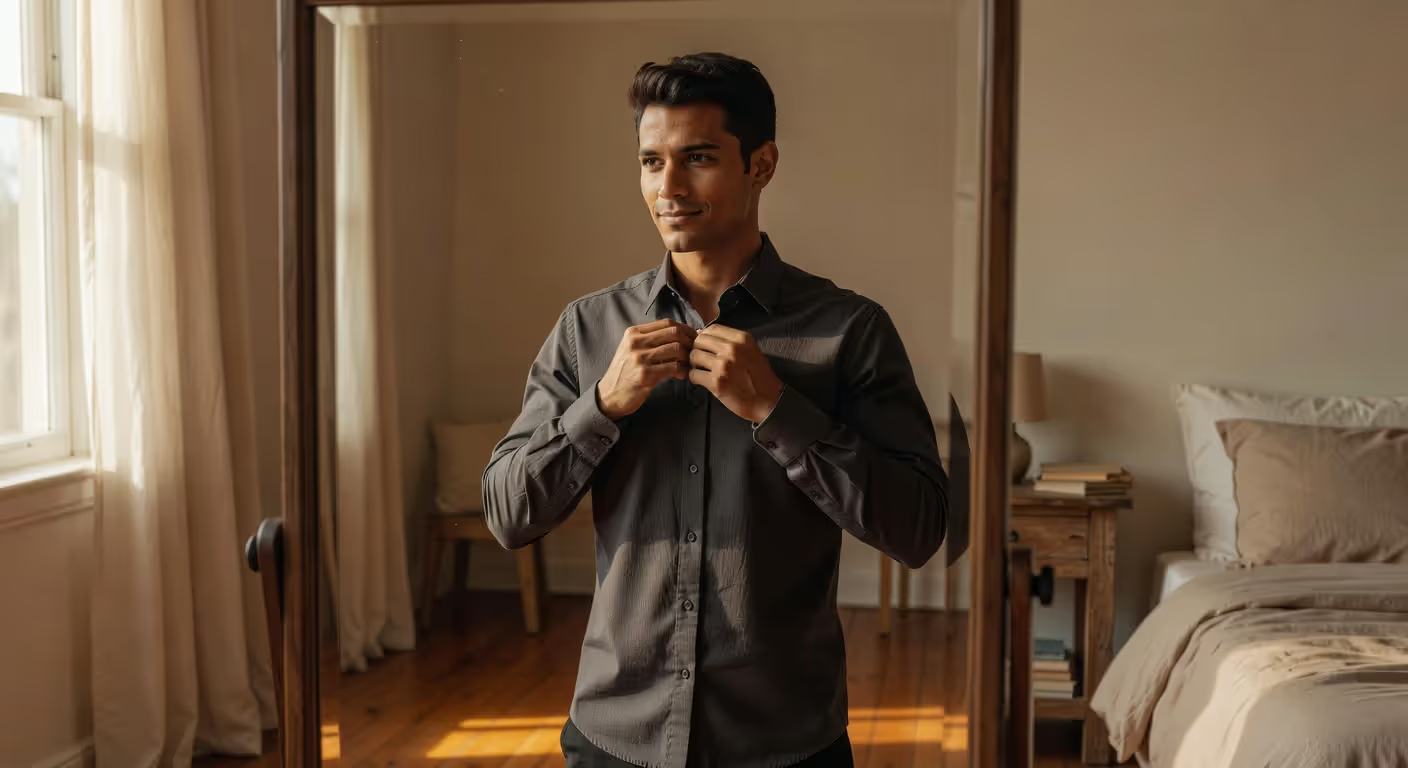
Start with your outfit. You want to look good, but more importantly, you need to feel good. Choose something that fits well and matches the venue. If you're meeting for coffee, don't show up in a cocktail dress or a three-piece suit. Save that for a fancy dinner. Your clothes should reflect the setting while still showing a bit of personality. Lay out your outfit the night before if you're prone to last-minute panic.
Do a little homework. If you met on a dating app, review their profile. Refresh your memory on what they do for work, their hobbies, or that trip they mentioned. This isn't about memorizing facts—it's about showing genuine interest when you ask follow-up questions.
Research the venue too. Know where you're going, how long it takes to get there, and whether parking is a nightmare. Arriving late and flustered is not the first impression you want to make. Build in a buffer. Aim to arrive five minutes early.
Manage your expectations. This is one date, not your wedding day. The goal isn't to find your soulmate in two hours—it's to see if there's enough chemistry and compatibility to warrant a second meeting. Lower the pressure on yourself.
Mental preparation matters. If you're feeling nervous (and most people are), that's completely normal. Spend ten minutes before you leave doing something that calms you down. Listen to your favorite song. Call a friend who makes you laugh. Do some deep breathing. You're not preparing for battle—you're preparing to meet another human being who's probably just as nervous as you are.
Author: Julian Evercrest;
Source: nappyheadedlovestories.com
How to Act and What to Say During a First Date
Once you're sitting across from each other, the real work begins. But it doesn't have to feel like work.
Be present. Put your phone on silent and keep it in your pocket or bag. Checking your phone signals that you'd rather be somewhere else. Even if the date isn't going well, basic courtesy matters.
Listen more than you talk. This is harder than it sounds. Most people spend conversation time waiting for their turn to speak rather than actually listening. Pay attention to what they're saying. Ask follow-up questions based on their answers, not just the next question on your mental list.
Share the conversational load. If you're doing all the talking, pull back and invite them in. If they're dominating, it's okay to gently redirect: "That's really interesting—I actually had a similar experience when…"
Be yourself, but maybe the slightly edited version. You don't need to share every detail of your life story or your deepest insecurities on date one. Authenticity doesn't mean oversharing. It means being honest about who you are without dumping your emotional baggage on the table.
First Date Conversation Starters That Actually Work
Forget "What do you do?" Everyone asks that. Try these instead:
"What's been the highlight of your week so far?" This opens the door to something they're excited about, not just their job title.
"If you could travel anywhere next month with no restrictions, where would you go?" Hypotheticals are fun and reveal priorities and interests.
"What's something you're really into right now?" Could be a podcast, a hobby, a TV show—anything. People light up when they talk about their current obsessions.
"What's the best meal you've had recently?" Food is universal, and it usually leads to stories about restaurants, travel, or family traditions.
The pattern I see most often is people sticking to safe, boring questions because they're afraid of being too forward. But safe questions lead to safe, forgettable conversations. Take a small risk.
Body Language Signals That Show Interest
Your words matter, but your body says even more.
Make eye contact. Not in a creepy, unblinking way—just normal, friendly eye contact that shows you're engaged. If you're naturally shy about this, try looking at the bridge of their nose. They won't notice the difference.
Lean in slightly when they're talking. It signals interest and makes the conversation feel more intimate.
Smile. Sounds obvious, but nerves can make people forget. A genuine smile makes you more approachable and attractive.
Mirror their energy subtly. If they're leaning back and relaxed, you can too. If they're animated and leaning forward, match that. Mirroring builds rapport unconsciously.
Watch their body language too. Are they turned toward you or angled away? Are their arms crossed defensively or open? Are they making eye contact or scanning the room? These cues tell you whether they're comfortable and interested.

Author: Julian Evercrest;
Source: nappyheadedlovestories.com
Common First Date Mistakes and How to Avoid Them
Even with the best intentions, it's easy to stumble. Here are the traps to dodge.
Talking about your ex. Just don't. Even if they ask. Keep it brief: "It didn't work out, but I learned a lot" and move on. Dwelling on past relationships makes you look stuck or bitter.
Treating it like a job interview. Rapid-fire questions with no follow-up feel interrogative, not conversational. Let the discussion flow naturally. One good topic explored deeply beats ten superficial ones.
Being glued to your phone. Already mentioned, but worth repeating. It's the fastest way to kill any connection.
Drinking too much. One or two drinks can ease nerves. Three or four makes you sloppy and impairs your judgment. Pace yourself. Alternate with water.
Oversharing too soon. Your childhood trauma, your financial struggles, your health issues—these are second, third, or tenth-date topics. Keep things light and positive on date one.
Being late without communication. Life happens. Traffic, emergencies, whatever. But if you're running late, send a text immediately. Respect their time.
Talking only about yourself. Conversation is a two-way street. If you realize you've been monologuing for five minutes, stop and redirect.
Complaining excessively. Negativity is draining. Don't spend the date griping about your job, your roommate, or the service at the restaurant. Keep the vibe upbeat.
How to Handle First Date Nerves
Let's be real: you're going to be nervous. That's not a problem to solve—it's a normal human response.
Reframe the anxiety. Your racing heart and sweaty palms? That's excitement, not fear. Your body doesn't know the difference. Tell yourself you're excited, not scared. It actually works.
Breathe. Seriously. Before you walk in, take five slow, deep breaths. In through your nose for four counts, out through your mouth for six. It activates your parasympathetic nervous system and calms you down.
Focus outward, not inward. Nerves make you hyper-aware of yourself—how you look, how you sound, whether you're being awkward. Flip the script. Focus completely on the other person. What are they saying? How are they feeling? This takes the pressure off you and makes you a better conversationalist.
Accept that awkward moments will happen. You might stumble over a word. There might be a brief silence. That's okay. Laugh it off and keep going. Perfection isn't the goal.
Have a pre-date ritual. Same coffee order, same playlist, same pep talk from your best friend. Rituals create a sense of control and calm.
Remember that they're nervous too. You're not the only one worried about making a good impression. That shared vulnerability can actually be a bonding point.
Author: Julian Evercrest;
Source: nappyheadedlovestories.com
What to Wear on a First Date Based on the Venue
Your outfit should match the setting. Here's a quick reference guide.
| Venue Type | Outfit Suggestion for Women | Outfit Suggestion for Men | What to Avoid |
| Coffee shop / casual cafe | Jeans and a nice top, casual dress, ankle boots or clean sneakers | Dark jeans, button-down or polo, casual blazer optional, clean shoes | Gym clothes, overly formal suits, anything too revealing |
| Dinner at a mid-range restaurant | Dress or blouse with skirt/pants, heels or flats, light jewelry | Chinos or dress pants, button-down shirt, loafers or dress shoes | Ripped jeans, flip-flops, anything too casual or too formal |
| Upscale restaurant / cocktail bar | Cocktail dress, dressy jumpsuit, heels, statement jewelry | Suit or sport coat with dress pants, dress shirt, tie optional, dress shoes | Sneakers, overly casual attire, anything wrinkled or ill-fitting |
| Activity date (mini golf, museum, etc.) | Comfortable jeans or leggings, casual top, comfortable shoes you can move in | Jeans or khakis, casual shirt or henley, sneakers or casual shoes | High heels, anything restrictive, overly dressy clothing |
| Outdoor date (park, hike, etc.) | Athletic leggings or shorts, breathable top, sneakers, light jacket | Athletic shorts or pants, T-shirt or athletic top, sneakers, hat | New shoes that might cause blisters, white clothing if it's muddy, anything impractical |
The golden rule: dress one level above what the venue requires. If it's casual, go smart casual. If it's smart casual, lean slightly dressy. You can always remove a jacket or cardigan if you're overdressed, but you can't add formality if you're underdressed.
Comfort matters more than fashion. If your feet hurt or your clothes are too tight, you'll be distracted and uncomfortable the entire time. Choose outfits you've worn before and know fit well.
The first three minutes of a date are when people form their strongest impressions, but authenticity matters more than perfection. People are attracted to confidence and genuine interest, not rehearsed lines or carefully curated personas. Show up as yourself, ask real questions, and be curious about who they are—that's what creates real connection.
— Martinez Dr. Elena
How to End a First Date and Follow Up
The end of the date can be just as nerve-wracking as the beginning. Here's how to handle it gracefully.
Read the signals. If the conversation has been flowing, there's been laughter, and neither of you is checking the time, that's a good sign. If it's felt forced or awkward, keep the ending brief and polite.
Be honest about your interest level. If you had a good time and want to see them again, say so. "I really enjoyed this. I'd love to do it again sometime." Simple and direct.
If you're not interested, be kind but clear. "Thanks for tonight—I had a nice time" is polite without promising anything. Don't say "Let's do this again" if you don't mean it.
The kiss question. There's no universal rule here. If the vibe is right and you both seem to be leaning in, go for it. If you're unsure, a hug is perfectly fine. Don't force it.
Follow up within 24-48 hours if you're interested. Waiting three days is outdated game-playing. A simple text the next day—"Had a great time last night. Would love to take you to [specific place] this weekend if you're free"—shows interest and initiative.
If you're on the receiving end and not interested, respond politely but honestly. "I appreciate you reaching out, but I didn't feel a romantic connection. I wish you the best." It's kinder than ghosting.
FAQ: First Date Questions Answered
First dates don't have to be perfect to be successful. They just need to be genuine. Show up prepared, stay present, ask good questions, and be yourself. The right person will appreciate you for exactly who you are—nerves, quirks, and all. And if it doesn't work out? That's just one date, not a referendum on your worth. Dust yourself off and try again. Each date is practice, and you're getting better every time.
Related Stories
Read more

Read more



The content on this website is provided for general informational and educational purposes only. It is intended to explain concepts related to relationships, dating, marriage, emotional intimacy, attachment styles, and breakup recovery.
All information on this website, including articles, guides, and examples, is presented for general educational purposes. Outcomes and relationship experiences may vary depending on individual circumstances.
This website does not provide professional counseling, therapy, or legal advice, and the information presented should not be used as a substitute for consultation with qualified mental health professionals or relationship counselors.
The website and its authors are not responsible for any errors or omissions, or for any outcomes resulting from decisions made based on the information provided on this website.