

Signs Someone Likes You and How to Recognize Them
Signs Someone Likes You

Wondering if that person you've been thinking about feels the same way? You're not alone. Most of us have been there—analyzing every glance, every text, every laugh, trying to decode what it all means. The good news? People broadcast their interest in surprisingly consistent ways. Once you know what to look for, the signs become much clearer. And no, you don't need to be a mind reader.
How Body Language Reveals Attraction
Body language does most of the talking when someone's interested. In fact, research shows that nonverbal communication accounts for roughly 55% of how we convey feelings. Words matter, sure. But what someone does with their eyes, hands, and posture often tells the real story.
The pattern I see most often is people completely missing obvious physical cues because they're too focused on what's being said. Don't make that mistake.
Eye Contact and Facial Expressions
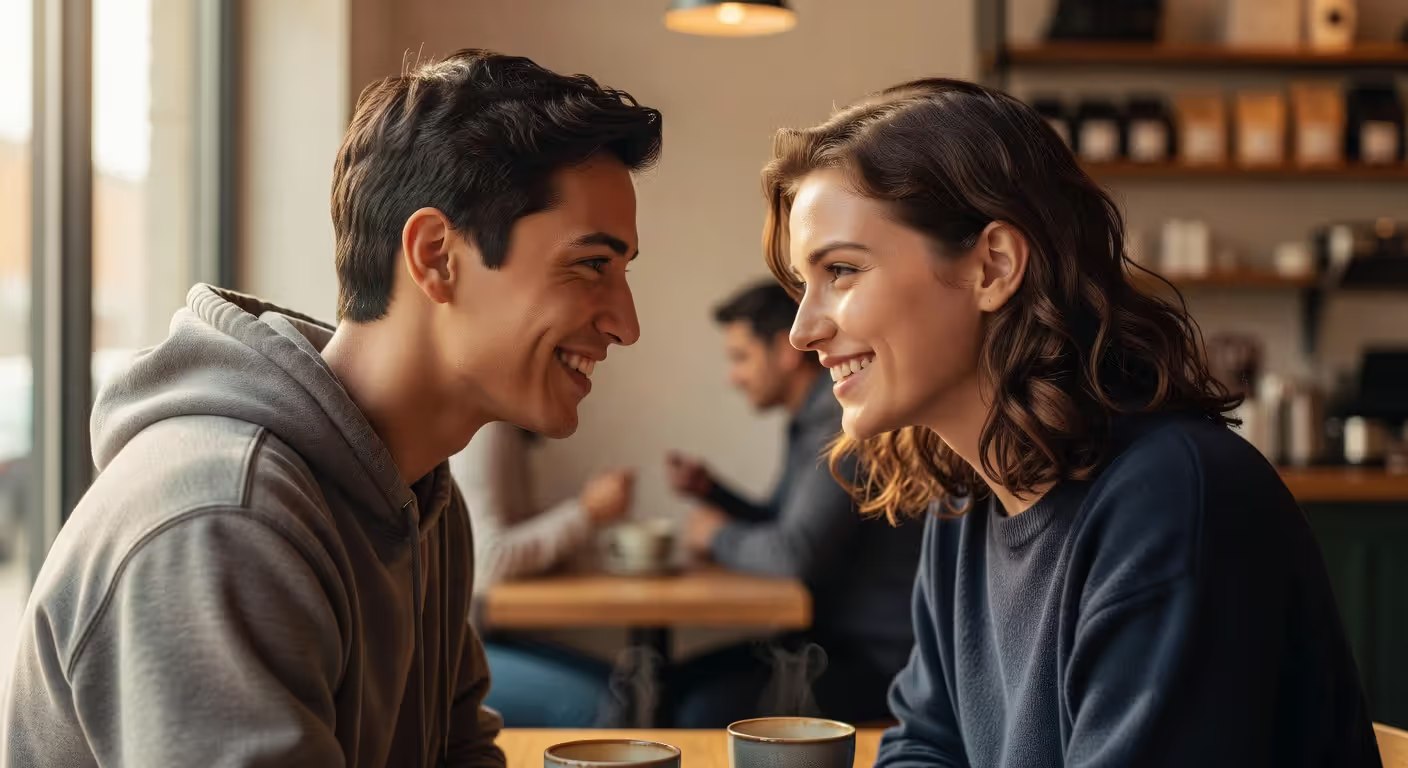
Eye contact is the heavyweight champion of attraction signals. When someone likes you, they hold your gaze longer than necessary—typically 2 to 3 seconds past what feels neutral. They'll look at you even when you're not speaking. You'll catch them glancing your way repeatedly across a room.
But here's the thing: context matters. In some cultures, prolonged eye contact reads as aggressive rather than affectionate. In professional settings, it's standard practice. The key is noticing when someone's eye contact with you differs from how they look at others.
Pupil dilation is another giveaway, though harder to spot. When we're attracted to someone, our pupils expand involuntarily. It's a biological response we can't fake or control.
Watch their eyebrows too. A quick eyebrow flash—that split-second lift when they first see you—signals recognition and positive emotion. Genuine smiles reach the eyes, creating those small crinkles at the corners. A smile that stops at the mouth? That's politeness, not interest.
Author: Evelyn Hartleigh;
Source: nappyheadedlovestories.com
Physical Proximity and Touch Patterns
People gravitate toward what they like. Literally.
Someone who's attracted to you will consistently reduce the physical distance between you. They'll sit closer than necessary. Stand near you at gatherings. Find excuses to be in your orbit. Social psychologists call this "proxemics"—the study of personal space—and attraction shrinks those invisible boundaries fast.
The average comfortable distance between acquaintances is about 4 feet. Friends close that to roughly 1.5 to 4 feet. When someone's romantically interested, they'll push into the intimate zone—anything under 18 inches—whenever possible.
Touch is even more telling. Light, seemingly accidental touches on the arm, shoulder, or hand. Brushing lint off your jacket. A hand on the small of your back when walking through a door. These aren't random. They're testing the waters, seeing how you respond to physical contact.
Mirroring is another dead giveaway. When someone unconsciously copies your gestures, posture, or movements, it signals rapport and attraction. You lean in, they lean in. You cross your legs, they do the same moments later. This subconscious mimicry creates connection.
One common mistake? Assuming nervous fidgeting means disinterest. Often it's the opposite. Playing with jewelry, adjusting clothing, or touching their own face repeatedly can indicate they're self-conscious because they care what you think.
Verbal and Behavioral Signs of Interest
Actions speak. But so do words—and the patterns behind them.
Someone who likes you remembers things. Small details from conversations weeks ago. That band you mentioned once. Your coffee order. The name of your childhood dog. This isn't coincidence. When we're interested in someone, we file away information about them like it's mission-critical data.
They initiate contact regularly. Texts, calls, social media messages—the medium varies, but the consistency doesn't. You're not always the one reaching out. They start conversations without needing a reason. "Saw this and thought of you" becomes a recurring theme.
The most reliable indicator of romantic interest isn't any single gesture or word—it's sustained effort over time. Someone who consistently prioritizes your company, remembers what matters to you, and actively tries to deepen the connection is showing you exactly how they feel.
— Glass Lillian
Notice how they handle your availability. Someone interested will work around your schedule, not expect you to do all the accommodating. They'll suggest specific plans rather than vague "we should hang out sometime" statements. Concrete invitations signal serious interest.
The questions they ask reveal a lot too. Surface-level small talk is one thing. But when someone digs deeper—asking about your goals, your past, your opinions on things that matter—they're trying to understand who you are beyond the surface. Personal questions indicate personal interest.
They make time even when they're busy. Everyone has 24 hours. How someone allocates theirs tells you where you rank in their priorities. Canceling occasionally happens. Consistently making you fit into their life? That's a choice, and it means something.
Signs a Man Likes You
Men often show interest through action-oriented behaviors. Not always, but patterns emerge.
Protectiveness is common. Not the controlling kind—the looking-out-for-you kind. Walking on the traffic side of the sidewalk. Making sure you got home safe. Offering help with practical problems. This instinct to provide and protect intensifies when a guy's interested.
Teasing and playful banter signal comfort and attraction. Light jokes, friendly challenges, mock arguments about trivial things—these create intimacy through humor. If he's giving you a hard time in a way that makes you both laugh, that's often flirtation disguised as friendship.
Physical nervousness shows up differently in men. Fidgeting with keys or phone. Adjusting posture frequently. Running hands through hair. These self-soothing gestures indicate he's outside his comfort zone—usually because your opinion matters to him.

Author: Evelyn Hartleigh;
Source: nappyheadedlovestories.com
Showing off isn't always obvious. Sometimes it's subtle—mentioning accomplishments that came up "naturally" in conversation, demonstrating knowledge about topics you care about, or displaying skills when you're around. He's essentially saying "look what I can offer" without stating it directly.
Future-oriented language is a big tell. "We should check out that new restaurant." "You'd love this hiking trail I know." "Next time we hang out..." These phrases assume ongoing connection. Men who see you as temporary don't make future plans.
Signs a Woman Likes You
Women's attraction signals often involve creating opportunities for connection.
Hair touching is classic for a reason. Playing with hair, twirling it, smoothing it—these preening behaviors increase when a woman's around someone she wants to impress. It's subconscious self-grooming that signals interest in being noticed.
Laughing at your jokes—even the mediocre ones—indicates she enjoys your company and wants you to feel good around her. Genuine laughter creates bonding. If she's finding you funnier than you probably are, take note.
Finding reasons to talk happens consistently. She'll ask questions that extend conversations. Bring up topics she knows interest you. Circle back to previous discussions. The goal isn't just exchanging information—it's maintaining connection.
Mentioning availability is often strategic. "I don't have plans this weekend." "My schedule's pretty open lately." These statements create openings for you to suggest getting together. She's making it easy for you to ask without actually asking herself.
Asking about your relationship status—or mentioning her own single status—cuts through ambiguity. When a woman wants to know if you're available, it's usually because she's considering her own interest, not conducting a casual survey.
Social media engagement increases. More likes, comments, story replies. Sharing content that relates to your conversations. This digital attention extends your interactions beyond in-person time and keeps you on her radar.
Subtle Signs Someone Has Feelings for You
Not everyone broadcasts interest loudly. Some signals whisper.
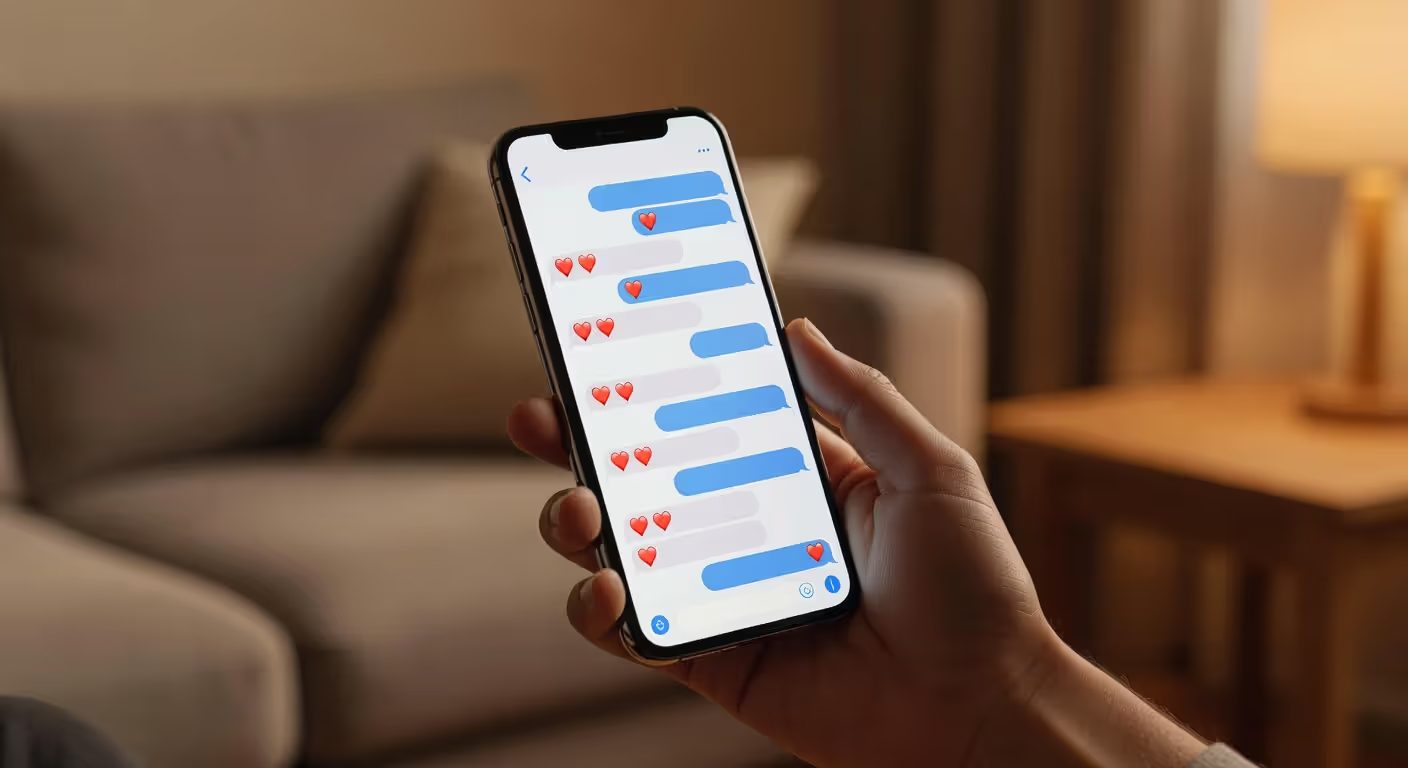
Communication frequency shifts. Maybe you used to text sporadically, and now there's daily contact. Or they've started initiating more often. Changes in how regularly someone reaches out—especially increases—often indicate growing feelings.
Jealousy signals leak out even when people try to hide them. Asking about other people you mention. Seeming less enthusiastic when you talk about time spent with others. Making subtle comments about your social life. Jealousy isn't always healthy, but mild versions often accompany romantic interest.
Remembering tiny details you barely recall mentioning yourself is a strong indicator. That documentary you said looked interesting. Your preference for window seats. How you take your tea. This level of attention requires active mental investment.
Author: Evelyn Hartleigh;
Source: nappyheadedlovestories.com
Social media behavior tells stories. Watching all your stories within minutes of posting. Liking older posts while scrolling your profile. Engaging with your content more than you engage with theirs. Digital breadcrumbs lead somewhere.
Meeting friends and family becomes a priority. When someone wants to integrate you into their social circle, they're testing compatibility beyond your one-on-one dynamic. Introductions signal they're thinking longer-term.
Body orientation is subtle but significant. In group settings, notice whose direction they face. Who they angle their body toward. Who gets their primary attention. If it's consistently you, even when others are talking, that physical orientation reveals mental focus.
How to Tell if They Want to Date You vs. Just Being Friendly
Here's where people get tripped up most. Friendly people can seem flirty. Flirty people might just be friendly. So how do you tell the difference?
Consistency is your best diagnostic tool. Romantic interest maintains steady effort over time. Friendly behavior is more variable—warm one day, distracted the next, without pattern. Someone who wants to date you will show sustained, reliable interest across weeks and months.
Exclusivity signals matter. Do they treat you differently than others? Give you more attention, time, or physical closeness than their other friends? If their behavior toward you is indistinguishable from how they treat everyone, it's probably platonic.
Flirting includes elements friendship doesn't: sustained eye contact with a slight smile, playful touching that lingers, compliments about appearance rather than just accomplishments, innuendo or suggestive humor. Friendly banter stays in safer territory.
Context shapes interpretation. A bartender's warm attention is professional. A coworker's friendliness might be networking. Someone who seeks you out in non-obligatory settings—when they could easily be elsewhere—is choosing your company for its own sake.
The touch test helps clarify things. Friendly touch is brief and practical—a quick hug, a pat on the shoulder. Romantic touch lingers, happens more frequently, and targets more intimate areas like the lower back, forearm, or hand. The duration and location tell the story.
One-on-one time preferences reveal intent. Friends are fine with group hangs. Someone who wants to date you will actively create opportunities to be alone together. Coffee dates, walks, dinners for two—these aren't friendship maintenance activities.
| Sign Type | What to Look For | Reliability Level | Context Matters |
| Sustained eye contact | Holding gaze 2-3+ seconds, frequent glances across room | High | Yes—cultural norms vary; compare to how they look at others |
| Physical proximity | Consistently reducing distance, entering personal space (under 18 inches) | High | Yes—crowded environments force closeness; note if they maintain it when space opens up |
| Mirroring behavior | Copying gestures, posture, movements unconsciously | Medium-High | Moderate—some people mirror naturally; look for patterns specific to you |
| Initiating contact | Regular texts/calls/messages without prompting | High | Low—frequency and effort speak clearly across most contexts |
| Remembering details | Recalling small facts from past conversations | Medium-High | Low—this requires intentional attention regardless of situation |
| Light touching | Brief, "accidental" touches on arm, shoulder, hand | Medium | Yes—some cultures/personalities are naturally tactile; note increases around you |
| Future planning language | Using "we" and suggesting future activities together | High | Moderate—verify through actual follow-through on plans |
| Jealousy indicators | Questions about your social life, reactions to mentions of others | Medium | High—could indicate possessiveness or insecurity rather than healthy interest |

Author: Evelyn Hartleigh;
Source: nappyheadedlovestories.com
FAQ: Reading Romantic Interest in Others
Reading attraction isn't an exact science, but it's not mystical either. People tell you how they feel through dozens of small, consistent signals. Trust the patterns you see over time more than any single gesture. And remember—the clearest sign someone likes you is that being around them feels easy, reciprocal, and progressively more connected. When interest is mutual, you won't have to decode it like a cryptographer. You'll feel it.
Related Stories

Read more

Read more




The content on this website is provided for general informational and educational purposes only. It is intended to explain concepts related to relationships, dating, marriage, emotional intimacy, attachment styles, and breakup recovery.
All information on this website, including articles, guides, and examples, is presented for general educational purposes. Outcomes and relationship experiences may vary depending on individual circumstances.
This website does not provide professional counseling, therapy, or legal advice, and the information presented should not be used as a substitute for consultation with qualified mental health professionals or relationship counselors.
The website and its authors are not responsible for any errors or omissions, or for any outcomes resulting from decisions made based on the information provided on this website.