
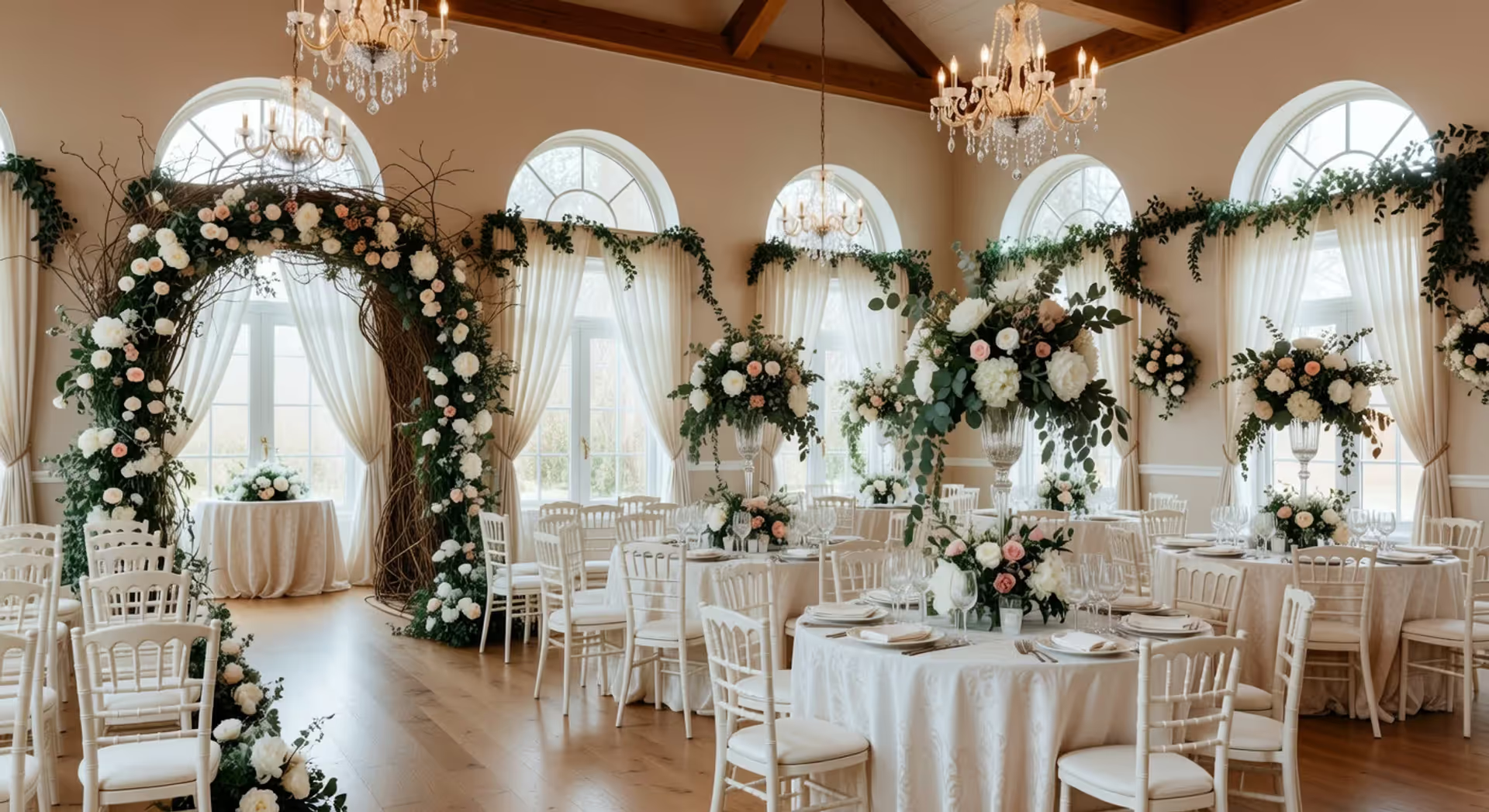
Wedding Day Timing Guide for Your Big Day
Wedding Day Timing Guide for Your Big Day
Planning a wedding means juggling dozens of moving parts, and one of the most practical questions couples ask is: how long will this actually take? You need real numbers to book vendors, reserve venues, and set guest expectations. This wedding day timing guide breaks down every phase of your celebration—from the first look to the last dance—so you can build a realistic schedule that flows smoothly without feeling rushed.
How Long Does a Wedding Last on Average?
Most weddings run between four and eight hours total. That's the sweet spot where you have enough time to enjoy each moment without exhausting your guests or blowing your budget on overtime fees.
The ceremony itself is usually the shorter piece. You're looking at 20 to 60 minutes depending on your style and traditions. The reception takes up the bulk of your day—typically four to five hours of cocktails, dinner, toasts, and dancing.
Here's the thing: how many hours does a wedding take really depends on what you're including. A simple courthouse ceremony with a restaurant dinner might wrap in three hours. A full Catholic Mass followed by a formal seated dinner and open bar? Plan for seven or eight hours minimum.
The ceremony-to-reception ratio matters too. Religious ceremonies tend to run longer but might have shorter receptions. Civil ceremonies are quick, leaving more time for the party. Think of your total wedding duration as a budget—you decide where to spend those hours based on what matters most to you.
Average Wedding Ceremony Length by Style
Ceremony length varies wildly based on tradition, religion, and personalization. Let's break it down by type so you can plan accurately.
Religious Ceremony Timelines
Catholic wedding ceremonies typically run 45 to 60 minutes, and that jumps to 60-90 minutes if you're including a full Mass. There's a structured liturgy with readings, prayers, communion, and specific rituals that can't be rushed.
Protestant ceremonies are generally shorter—20 to 40 minutes. Baptist, Methodist, Presbyterian, and non-denominational Christian weddings follow a simpler format: processional, readings, vows, rings, pronouncement, recessional. You can customize readings and music, but the core structure stays lean.
Jewish weddings last 25 to 45 minutes under the chuppah. Orthodox ceremonies include more blessings and rituals (like circling, seven blessings, breaking the glass), while Reform ceremonies streamline traditions. The ketubah signing happens before the ceremony, so factor that into your timeline if you're including it in your formal schedule.
Hindu weddings are a different beast entirely. A traditional ceremony can run three to four hours with multiple rituals around the sacred fire. Many modern couples condense this to 90 minutes by selecting key rituals, but you'll still need significantly more time than a Western ceremony.
Muslim nikah ceremonies are surprisingly brief—15 to 30 minutes. The focus is on the marriage contract, prayers, and a short sermon. The reception is where the real celebration happens.
Civil and Courthouse Wedding Duration
Courthouse ceremonies are the sprinters of the wedding world. Expect 10 to 20 minutes from start to finish. You'll say your vows, sign the paperwork, maybe exchange rings, and you're done. No frills, no fuss.
Civil ceremonies with an officiant at your chosen venue run slightly longer—15 to 30 minutes. You have more flexibility here to add personal vows, readings, or unity ceremonies, but the stripped-down legal framework keeps things moving.
The pattern I see most often is couples choosing a quick civil ceremony to maximize reception time. If your priority is the party, this is your lane.
Cultural and Traditional Ceremony Length
Chinese tea ceremonies add 30 to 45 minutes to your timeline. The couple serves tea to family elders in order of seniority, receiving blessings and red envelopes in return. It's intimate and meaningful but requires careful scheduling, especially with large families.
Nigerian weddings often include multiple ceremonies. The traditional engagement (introduction) can last two to three hours with cultural dances, gift exchanges, and symbolic rituals. The white wedding (Western-style ceremony) follows standard Christian timing.
Latin American ceremonies blend Catholic traditions with cultural elements like the lasso or arras ceremony, usually running 45 to 75 minutes. The reception is where the real time investment happens—expect six-plus hours of food, dancing, and celebration.
Author: Evelyn Hartleigh;
Source: nappyheadedlovestories.com
How Long Is a Wedding Reception?
Four to five hours is the standard reception length, though this flexes based on your format and formality level.
Here's how that time typically breaks down: cocktail hour (60 minutes), dinner service (60-90 minutes), formalities like toasts and cake cutting (30-45 minutes), and open dancing (90-120 minutes). That's your basic framework.
Cocktail hour kicks things off while you're finishing photos. Guests arrive, grab drinks, mingle, and snack on passed appetizers. This buffer is crucial—it gives latecomers time to arrive and prevents an awkward gap between ceremony and reception.
Dinner timing depends on service style. Plated meals take 75-90 minutes from first course to cleared tables. Buffets can stretch to two hours if you have a large guest count and limited buffet lines. Family-style service lands somewhere in between at about 60-75 minutes.
The formalities slot happens during or right after dinner. First dance, parent dances, toasts, cake cutting—these programmed moments take 30-45 minutes total. Stack them too tightly and your reception feels like a performance. Space them out and you maintain energy without overwhelming guests.
Open dancing fills the final chunk of your reception. Most couples book DJs or bands for three to four hours total, with the last 90-120 minutes dedicated to dancing. Energy typically peaks around hour four, then gradually winds down.
You don't need to fill every minute. Breathing room matters. Guests need time to use restrooms, refresh drinks, step outside for air, and have actual conversations. A packed timeline feels exhausting.
Wedding Day Schedule Breakdown by Hour
Let's walk through a typical wedding day hour by hour so you can see how everything fits together.
Hour 1-3: Getting Ready (8:00 AM - 11:00 AM)
Hair and makeup for the wedding party. This usually takes two to three hours depending on your group size. Book your hairstylist and makeup artist to finish 30 minutes before you need to leave for photos—not right at departure time.
Hour 4: First Look and Wedding Party Photos (11:00 AM - 12:00 PM)
If you're doing a first look, schedule 60-90 minutes for couple portraits and wedding party photos before the ceremony. This front-loads photography so you can join cocktail hour. Alternatively, skip the first look and plan for 60 minutes of photos between ceremony and reception.
Hour 5: Final Ceremony Prep (12:00 PM - 1:00 PM)
Everyone gets dressed, final touch-ups happen, and you travel to the ceremony venue. Build in 15-20 minutes of buffer time here. Someone will need a safety pin. Someone will forget their shoes. It happens.
Hour 6: Guest Arrival and Ceremony (1:00 PM - 2:00 PM)
Guests should arrive 20-30 minutes before the ceremony start time. The ceremony itself runs 30-45 minutes for most couples. Photographers capture detail shots and guest arrivals during this window.
Hour 7: Cocktail Hour (2:00 PM - 3:00 PM)
Guests enjoy drinks and appetizers while you finish any remaining photos. If you skipped the first look, this is when you're taking couple and family portraits. Your photographer needs a shot list and a family member to wrangle people.
Hour 8: Reception Begins and Dinner (3:00 PM - 5:00 PM)
Grand entrance, first dance, blessing, and dinner service. This is the most structured part of your reception. Toasts typically happen during dinner to keep guests seated and engaged.
Hour 9-10: Dancing and Formalities (5:00 PM - 7:00 PM)
Parent dances, cake cutting, bouquet and garter toss (if you're doing them), and open dancing. This is the peak energy window. Your DJ or band should read the room and adjust accordingly.
Hour 11: Last Dance and Send-Off (7:00 PM - 8:00 PM)
Final songs, last call, and your grand exit if you're doing one. Some couples skip the send-off and just mingle until the venue closes. Both work fine.
This timeline assumes a 1:00 PM ceremony. Shift everything earlier for a morning wedding or later for an evening celebration. The proportions stay roughly the same.
Author: Evelyn Hartleigh;
Source: nappyheadedlovestories.com
Factors That Affect Wedding Length
Your wedding won't match the generic timeline exactly. Several factors stretch or compress your schedule.
Guest count impacts everything. A 50-person wedding moves faster than a 250-person wedding. Buffet lines, receiving lines, photo groupings—everything scales with headcount. Plan an extra 30-60 minutes for receptions over 200 guests.
Travel between venues eats time. If your ceremony and reception are in different locations, add 30-60 minutes to your timeline depending on distance and whether you're providing transportation. City weddings with traffic? Add even more buffer.
Formality level extends duration. Black-tie weddings with multiple courses, champagne toasts, and formal programs run longer than casual celebrations. Each added element—extra courses, more toasts, elaborate entrances—adds 10-20 minutes.
Cultural traditions require time. If you're incorporating a tea ceremony, hora, money dance, or other cultural elements, block out appropriate time. Don't try to rush meaningful traditions to fit an arbitrary schedule.
Photography time is non-negotiable. Your photographer needs 20-30 minutes for couple portraits, 30-45 minutes for family photos, and 15-20 minutes for wedding party shots. Trying to cut this time results in stressed couples and mediocre photos.
Number of speakers at your reception matters more than you'd think. Each toast runs 3-5 minutes. Three toasts? That's 15 minutes. Six toasts? Now you're at 30 minutes, and guests are getting restless. Cap toasts at four maximum and give speakers a time limit.
Vendor setup and breakdown happens outside your guest-facing timeline but affects venue booking. Most venues require 2-3 hours before your event for setup and 1-2 hours after for breakdown. This doesn't impact your guests but does affect your venue rental hours and cost.
How to Build Your Wedding Day Timeline
Creating a realistic wedding day timing guide takes more than guessing. Here's how to actually build one that works.
Start with your venue's hard stops. If your reception venue closes at 11:00 PM, that's your endpoint. Work backward from there. Last dance at 10:45 PM, cake cutting at 9:30 PM, dinner at 7:00 PM, cocktail hour at 6:00 PM, ceremony at 5:00 PM. Suddenly you have a framework.
Talk to your vendors early. Your photographer, DJ, and venue coordinator have done this hundreds of times. They know how long things actually take. Ask for their input on your draft timeline. A good wedding photographer will tell you if you've allocated enough time for photos.
Build in 15-minute buffers. Things run late. It's not pessimism—it's reality. Add small buffers between major segments. The ceremony might start 10 minutes late because Aunt Linda couldn't find parking. Your buffer absorbs that delay so the rest of your day stays on track.
Group family photos strategically. Don't list out 47 different family combinations. Group them logically: couple alone, couple with each set of parents, couple with siblings, couple with extended family from each side. Your photographer can knock out variations within those groupings without a military-grade spreadsheet.
Communicate the timeline clearly. Your wedding party needs to know when and where to be. Create simple day-of timeline cards for key players: one for the wedding party, one for parents, one for vendors. Include times, locations, and what's happening. Nobody should be confused about where to be at 4:30 PM.
Share the timeline with all vendors. Your photographer, videographer, DJ, band, caterer, florist, and venue coordinator should all have the same timeline. Email it two weeks before the wedding and confirm everyone's on the same page.
Assign a point person. This isn't you on your wedding day. Designate a reliable friend, family member, or day-of coordinator to keep things moving. They watch the clock, wrangle people for photos, and handle small issues so you can stay present.
The simpler option usually wins here. Don't create a minute-by-minute schedule with 73 line items. Hit the major milestones and let the day flow naturally between them.
Author: Evelyn Hartleigh;
Source: nappyheadedlovestories.com
Common Wedding Timeline Mistakes to Avoid
Even experienced couples make these timing errors. Here's what to watch out for when planning a smooth wedding day schedule.
Rushing photos is the biggest regret. Couples consistently underestimate how long quality photos take. You can't get beautiful, relaxed portraits in 20 minutes while also doing family photos and wedding party shots. Allocate at least 90 minutes total for all photography, or do a first look to split photos across the day.
Underestimating travel time kills timelines. Google Maps says 15 minutes between venues? Plan for 30. Traffic happens. Parking takes time. Your wedding party won't move as quickly as you think in formal wear. Double the estimated travel time and you'll actually arrive on time.
Back-to-back scheduling with no breaks exhausts everyone. If your ceremony ends at 5:00 PM and cocktail hour starts at 5:00 PM at a different location, something will go wrong. You need transition time between segments. Even 15 minutes of padding prevents the domino effect of delays.
Not accounting for guest arrival patterns creates awkward gaps. Guests don't all arrive at once. They trickle in over 20-30 minutes. If you schedule your ceremony to start exactly when doors open, half your guests will miss the processional. Build in that pre-ceremony buffer.
Skipping vendor meal time is both rude and impractical. Your photographer can't shoot your reception if they're passing out from hunger. Most vendor contracts include meal breaks. Honor them. It keeps your vendors energized and working at their best.
Overpacking the reception with activities leaves no time for actual celebration. You don't need 12 different reception events. Pick the traditions that matter to you and cut the rest. Guests need time to eat, drink, chat, and dance without constant interruptions for the next programmed moment.
Ignoring seasonal factors throws off your timeline. Summer sunset at 8:30 PM? Great for golden hour photos. Winter sunset at 4:30 PM? You'll need to adjust if you want outdoor portraits. Heat, cold, and daylight hours all impact your schedule.
Author: Evelyn Hartleigh;
Source: nappyheadedlovestories.com
Wedding Duration Comparison by Type
Here's a practical comparison of how different wedding styles stack up in terms of timing and scale.
| Wedding Type | Ceremony Length | Reception Length | Total Duration | Typical Guest Count |
| Traditional Religious | 45-60 minutes | 4-5 hours | 6-7 hours | 100-200 guests |
| Civil/Secular | 20-30 minutes | 4-5 hours | 5-6 hours | 75-150 guests |
| Destination | 30-45 minutes | 3-4 hours | 4-5 hours | 30-75 guests |
| Elopement | 15-30 minutes | 1-2 hours (if any) | 2-3 hours | 2-20 guests |
| Cultural (Hindu/Nigerian) | 2-4 hours | 5-7 hours | 7-11 hours | 150-400+ guests |
| Courthouse | 10-20 minutes | Variable | 1-6 hours | 2-30 guests |
This table shows why you can't apply a one-size-fits-all timeline. A Hindu wedding requires fundamentally different planning than a courthouse ceremony followed by a restaurant dinner.
Destination weddings run shorter because you're typically hosting fewer guests and working within resort or venue packages that have set timeframes. The intimacy allows for a more condensed celebration.
Cultural weddings often span multiple days with different events, but even the main ceremony day runs significantly longer than Western traditions. If you're blending cultures, plan for the longer timeline and communicate expectations clearly to guests unfamiliar with those traditions.
The most common timing mistake couples make is underestimating transition time. They schedule the ceremony to end at 5:00 and expect everyone at cocktail hour by 5:00, but that's physically impossible. Every segment needs breathing room. I always tell couples: if you think you need 30 minutes, plan for 45. That buffer is the difference between a relaxed celebration and a stressful race against the clock.
— Mitchell Sarah
FAQ: Wedding Timing Questions Answered
Planning your wedding timeline doesn't have to be overwhelming. Start with the big blocks—ceremony length, reception duration, photo time—and work backward from your venue's end time. Build in buffers, communicate clearly with vendors, and remember that the goal isn't a perfect minute-by-minute schedule. It's creating enough structure that your day flows smoothly while leaving room for spontaneous moments and genuine celebration. Your timeline is a guide, not a prison. Use it to reduce stress, not create more.
Related Stories
Read more
Read more


The content on this website is provided for general informational and educational purposes only. It is intended to explain concepts related to relationships, dating, marriage, emotional intimacy, attachment styles, and breakup recovery.
All information on this website, including articles, guides, and examples, is presented for general educational purposes. Outcomes and relationship experiences may vary depending on individual circumstances.
This website does not provide professional counseling, therapy, or legal advice, and the information presented should not be used as a substitute for consultation with qualified mental health professionals or relationship counselors.
The website and its authors are not responsible for any errors or omissions, or for any outcomes resulting from decisions made based on the information provided on this website.