
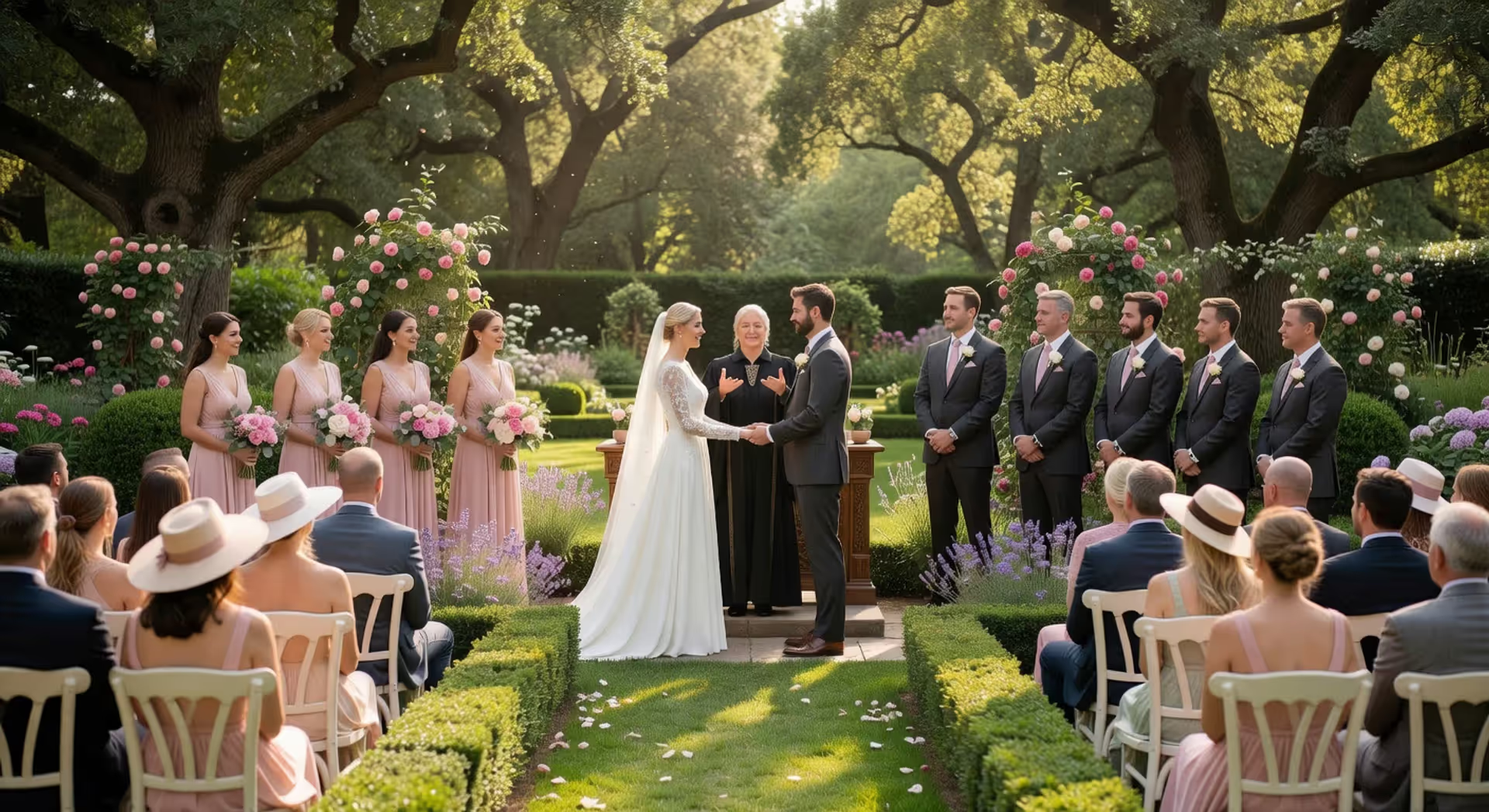
What Happens at a Wedding Ceremony
What Happens at a Wedding Ceremony?
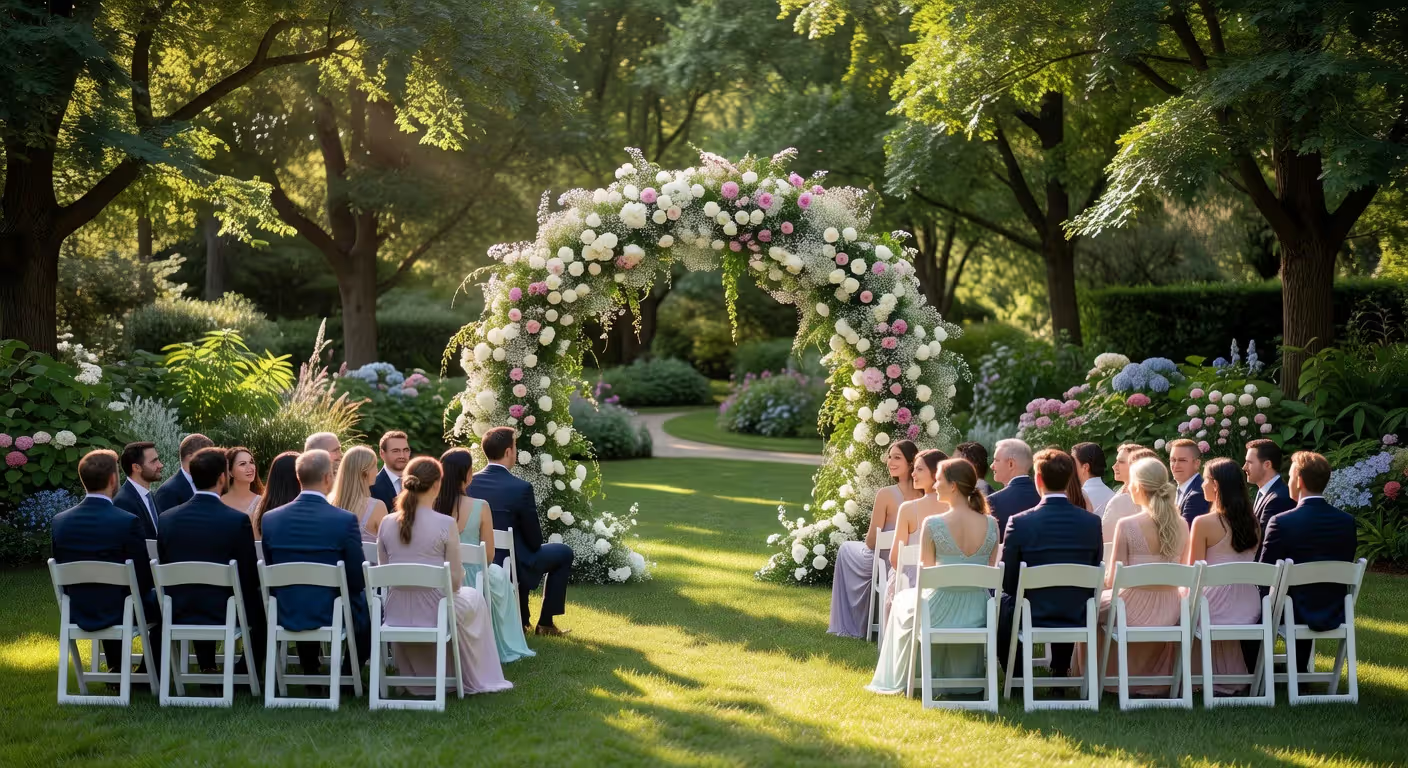
You know that moment when everyone goes quiet and the music swells? That's a wedding ceremony about to start. Maybe you're the one getting married, or you're in the wedding party trying not to trip, or you're a guest wondering when you're supposed to stand up. Either way, ceremonies pack a lot into a short window—legally binding promises, centuries-old traditions, and enough emotion to make even your stoic uncle tear up.
Here's the thing: ceremonies are where the actual marriage happens. The party afterward? That's just celebrating what went down during these crucial minutes. Reception halls, dance floors, open bars—all of that exists to toast what two people committed to in front of everyone who matters to them. And despite all the variations across cultures, religions, and personal styles, most ceremonies share a recognizable flow that's been refined over generations.
The Standard Order of Events in a Wedding Ceremony
Western ceremonies generally move through a sequence that feels familiar even if you've only been to a handful of weddings. The exact timeline bends depending on religion and how much the couple wants to personalize things, but you'll recognize the basic bones.
Prelude and Seating
People trickle in anywhere from fifteen minutes to half an hour before things kick off. If there are ushers, they'll walk guests to their seats. That old rule about the bride's side sitting left and groom's side right? Most couples don't bother anymore—sit wherever you find space. Background music fills the room while everyone gets settled and checks their phones one last time before (hopefully) silencing them.
Processional
The officiant walks out and takes their spot up front. What happens next varies. Sometimes the groom and best man slip in from a side door. Other times they walk the full aisle. Then comes the wedding party in waves: grandparents shuffling down, groom's parents, bride's mom, bridesmaids in their matching dresses, the maid of honor looking slightly more important, and if there are kids involved, a flower girl and ring bearer who may or may not follow the plan.
The music shifts—often to something more dramatic—and the bride makes her entrance. This is the moment half the guests start crying. She might walk with her dad, both parents, by herself, or even alongside the groom if they're ditching the traditional approach.
Opening Remarks
The officiant welcomes everyone and usually explains why you're all crammed into this room together. Religious officiants might open with a prayer. Secular ones often share something about love, commitment, or a funny story about how the couple met. This section sets the tone—formal and reverent, or casual and warm.
Readings and Music
If the couple chose readings, they happen here. A friend or family member stands up and reads a poem, a passage from a religious text, or maybe something from a favorite book. Some couples add a musical performance—a soloist, a string quartet, whatever fits their vibe.
The Vows
This is why everyone's here. Each person makes promises to the other. Some couples repeat traditional lines fed to them by the officiant. Others pull out handwritten notes and recite personal vows they've been agonizing over for weeks. The words change, but the core is identical: I'm choosing you, and I'm saying it out loud in front of all these witnesses.
Ring Exchange
Rings go on fingers while each person says something about eternal love and unbroken circles. The officiant usually blesses the rings first, then hands them over. The best man and maid of honor have been holding onto these (or pretending to—sometimes the real rings stay with the officiant because nobody trusts the ring bearer's pillow).
Unity Ceremony (Optional)
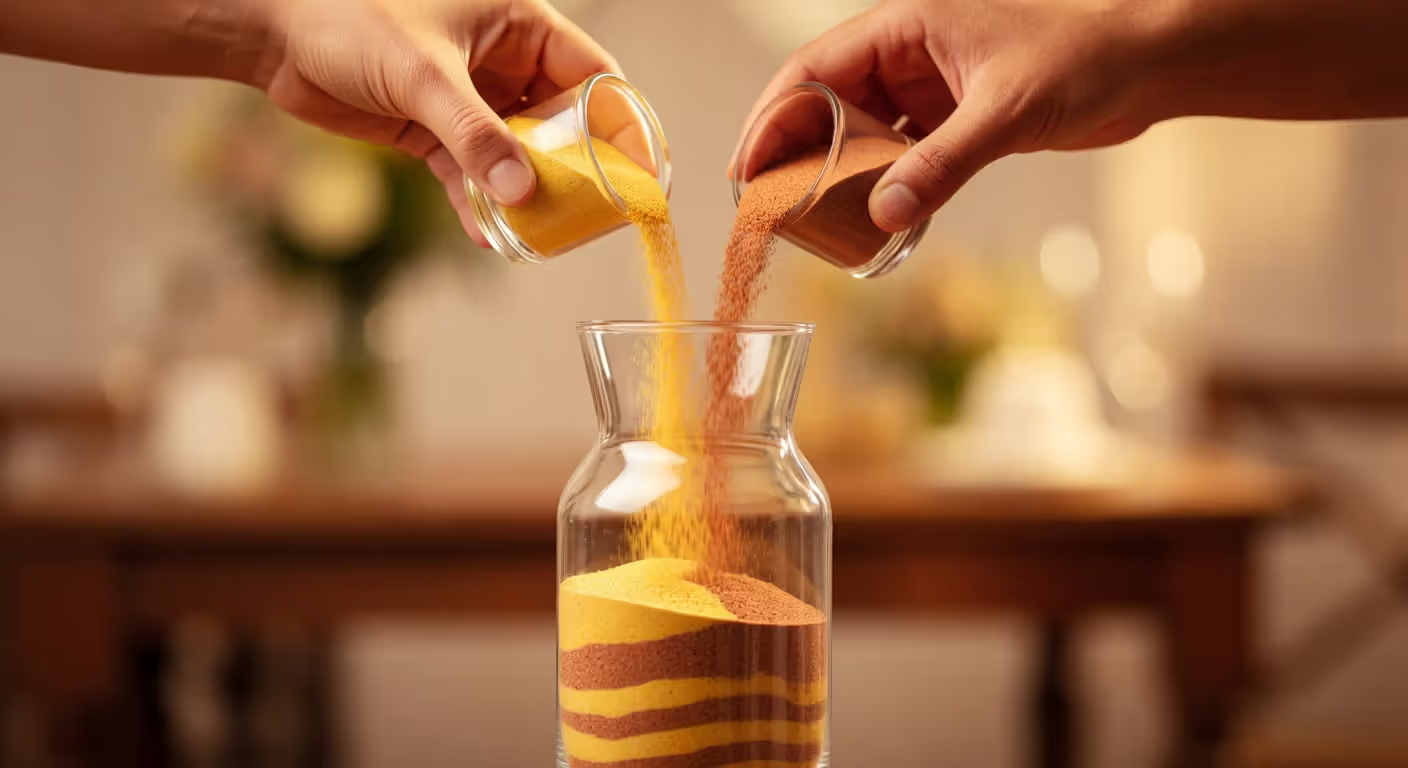
Not every ceremony includes this, but plenty do. Couples light a candle together, pour different colored sand into one container, or have their hands bound with ribbon. These rituals create a visual representation of two lives merging. They're completely optional but popular because they give guests something to watch and photograph.
Pronouncement
The officiant announces that the couple is now married. Legally, this is the moment. Religious ceremonies often layer in a blessing here.
The Kiss
"You may kiss" is the cue everyone's waiting for. The couple kisses, guests applaud or cheer, and the formal part is essentially over.
Recessional
The newly married pair walks back up the aisle together—this time as spouses. The wedding party follows in reverse order. The music is usually upbeat, something celebratory. Everyone's smiling.
How long does all this take? Quick civil ceremonies wrap up in under ten minutes. Most run twenty to thirty. Religious services, especially Catholic masses or Hindu ceremonies with multiple rituals, can push past an hour. I've sat through ninety-minute ceremonies where my feet went numb.
Author: Julian Evercrest;
Source: nappyheadedlovestories.com
Key Participants and Their Roles During the Ceremony
Everyone at a wedding has a job, even if that job is just "sit quietly and witness this."
The Officiant
This person runs the show and makes it legal. Could be a priest, rabbi, imam, minister, judge, justice of the peace, or that friend who got ordained online last month. They guide the couple through each step, speak about marriage's significance, and sign the paperwork afterward. Their style shapes the ceremony's feel—some are solemn and traditional, others crack jokes and keep things light.
The Couple
They're the reason everyone's here. Their responsibilities sound simple: show up, say the words, exchange rings, don't pass out. But nerves turn simple tasks complicated. I've watched grooms forget their own names and brides giggle through their vows because anxiety does weird things to people.
Maid/Matron of Honor and Best Man
These two stand closest to the action. The maid of honor takes the bride's bouquet during vow exchanges and might fuss with the dress train or veil. The best man traditionally handles the rings, though often they're actually with the officiant or ring bearer. Both sign the marriage license as official witnesses.
Bridesmaids and Groomsmen
They walk in, stand up front looking supportive, and walk out. Some get additional tasks—reading a poem, lighting a candle, adjusting the bride's dress. Mostly they're there to show "these people matter to us."
Parents
Parents often escort the couple down the aisle and always sit front row. Some ceremonies give them active roles—lighting candles, offering blessings, participating in unity rituals. In certain cultures, parents are deeply involved throughout the entire ceremony.
Flower Girl and Ring Bearer
Little kids who add cuteness and unpredictability in equal measure. The flower girl tosses petals (or carries a basket and forgets to toss them). The ring bearer carries a decorative pillow, usually with fake rings tied to it because no one trusts a four-year-old with actual jewelry.
Guests
You're not just decoration. Your presence serves as witness to the marriage—that's actually important. Some ceremonies explicitly ask guests to pledge support for the couple. You might stand, respond verbally, or participate in a group ritual. At minimum, you're there to watch two people make life-changing promises and to celebrate with them afterward.
Core Symbolic Elements and What They Mean
Ceremonies are loaded with symbols. Some date back thousands of years. Others were invented by marketing departments and adopted as "tradition."
The Wedding Rings
Circles represent eternity—no start, no finish. That's the basic symbolism. The tradition of wearing rings on the left hand's fourth finger comes from an ancient (incorrect) belief that a vein in that finger connected straight to the heart. The anatomy's wrong but the sentiment stuck. Rings serve as daily, tangible reminders of the promises made. You can't forget you're married when you're literally wearing evidence on your hand.
The Aisle Walk
Walking down the aisle represents a journey from one phase of life into another. The bride's entrance traditionally serves as the ceremony's most dramatic moment—everyone stands, the music swells, emotions spike. This comes partly from older customs when marriages were more about families transferring property (the bride being the property, uncomfortably). Modern couples increasingly walk together or create their own entrance patterns that feel less patriarchal.
The Kiss
That first kiss as a married couple publicly seals the deal. It's also a relatively modern addition—Victorian weddings rarely included it. Now it's the moment everyone cheers for.
Readings and Music
These elements add personal meaning and emotional texture. Religious texts connect the marriage to faith traditions. Secular readings from novels, poetry, or even song lyrics reflect the couple's values and personality. Music marks transitions and creates atmosphere—you know something's about to happen when the soundtrack changes.
The Vow Exchange and Its Variations
Vows are just promises. But the specific words vary wildly.
Traditional religious vows often hit the classics: "for better or worse, for richer or poorer, in sickness and in health, till death do us part." These phrases have been repeated for centuries. Millions of couples have spoken identical words, which some people find comforting—you're joining a long tradition.
Personal vows let couples use their own voices and vocabularies. They might be funny ("I promise not to eat the last cookie without asking"), deeply poetic, painfully specific, or so emotional they can barely get through them. The downside? They can run absurdly long, or one person writes a novel while the other manages three sentences, creating an awkward imbalance.
Some couples split the difference: traditional structure with personal additions. Others collaborate on their vows to ensure they match in length and tone.
The pattern I see most often is couples who want personal vows but freeze when actually writing them. Starting with "I promise to..." and listing three to five concrete commitments usually breaks the paralysis.
Unity Ceremonies (Candle, Sand, Handfasting)
These rituals create visual metaphors for two lives joining.
Unity Candle
Each person holds a lit taper candle. Together they light a larger central candle. Some couples blow out their individual candles afterward (two becoming one), others leave them burning (two individuals forming a partnership). If you're getting married outside, skip this—wind will ruin the moment.
Sand Ceremony
Each person pours a different colored sand into one clear vessel. The colors layer or blend, creating a pattern that can't be separated. This symbolizes permanent union. Works great outdoors, and it's easy to include children from previous relationships—just add more colors.
Handfasting
An old Celtic tradition where the couple's hands are literally bound together with cord or ribbon during their vows. This is the origin of "tying the knot." Modern couples often select fabric in meaningful colors or patterns, sometimes incorporating family heirlooms.
Other unity rituals include planting a tree, mixing drinks (wine, whiskey, whatever they like), creating a painting together, or blending traditions from different cultural backgrounds.
Author: Julian Evercrest;
Source: nappyheadedlovestories.com
Traditional vs. Modern Wedding Ceremony Differences
Weddings have changed dramatically over the past generation. The shifts reflect broader cultural movements toward personalization, inclusivity, and authenticity.
Structure and Script
Traditional ceremonies follow established religious or cultural scripts with minimal deviation. The words, sequence, and rituals are predetermined by centuries of practice. Modern ceremonies treat those scripts as suggestions rather than requirements. Couples edit freely, removing elements that don't resonate and adding new ones that do.
Length and Formality
Traditional religious ceremonies tend toward longer durations and maintain formal language and dress expectations. Modern ceremonies skew shorter and more relaxed. A twenty-minute ceremony in a barn with everyone in sundresses and khakis? Completely normal now. Fifty years ago that would've been scandalous.
Personalization
This is the massive shift. Modern couples write original vows, choose readings from their favorite novels instead of scripture, and incorporate rituals reflecting their interests—like mixing craft beers instead of lighting candles. Traditional ceremonies prioritize continuity with the past and connection to something larger than the individual couple. Modern ceremonies prioritize authentic self-expression and making the ceremony unmistakably "us."
Gender Roles
Traditional ceremonies often include gendered language and assumptions: fathers "giving away" brides, grooms entering first, brides wearing white to signal purity. Modern ceremonies frequently abandon these conventions entirely. Both partners might walk in together. Gender-neutral language is standard. Same-sex couples have necessarily reshaped ceremony traditions, and those changes have influenced opposite-sex ceremonies too.
Religious Content
Traditional ceremonies are typically religious by default. Modern ceremonies span the full spectrum from deeply spiritual to entirely secular. Many couples with different faith backgrounds create interfaith ceremonies honoring both traditions, something that would've been difficult or impossible a generation ago.
Guest Participation
Traditional ceremonies position guests as witnesses—you watch, you don't participate. Modern ceremonies often include interactive moments: guests offering blessings, answering questions, or participating in group rituals like a ring warming where the wedding bands are passed through the audience for silent blessings.
Here's the trap: couples who try cramming too many modern additions into one ceremony risk creating something that feels cluttered or emotionally diluted. Sometimes less is more.
How Wedding Ceremonies Vary by Culture and Religion
Weddings worldwide share one core function—publicly formalizing a union—but the specific practices diverge dramatically.
Catholic Ceremonies
A full Catholic wedding mass runs forty-five minutes to an hour, sometimes longer. Expect communion, multiple scripture readings, prayers, and blessings. The ceremony emphasizes marriage as a sacrament—a sacred act, not just a legal contract. Couples must complete pre-marriage counseling (Pre-Cana). The ceremony happens in a church, and the priest approves all music and readings. There's a specific structure that can't be altered much.
Protestant Ceremonies
These vary by denomination but generally run shorter and less formal than Catholic masses. They center on scripture, prayer, and the exchange of vows and rings. Most Protestant ceremonies last twenty to thirty minutes. The level of formality and traditional structure depends heavily on the specific denomination—Episcopal ceremonies feel more formal than Baptist ones, for example.
Jewish Ceremonies
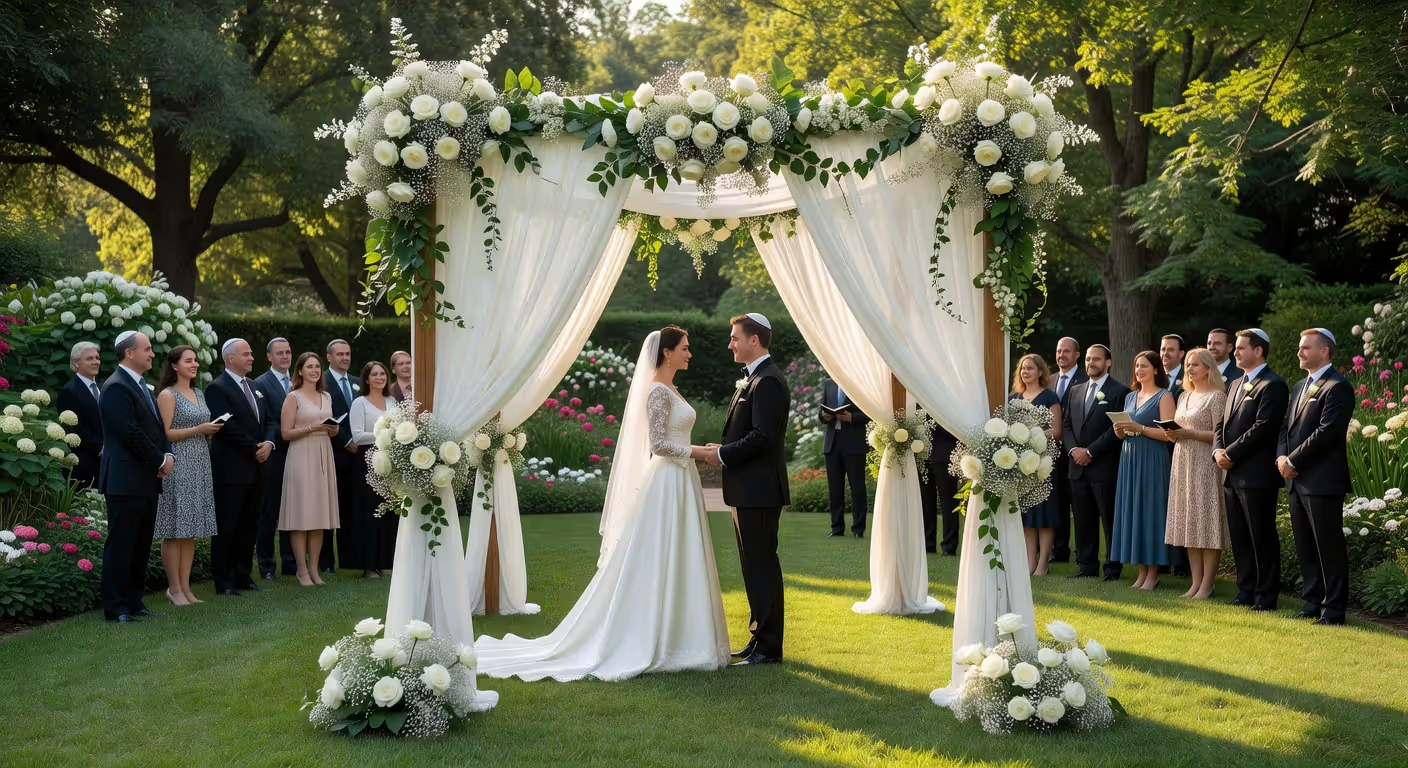
The couple marries under a chuppah (wedding canopy) representing their future home together. Key elements include signing the ketubah (marriage contract), the Sheva Brachot (seven blessings), and breaking the glass at the end. The glass-breaking commemorates the destruction of the Temple in Jerusalem and reminds the couple that marriage includes sorrow alongside joy. It's also the signal for everyone to yell "Mazel tov!" and start celebrating.
Hindu Ceremonies
These elaborate, colorful ceremonies can stretch several hours or span multiple days. The central ritual is the saptapadi—seven steps taken around a sacred fire. Each step represents a specific vow. The fire itself serves as the divine witness to the marriage. Families play active, integral roles throughout. The bride's hands and feet are decorated with henna. There are multiple outfit changes. It's an immersive, multi-sensory experience.
Muslim Ceremonies
The nikah (marriage contract) forms the legal and religious core. An imam or religious official presides. Key elements include the mahr (mandatory gift from groom to bride), signing the marriage contract, and recitation of Quranic verses. Muslim ceremonies can be surprisingly brief—sometimes just fifteen to twenty minutes—though the surrounding celebrations might last much longer.
Secular/Civil Ceremonies
These focus on legal requirements and personal commitment without religious elements. A judge, justice of the peace, or ordained friend officiates. Couples have complete freedom in structure and content. These ceremonies might be as short as five minutes at a courthouse or as elaborate and lengthy as any religious service, just without the religious framework.
Cultural Variations
Chinese weddings incorporate tea ceremonies honoring elders. Japanese Shinto ceremonies include san-san-kudo (ritual sake sharing). African ceremonies might include jumping the broom—a tradition also embraced by African American couples honoring ancestors who couldn't legally marry during slavery. Mexican ceremonies often include the lazo or lasso, a rope or rosary placed around the couple in a figure-eight symbolizing their union.
Author: Julian Evercrest;
Source: nappyheadedlovestories.com
Here's how common ceremony types compare:
| Ceremony Type | Typical Duration | Key Rituals | Officiant Type | Common Symbolic Elements |
| Catholic | 45-60 minutes | Communion, scripture readings, nuptial blessing | Priest | Rings, communion elements, candles, crucifix |
| Protestant | 20-30 minutes | Scripture readings, prayer, vow exchange | Minister or pastor | Rings, Bible, unity candle |
| Jewish | 30-45 minutes | Ketubah signing, seven blessings, glass breaking | Rabbi | Chuppah, wine, ketubah document, glass |
| Hindu | 2-4 hours (or multiple days) | Saptapadi (seven steps), fire ceremony, garland exchange | Priest (Pandit) | Sacred fire, flower garlands, sindoor, mangalsutra |
| Muslim | 15-30 minutes | Nikah contract, mahr exchange, Quranic recitation | Imam or religious official | Mahr (gift), Quran, marriage contract |
| Secular/Civil | 10-30 minutes | Vow exchange, ring exchange, readings (optional) | Judge, justice of peace, ordained friend | Rings, personal vows, unity ceremony (optional) |
What Guests Should Expect and Know
If you're attending a wedding ceremony, especially your first one, here's your practical guide.
Arrival and Seating
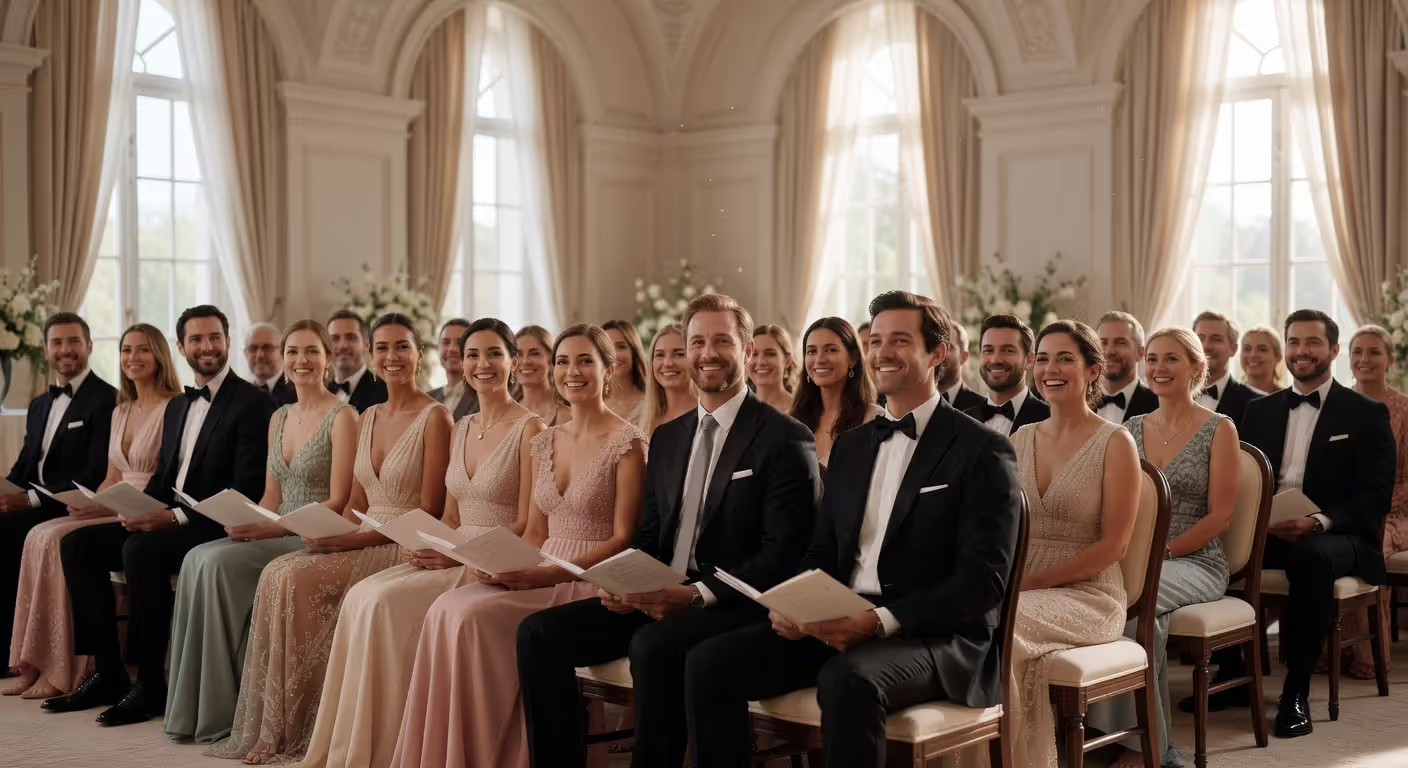
Show up fifteen to twenty minutes before the start time listed on the invitation. If there are ushers, they'll guide you to a seat. Otherwise, grab one yourself. That old tradition about bride's guests sitting left and groom's right? Most couples ignore it now—sit wherever looks good. The first few rows are typically reserved for immediate family, so avoid those unless you're directed there.
Author: Julian Evercrest;
Source: nappyheadedlovestories.com
What to Bring
Just yourself. Silence your phone or turn it completely off. Don't take photos during the ceremony unless the couple explicitly says it's okay—many want "unplugged" ceremonies so guests are actually present instead of watching through screens. If you're bringing a gift, drop it at the reception venue, not the ceremony location.
Dress Code
Follow whatever the invitation specifies. When in doubt, dress slightly more formal than you think necessary. Don't wear white or anything that might compete with the couple for attention. Religious ceremonies might require modest dress—covered shoulders, longer hemlines, or head coverings. Check ahead if you're unsure.
Participation
You might be asked to stand, sit, or respond verbally at certain moments. Just follow what everyone else does. If there's a religious ritual you don't participate in (like communion at a Catholic ceremony), simply stay seated respectfully. No one expects you to fake participation in religious practices you don't follow.
Emotional Reactions
Crying at weddings is completely normal. Bring tissues. Laughing during sweet or funny moments is fine too. What's not acceptable? Talking during the ceremony, using your phone, or leaving mid-ceremony unless it's a genuine emergency.
Duration
Plan for anywhere between twenty and forty-five minutes for most ceremonies. Use the bathroom beforehand.
After the Ceremony
Follow the recessional out of the ceremony space. There might be a receiving line where you can congratulate the couple, or you might be directed straight to cocktail hour. Don't linger at the ceremony site—the couple usually wants to take photos there.
One common mistake: guests who arrive late and try sneaking in during the processional. Don't do this. Wait until everyone's seated, or slip in during the prelude music before things officially start. An usher can help you time it right.
The most meaningful ceremonies I've officiated are those where couples honor tradition while making it unmistakably their own. You don't have to choose between authentic self-expression and respecting cultural or religious heritage—the best ceremonies weave both together. What matters most isn't the length or the location or whether you follow every rule. It's whether the two people standing before me, their loved ones, and whatever higher power they believe in can feel the weight and joy of the commitment being made.
— Mitchell Sarah
FAQ: Wedding Ceremony Questions Answered
Wedding ceremonies have evolved dramatically over generations, but their core purpose remains unchanged. They're public declarations of private commitment. Whether you're standing under a chuppah, kneeling before an altar, or exchanging vows in a backyard, you're participating in one of humanity's oldest and most universal rituals. The specific words, symbols, and traditions matter less than the intention behind them—two people choosing to build a life together and asking their community to witness and support that choice. That's what happens at a wedding ceremony. Everything else is just details.
Related Stories
Read more
Read more


The content on this website is provided for general informational and educational purposes only. It is intended to explain concepts related to relationships, dating, marriage, emotional intimacy, attachment styles, and breakup recovery.
All information on this website, including articles, guides, and examples, is presented for general educational purposes. Outcomes and relationship experiences may vary depending on individual circumstances.
This website does not provide professional counseling, therapy, or legal advice, and the information presented should not be used as a substitute for consultation with qualified mental health professionals or relationship counselors.
The website and its authors are not responsible for any errors or omissions, or for any outcomes resulting from decisions made based on the information provided on this website.